What should you look for when choosing?
First decide whether you want ready-to-eat popcorn or to make it yourself. Then check the specific variety for fat, energy, portion size and added ingredients.
Ready-to-eat popcorn
A good fit if: you want popcorn with your takeaway lunch, without having to prepare it.
The trade-off: it saves you preparation time, but the product name alone doesn’t tell you the fat content of that specific variety.
Make your own with popcorn kernels
A good fit if: you can pop it in advance and want to choose your own flavourings.
The trade-off: you’ll need to plan when to make it and how to take it with you, and assess the nutritional values of the finished snack, including any additions.
A reduced-fat variety
A good fit if: your main aim is to have less fat than in a comparable product, and you can check the claim and what it’s compared with.
The trade-off: a relative reduction in fat doesn’t prove that the popcorn is also low in fat or lower in energy.
| What to consider |
What should you check? |
Who is this important for? |
| Fat content and claim |
Check the fat per 100 g and the claim for the specific variety. For solid foods, the European Commission sets a maximum of 3 g of fat per 100 g for the claim ‘low fat’. The Netherlands Bakery Centre describes ‘reduced’ content as at least 30% less than in comparable products; check the specific claim and what it’s compared with. |
If my main aim is to eat less fat, I want to know whether the claim applies to my variety and what it’s being compared with. Around 31% of consumers put reducing fat at the top of their shopping priorities. |
| Energy and portion size |
Compare energy per 100 g on the same product basis, then take into account the portion you actually eat. The European Union explains that nutritional values must describe the state of the product to which the labelling refers. |
If I mainly want to know what the popcorn adds to my lunch, I also consider how much I actually eat. Around 25% of consumers put energy and portion size at the top of their priorities. |
| Ready to eat or needs preparing |
Check whether it’s ready-to-eat popcorn or kernels that still need popping. Also check the pack weight; it won’t necessarily be the same as your portion. |
If I want popcorn with my takeaway sandwich without any preparation, convenience matters most to me. Around 25% of consumers put ready-to-eat convenience at the top of their priorities. |
| Flavourings and ingredients |
Check the ingredients, sugars and salt in the packaged variety. If you make it yourself, any additions and their ingredient information matter too; the Netherlands Nutrition Centre describes herbs and spices as possible flavourings. |
If I want to choose my own flavourings, I need time to prepare the popcorn in advance. Around 19% of consumers put control over flavour at the top of their priorities. |
Popcorn products at Joybuy
These products are suitable for making popcorn in the microwave, choosing salted popcorn or popping your own kernels. Check the nutritional values and preparation information for each variety before comparing it with what you’re looking for in a lunch.
 No image available
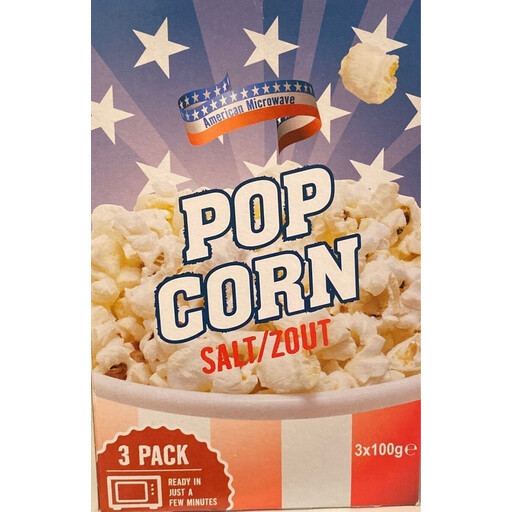
Pop Corn 3 x 100 g
A good choice if you want to prepare popcorn in the microwave in advance; according to the product information, it isn’t a snack to eat straight from the pack.
The product information gives nutritional values per 100 g.
View at Joybuy
 No image available
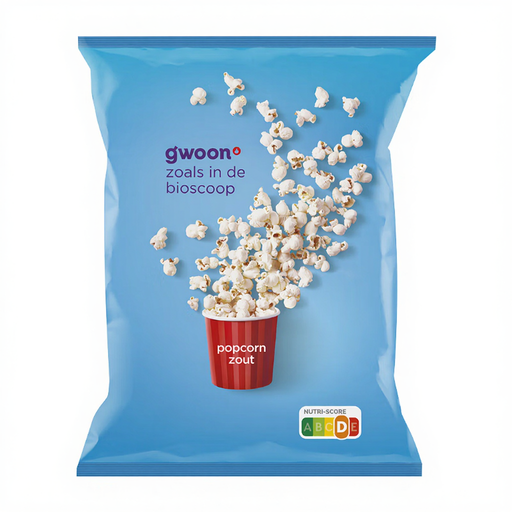
g'woon Salted Popcorn 100 g
A good choice if you’re looking for salted popcorn; check whether its ingredients suit your lunch choice.
The product information lists the ingredients and a nutrition table for this variety.
View at Joybuy
 No image available
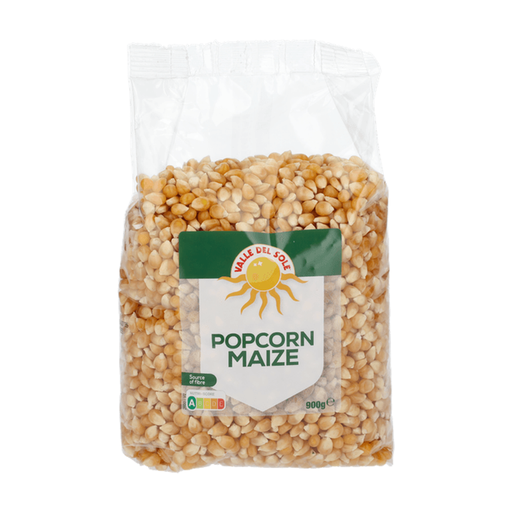
Valle Del Sole Popcorn Maize (Butterfly) 900 g
A good choice if you want to make popcorn yourself in advance; the stated method requires a pan and vegetable oil.
The product information includes preparation instructions and nutritional values for the kernels; assess the finished popcorn, including any additions.
View at Joybuy
Frequently asked questions
When can popcorn be called ‘low fat’?
For solid foods, the European Commission sets a maximum of 3 g of fat per 100 g for the ‘low fat’ claim. This is a condition for making a nutrition claim, not a personal dietary recommendation.
Can I compare dry popcorn kernels directly with ready-to-eat popcorn?
Not without first checking the product basis. The nutrition information refers to the product as sold or, where applicable, to a prepared product. So compare products in the same state and take into account any ingredients you add yourself.
How should I prepare and store popcorn kernels?
The Netherlands Nutrition Centre describes popping kernels in a covered pan and recommends taking the pan off the heat when the popping has mostly stopped. Jumbo recommends storing its dried Popcorn Maïs in a cool, dark place. Follow the instructions on your product’s packaging too.
Is homemade popcorn automatically suitable for someone with a food allergy?
No. If you have a relevant allergy, check every ingredient and the information on the packaging for the exact variety; making it yourself doesn’t guarantee that the ingredients are allergen-free.
What information should I be able to check when buying food online in the Netherlands?
Business.gov.nl states that label information must be in Dutch and also available online. Use the information for the exact product variety to make your choice.


