
Snackers looking to eat less fat
You want to be able to assess the fat content and amount of added oil, rather than judging by the light, airy texture.


If you want a lower-fat snack while keeping an eye on your protein intake, loose popcorn kernels give you more control over the oil and toppings. For convenience, you can check the nutritional values of ready-to-eat popcorn for a weighed portion. The values for dry maize don’t describe the prepared snack, and lower fat doesn’t automatically mean more protein.
You want to be able to assess the fat content and amount of added oil, rather than judging by the light, airy texture.
You want to know how many grams of protein your own portion provides, not just what the pack lists per 100 g.
You’re looking for a portion that’s easy to keep track of, while also considering energy, oil and flavourings.
Compare the same product form and weigh your portion: dry maize, prepared popcorn and a serving from a bag don’t have the same nutritional basis.
| What to consider | What to look for when buying | Who should pay particular attention? |
|---|---|---|
| Fat and added oil | Compare fat per 100 g for the same product form, then work it out for your portion. If you’re popping it yourself, include the oil and toppings too. | If I want to decide how much oil goes into my snack, I look at loose popcorn kernels and how they’re prepared. An estimated 36% of consumers have managing fat as their main priority. |
| Protein in your portion | Calculate the amount of protein for the weight you actually eat; dry maize and prepared popcorn aren’t measured on the same basis. | If I want to know how my portion of popcorn contributes to my daily total, I look at the amount I actually eat. An estimated 29% of consumers put protein content first. |
| Energy and portion size | Weigh your portion and use the nutritional values for the relevant product form; include oil and toppings. | If I want to match a snack portion to my planned energy intake, the weighed amount makes a difference. An estimated 21% of consumers have energy and portion size as their main priority. |
| Convenience and flavour | Check whether it’s dry popcorn maize or ready-to-eat popcorn, and see which oils, salt or other flavourings are used in the recipe. | If I want something quick to grab, ready-to-eat popcorn is a convenient option; popping it myself gives me the freedom to choose the flavourings. An estimated 14% of consumers put convenience and flavour first. |
A large amount of popcorn can still contain a considerable amount of fat per 100 g. Albert Heijn lists 29 g of fat per 100 g and 26% sunflower oil for AH Salted Popcorn.
Check the nutrition table for the exact variety and assess your weighed portion, rather than judging by the volume of the bag or the type of oil used.
The values for dry maize don’t include any oil or flavourings you add during preparation.
Use a consistent basis and include the ingredients in your full preparation.
The amount you eat determines how much protein your snack contributes to your daily total.
Weigh your portion and adjust the label values to match the amount you actually eat.
A brand name or product description doesn’t prove that a particular variety meets the requirements for a nutrition claim.
Check the exact variety and the information on the packaging. The European Commission and the Netherlands Food and Consumer Product Safety Authority provide information about nutrition claims.
AH Organic Popcorn Maize is a base for popping at home; AH Salted Popcorn is ready to eat.
Jumbo Popcorn Maize 500 g is a dry base for making popcorn at home.
Snack Day Sea Salt Popcorn 200 g is a relevant ready-to-eat popcorn option from Lidl.
SUN SNACKS Salted Popcorn 100 g is a relevant ready-to-eat popcorn option from Aldi.
These Joybuy products offer two practical options: microwave popcorn for convenience and loose maize to pop at home. Compare the nutritional values with the portion you actually eat. If you pop it yourself, include the oil and flavourings too.
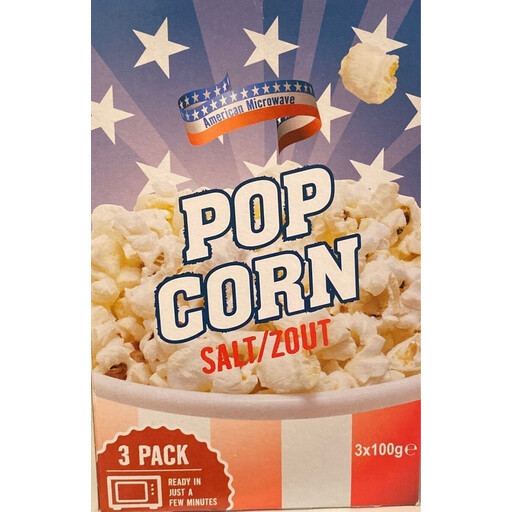 No image available
The microwave preparation described is a good fit if convenience matters to you.
Check the nutritional values for the exact variety and adjust them to the weight of your portion.
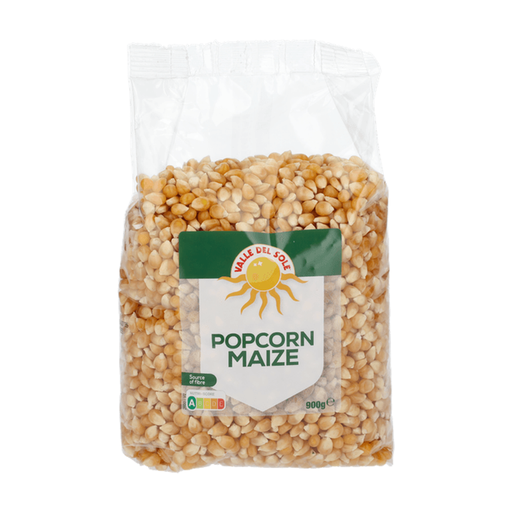 No image available
This dry popcorn maize is a good fit if you want to pop it yourself and control how it’s prepared.
The preparation described uses vegetable oil; include it when calculating the nutritional values of the finished snack.
Multiply the label value per 100 g by your portion weight in grams, then divide by 100. For dry popcorn maize, use the dry weight and count oil and toppings separately; for ready-to-eat popcorn, use the weight you eat.
For solid foods, the nutrition claim ‘low fat’ requires a maximum of 3 g of fat per 100 g, according to the European Commission. This is a condition for making the claim, not a personal dietary target or proof that a product is high in protein.
Measure the oil and include it in the nutritional values for your preparation. The Netherlands Nutrition Centre describes a pan method using 1 teaspoon of oil for 50 g of popcorn maize, a well-fitting lid and seasoning added after popping. The nutritional values also depend on your full recipe.
No. Check the packaging for the exact variety, as well as the flavourings used. AH Organic Popcorn Maize states that it may contain cereals containing gluten, soya and wheat.
For AH Salted Popcorn, Albert Heijn recommends storing it in a cool, dark and dry place and sealing the pack securely after use.