
Snackers keeping an eye on fat
You want to compare the fat content of the exact popcorn variety and distinguish a lower figure in the nutrition table from the ‘low fat’ claim.


Popping your own popcorn gives you control over the toppings and portion sizes; ready-to-eat popcorn is more convenient when you want to serve it straight away. Compare fat, sugar and energy per 100 g and per portion: a lower fat content does not automatically mean popcorn meets the ‘low fat’ claim.
You want to compare the fat content of the exact popcorn variety and distinguish a lower figure in the nutrition table from the ‘low fat’ claim.
You want to choose how much oil to use and which flavourings to add, rather than opting for a fixed sweet or salty recipe.
You’re looking for popcorn for a quick snack, with no preparation, and want to take sugar, fat and portion size into account.
First decide whether you want to pop it yourself or serve it straight away, then compare the varieties within that choice. For a ‘low fat’ claim, the European Commission sets a maximum of 3 g of fat per 100 g for solid foods.
| What to consider | What to check | Who might find this important? |
|---|---|---|
| Fat content | Compare the fat per 100 g for the exact variety. Don’t treat a lower figure as proof on its own that the product meets the ‘low fat’ claim. | If I want to cut down on fat first, I compare the nutrition tables on the same basis. Around 36% of consumers put fat content first. |
| Sugar and energy | Check the sugar and kcal per 100 g, then work out the figures for the portion you’ll actually serve. | For a sweet variety, I also want to know how much sugar and energy are in my portion; fat alone doesn’t give me the full picture. Around 29% of consumers put sugar and energy first. |
| Ease of preparation | Check whether the popcorn is ready to eat or needs preparing, then decide how you’ll portion it out. | If I want to hand out popcorn straight away at a Christmas market, I want to know whether it needs preparing first. Around 21% of consumers put ease of serving first when choosing what to buy. |
| Allergens | Read the ingredients and warnings on the exact packaging. If it’s sold loose, ask for allergen information before buying. | If I have a relevant allergy, I want to check the information for that exact variety before choosing. Around 14% of consumers put allergen suitability first. |
A product may contain less fat than another variety and still exceed the limit for the ‘low fat’ claim. For solid foods, the European Commission sets a maximum of 3 g of fat per 100 g.
Compare the nutrition table for the exact variety, and don’t treat a flavour name or a simple comparison as proof that a claim applies.
AH lists a 25 g portion for the popcorn reviewed; Jumbo Popcorn Zoet also gives figures per 30 g. These portions are not the same size.
Compare the figures per 100 g first, then work out the figures for the same portion size if you want to compare the varieties that way.
The nutrition table for dry popping corn doesn’t automatically describe the finished snack. Added oil and flavourings change what you end up serving.
Take the corn, oil and flavourings you use together into account when assessing your recipe and portion.
The range includes ready-to-eat sweet and salted popcorn, as well as dry popping corn, giving you the option to weigh up making your own against buying it ready-made.
Its product information covers dry popping corn and ready-to-eat sweet popcorn, so you can choose between making your own and serving it straight away.
Snack Day is Lidl’s own brand, which includes descriptions of salted and sweet popcorn.
SUN SNACKS Zoute popcorn is a ready-to-eat popcorn variety described by ALDI.
This selection includes sweet, salted and sweet-and-salty popcorn, as well as dry corn to pop yourself. Before choosing, check the nutrition information and portion size on the exact packaging.
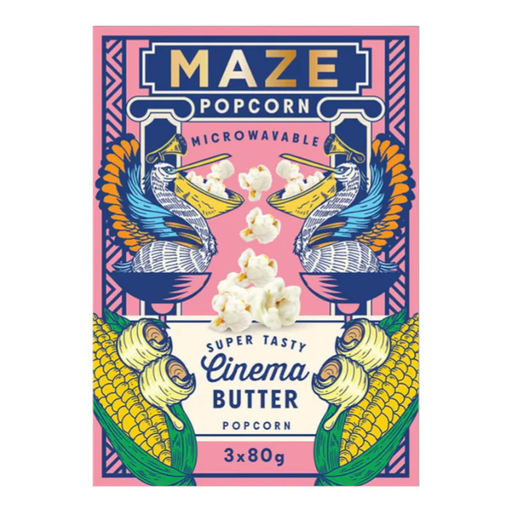 No image available
A good choice if you’re looking for cinema butter-flavoured popcorn; the product name lists a pack size of 240 g.
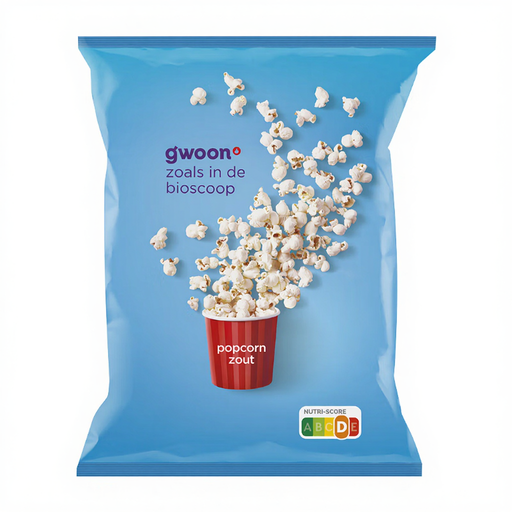 No image available
A good choice if you’re looking for salted popcorn; the product name lists a pack size of 100 g.
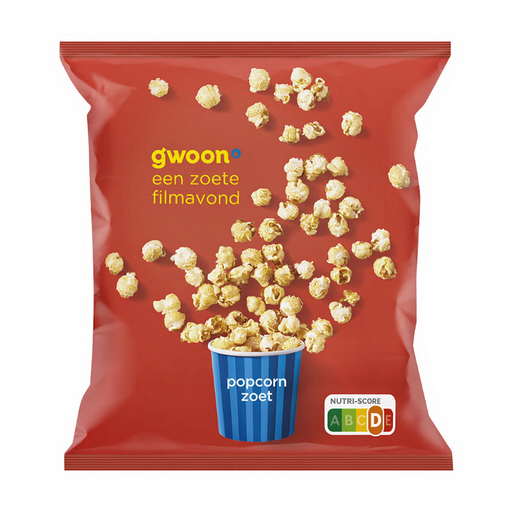 No image available
A good choice if you want to serve sweet popcorn straight from the pack; the product name lists a pack size of 175 g.
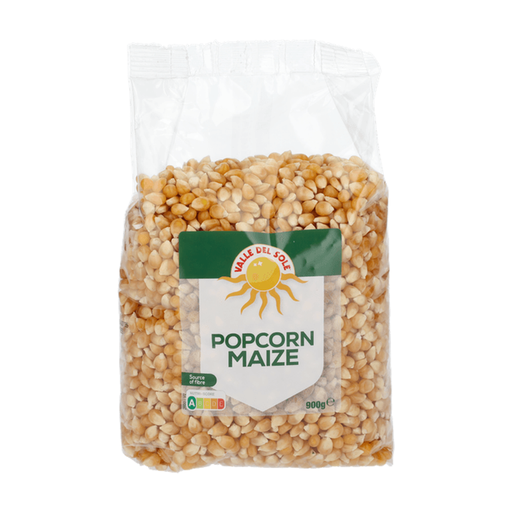 No image available
A good choice if you want to pop your own popcorn; this is dry corn that still needs to be prepared.
The product information lists vegetable oil in the preparation instructions. The figures for dry corn don’t describe the finished snack.
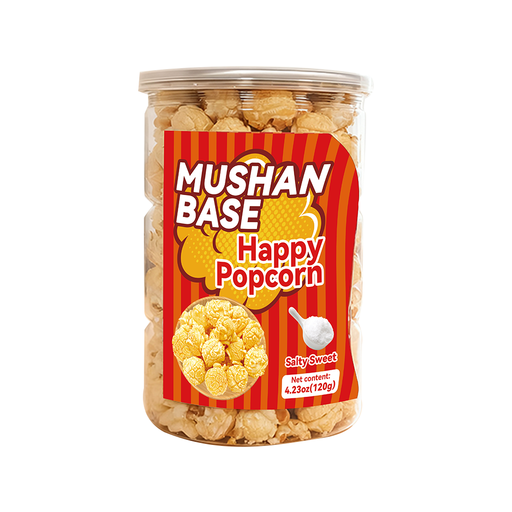 No image available
A good choice if you’re looking for sweet and salty popcorn that, according to the product description, can be eaten straight from the pack.
The product information lists soya and says the product may contain gluten; check the packaging if this is relevant to you.
For solid foods, the European Commission sets a maximum of 3 g of fat per 100 g for the ‘low fat’ claim. AH Popcorn zoet lists 4 g of fat per 100 g and Jumbo Popcorn Zoet 4.6 g per 100 g, so these two specific varieties are above that limit.
The Netherlands Nutrition Centre describes a recipe using 50 g of popping corn, 1 teaspoon of oil and 1 teaspoon of herb mix. Use a pan with a thick base and a well-fitting lid, and take it off the heat when the popping has mostly stopped. The ingredients you add count towards the finished snack.
Ask about the legally designated allergens present before you buy. According to the Netherlands Food and Consumer Product Safety Authority, this information must be available to consumers immediately when food is sold loose; the point of sale must also clearly direct you to the information.
For the sweet and salted popcorn varieties reviewed, Albert Heijn advises storing them in a cool, dark and dry place and closing the packaging securely after use. Also follow the storage information on your own pack.
The Netherlands Nutrition Centre suggests cinnamon and spiced biscuit seasoning as sweet flavour options. Check the ingredients in your chosen spice mix if allergens are relevant to you.