Compare popcorn using the nutritional information for the exact product, and decide in advance how much to serve. A different preparation method or flavour does not, by itself, prove that it contains less fat. For solid foods, the European Commission sets a maximum of 3 g of fat per 100 g for a ‘low fat’ claim. Choose between popping it yourself, cooking it in the microwave or buying ready-popped popcorn, depending on what suits your holiday plans. If children are eating it, also bear in mind the risk of choking.
Who is this guide for?
Label-conscious fans of lighter snacks
You want to check the nutritional information for the exact popcorn product and distinguish a nutrition claim from the product’s ingredients. The European Commission and the Netherlands Food and Consumer Product Safety Authority explain nutrition claims, while the European Union provides guidance on nutrition declarations.
Parents planning smaller portions
You’re looking for a snack for the children during the holidays and want to think about portion size, choking risks and any food allergies. The Netherlands Nutrition Centre lists popcorn among foods that require care because of the risk of choking.
Holiday planners choosing a preparation method
You want to choose between popping it yourself, cooking it in the microwave and buying ready-popped popcorn, depending on how much preparation fits into your plans. The Netherlands Nutrition Centre also describes a way to prepare popcorn with herbs and spices.
What should you look for when buying?
First compare the nutritional information for the exact product on a like-for-like basis. Then choose a preparation method and portion to suit your snack time.
| What to consider |
What should you look for? |
Who is this important for? |
| Fat content |
Check the claim and the fat per 100 g on the packaging. For solid foods, the European Commission sets a maximum of 3 g of fat per 100 g for a ‘low fat’ claim. |
If fat content is my first selection criterion, I want to check the claim and nutritional information for that exact product. Around 36% of consumers focus mainly on demonstrably lower fat content. |
| Suitability for children |
Consider the occasion and the child; if there’s a food allergy, check the ingredients and allergen information for the exact product. |
When children are eating too, I want to consider the risk of choking as well as the ingredients. Around 29% of consumers prioritise suitability for children. |
| Preparation method |
Choose between popping it yourself, cooking it in the microwave and buying ready-popped popcorn; follow the instructions on the packaging. |
If I want to do as little preparation as possible during holiday activities, I choose based on the steps that suit the occasion. Around 21% of consumers prioritise convenience. |
| Portion and nutritional value |
Decide how much to serve and compare energy and fat on the same basis; don’t confuse values per portion with values per 100 g. |
When I want to control how much I eat, I look beyond fat per 100 g alone. Around 14% of consumers focus mainly on portion size and overall nutritional value. |
Common selection mistakes
-
Taking a fat claim as a general health promise
A nutrition claim relates to a particular nutritional property. The threshold for a ‘low fat’ claim says nothing, in itself, about portion size, other nutrients or suitability for children.
Read the full nutrition table and consider the snack occasion and the children eating it separately.
-
Comparing unpopped corn directly with ready-to-eat popcorn
The nutritional information on a pack relates to the product as sold. When you prepare it yourself, added ingredients can change the finished snack.
Compare products on the same nutritional basis, and take into account the ingredients you use during preparation.
-
Assuming a whole pack is a suitable portion for a child
The Netherlands Nutrition Centre gives a small cup of plain popcorn as an example of a treat for children aged 4 to 12; it isn’t a universal portion for every child.
Decide in advance how much you want to serve and divide the popcorn into portions.
-
Assuming the word ‘popcorn’ tells you enough about allergens
Ingredients and any allergens can vary between products and added flavourings.
If there’s a food allergy, check the ingredients list and allergen information on the exact pack, including for any flavourings you add yourself.
Brands to consider
Albert Heijn
The range includes products for popping at home and cooking in the microwave, including AH Biologisch Popcorn mais and AH Magnetron Popcorn Zoet.
- Product listings distinguish between preparation methods.
- Organic ingredients or microwave preparation don’t prove that a product is low in fat; check the nutritional information for the exact product.
Jumbo
The range information lists sweet and salty popcorn, including microwave varieties.
- The different product formats offer a choice of flavours and preparation methods.
- A flavour or preparation label isn’t proof of lower fat content.
Lidl
Lidl lists popcorn under the Snack Day brand, with sweet and salty varieties.
- The brand page highlights two flavour options.
- The flavour name doesn’t tell you whether a specific product meets the ‘low fat’ claim.
Aldi
A Dutch product listing names Sun Snacks Zoute popcorn in a 100 g pack.
- The product name and pack size are listed.
- The product name doesn’t tell you its nutritional values; check the label on the exact product.
Popcorn at Joybuy
These product options cover popping it yourself, microwave preparation and ready-to-eat popcorn. Check the nutritional information for the exact product: its format or flavour doesn’t, by itself, prove that the popcorn is low in fat.
 No image available
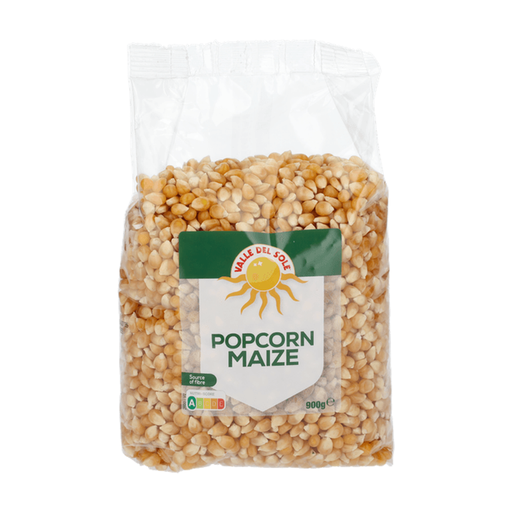
Valle Del Sole Popcorn Maize (Butterfly), 900 g
Suitable for popping your own popcorn and choosing the ingredients you use during preparation.
The product description lists 5 g of fat per 100 g of corn. The preparation instructions call for 2 tbsp of vegetable oil, so you can’t directly compare the value for the corn with that of prepared popcorn.
Joybuy
 No image available
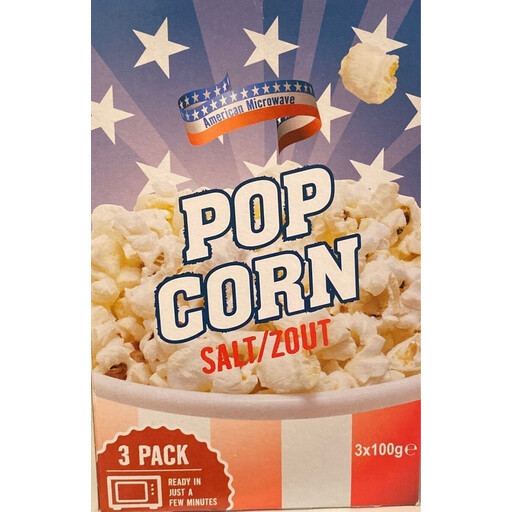
Pop Corn, 3 x 100 g
Suitable if you’re looking for popcorn to cook in the microwave.
The product description lists 23 g of fat per 100 g. This is above the European Commission’s maximum threshold of 3 g per 100 g for a ‘low fat’ claim on solid foods.
Joybuy
 No image available
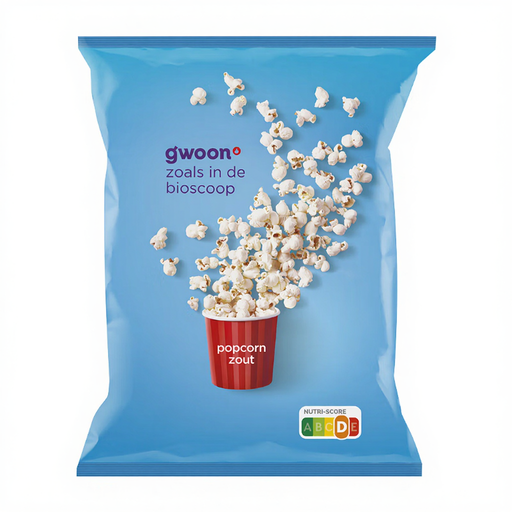
g'woon Salted Popcorn, 100 g
Suitable if you want to portion out ready-popped, salted popcorn.
The product name indicates salted popcorn in a 100 g pack. If fat content is your selection criterion, check the nutritional information on the packaging.
Joybuy
Frequently asked questions
What does ‘low fat’ mean on a popcorn pack?
For solid foods, the European Commission sets a maximum of 3 g of fat per 100 g as a condition for a ‘low fat’ claim. That threshold isn’t the same as a general statement that a product contains less fat.
Is popcorn suitable for every child eating with you during the holidays?
Not necessarily: the Netherlands Nutrition Centre lists popcorn among foods that require care because of the risk of choking. Its advice about a small cup of plain popcorn appears on a page for children aged 4 to 12, and isn’t a general safety guarantee for every child.
Can I add my own flavour without using caramel?
Yes. The Netherlands Nutrition Centre describes popcorn with herbs and spices, and suggests cinnamon or spiced biscuit seasoning for a change of flavour. If allergens are relevant, check the ingredients of any herbs and spices you add too.
Do allergens have to be listed on Dutch packaging?
According to the Netherlands Food and Consumer Product Safety Authority, the 14 allergens required by law must be included in the ingredients list and clearly distinguishable. Check the information on the pack of the exact product.
How long can I keep popcorn after opening?
Follow the storage advice on the pack of the exact product. The Netherlands Nutrition Centre distinguishes between sealed packs with a THT or TGT date and opened products, which have separate storage advice.


