
Walkers looking to eat less fat
You want to compare the fat content per 100 g rather than assume that ‘less fat’ automatically means ‘low fat’. For solid foods, the European Commission sets a maximum of 3 g of fat per 100 g for the ‘low fat’ claim.


Want a snack you can eat straight away while you’re out? Compare ready-to-eat popcorn by its fat, sugar and energy content per 100 g, as well as the portion you’ll take with you. Choose dry popping corn if you’d rather prepare it yourself beforehand and decide what to add. ‘Low fat’ doesn’t simply mean relatively less fat: for solid foods, the European Commission sets a maximum of 3 g of fat per 100 g for this claim, and the dry corn and sweet popcorn discussed here are both above that limit. For prolonged, intense exercise, a snack should also form part of a broader nutrition plan, as the Voedingscentrum explains.
You want to compare the fat content per 100 g rather than assume that ‘less fat’ automatically means ‘low fat’. For solid foods, the European Commission sets a maximum of 3 g of fat per 100 g for the ‘low fat’ claim.
You don’t want to need any equipment or preparation while you’re out. Ready-to-eat popcorn is a different type of product from dry popping corn or popcorn in a microwave bag.
You see your snack as part of what you eat and drink during your walk. The Voedingscentrum’s guidance on sports nutrition applies to prolonged, intense exercise, so don’t assume the same needs apply to every walk.
First, distinguish between ready-to-eat popcorn and popcorn that you prepare beforehand. Then compare the nutritional values per 100 g and consider how much you’ll actually take with you.
| What to consider | What should you check? | Who is this important for? |
|---|---|---|
| Fat content and claims | Compare the fat content per 100 g on the same product and preparation basis. Also check what a comparative claim refers to. | If I want to eat less fat, I want to compare values on a like-for-like basis rather than relying on a claim alone. Around 36% of consumers give the fat content and the meaning of the claim top priority. |
| Preparation | Check whether the popcorn is ready to eat or needs to be prepared first; for multipacks, also check the individual bags. | If I want a snack straight away while walking, I’d rather choose a product that doesn’t need a microwave or pan. Around 22% of consumers prioritise being able to snack straight away. |
| Portion and ingredients | Compare the sugar and energy content per 100 g, then calculate the values for the portion you’ll take with you. | If I want to weigh up my portion and the overall nutritional content, I look beyond fat alone. Around 21% of consumers give portion size, sugar and energy top priority. |
| Purpose of the walk | Decide whether you’re looking for popcorn for a regular break or for eating during prolonged, intense exercise. | If I’m planning food for a long, strenuous walk, I want to consider my overall nutrition plan, not just the fat content of one snack. Around 21% of consumers prioritise planning for exertion. |
A product can contain less fat than another product and still exceed the limit for the ‘low fat’ claim. For solid foods, the European Commission sets a maximum of 3 g of fat per 100 g for this claim.
Check the nutritional information per 100 g, and don’t treat a comparative claim as proof that a product is low in fat.
Jumbo lists 4.6 g of fat and 48.6 g of sugar per 100 g for its sweet popcorn. A comparison based on fat alone overlooks these other nutritional values.
Compare fat, sugar and energy per 100 g, then decide how much you’ll take with you.
The nutritional values for dry corn aren’t automatically the same as those for the prepared snack. Albert Heijn describes preparing its organic popping corn with oil; added ingredients affect the final nutritional content.
Compare prepared portions on the same basis and include any ingredients you add.
A microwave bag needs to be prepared before you leave, so it isn’t the same as ready-to-eat popcorn. Jumbo also gives specific preparation warnings for its salted microwave popcorn.
If you want to eat straight away while you’re out, choose a product that doesn’t need preparing. Follow the instructions on the pack for microwave popcorn.
The product ranges discussed include dry organic popping corn and ready-to-eat salted popcorn.
The product ranges discussed include dry popping corn, ready-to-eat sweet popcorn and microwave popcorn.
The Dutch product listing is for Snack Day popcorn with sea salt.
The Dutch product listing is for SUN SNACKS Zoute popcorn.
This selection includes ready-to-eat popcorn and popcorn that you prepare before setting off. Compare nutritional values on an appropriate preparation basis and consider the portion you’ll take with you.
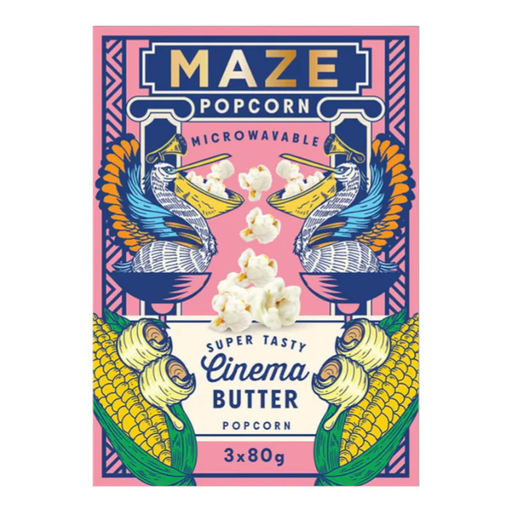 Image unavailable
This ready-to-eat option is handy if you don’t want to prepare anything while you’re out; the product name specifies a cinema butter flavour.
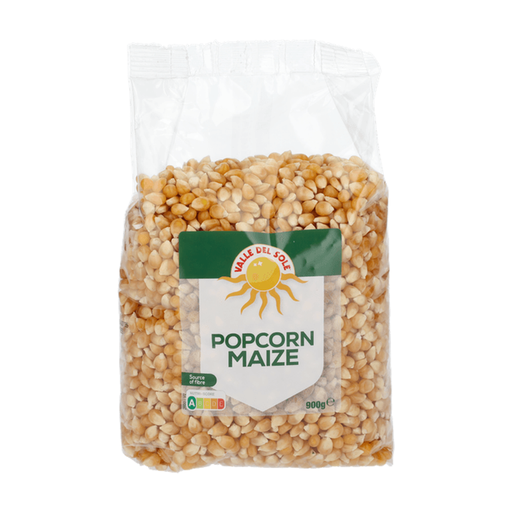 Image unavailable
An option if you’d like to prepare popcorn yourself before setting off; the product description suggests cooking it in a pan with vegetable oil, using 2 tablespoons of oil.
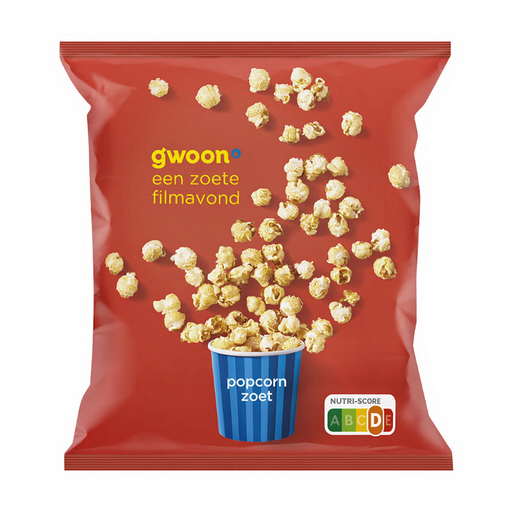 Image unavailable
This sweet popcorn is a handy choice if you want to snack straight away. Joybuy’s product information lists 4 g of fat and 44.5 g of sugar per 100 g.
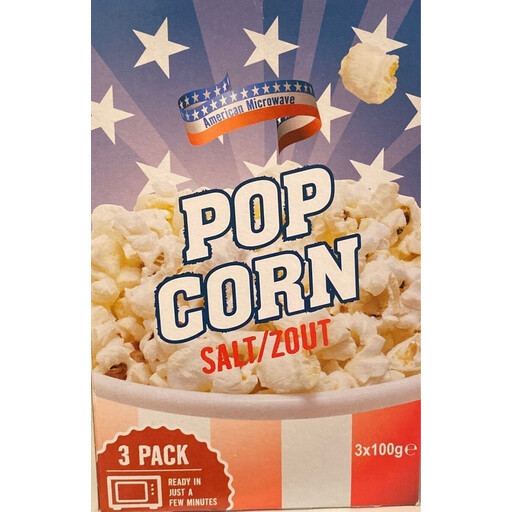 Image unavailable
This pack is intended to be prepared before you leave; the product description specifies microwave preparation. Joybuy’s product information lists 23 g of fat, 1 g of sugar and 16 g of saturated fat per 100 g.
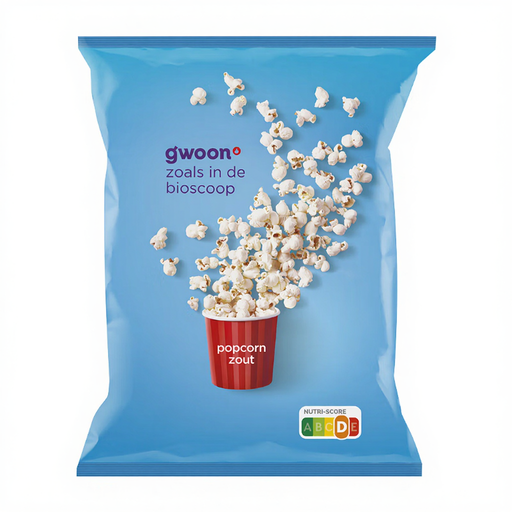 Image unavailable
This salted popcorn is a ready-to-eat option for when you’re out. Joybuy’s product information lists 29.2 g of fat, 1.2 g of sugar and 3.9 g of saturated fat per 100 g.
No. For solid foods, the European Commission sets a maximum of 3 g of fat per 100 g for the ‘low fat’ claim. Having a lower fat content than another product isn’t, on its own, enough to justify the claim.
Not without factoring in how it’s prepared. Albert Heijn gives values for dry corn and describes preparing it with oil; include the ingredients and the amount actually prepared when assessing the final portion.
Prepare the popcorn before your walk and follow the instructions on the pack. For its salted microwave version, Jumbo warns that children should only prepare it under adult supervision and that you shouldn’t restart the cooking process after an interruption.
No. Don’t assume this from the organic label or the main ingredient. Albert Heijn states that AH Biologisch Popcorn mais may contain cereals containing gluten, soya and wheat; check the label on the product you want to buy.
Albert Heijn recommends storing its salted popcorn in a cool, dark and dry place, and sealing the pack properly after use. For other products, follow the storage and use-by information on the pack.