
Snackers keeping an eye on portions
If you’re taking popcorn with you for a school day, check the calories in the amount you’ll actually eat. Compare equal portions, and don’t treat average popcorn figures as the figures for a particular brand.


For a school day, choose popcorn that suits your portion size and how you plan to prepare it. Compare the kcal per 100 g, then calculate the amount you’ll eat on a like-for-like basis. According to the European Commission, the claim ‘low energy’ can only be used for solid foods containing no more than 40 kcal per 100 g; a small portion doesn’t make a product above that limit low in calories. Children’s diet and safe eating matter too: the Voedingscentrum warns that popcorn can be a choking hazard for young children.
If you’re taking popcorn with you for a school day, check the calories in the amount you’ll actually eat. Compare equal portions, and don’t treat average popcorn figures as the figures for a particular brand.
For children aged 4 to 12, the Voedingscentrum recommends choosing snacks mainly from the Schijf van Vijf. It also warns that popcorn can be a choking hazard for young children; there’s no universal age at which popcorn automatically becomes safe.
You can choose between popping your own corn, preparing a microwave version or measuring out ready-to-eat popcorn. These options vary in preparation time, equipment needed and how much control you have over the extras.
First, compare the same quantity in the same state of preparation. Then decide what matters most to you: convenience, flavour or choosing what to add yourself.
A good fit if: you want to choose the portion size and extras yourself, and have time to make popcorn in advance.
The trade-off: AH Biologisch Popcorn mais contains 374 kcal per 100 g when measured as dry kernels; the preparation instructions use oil, which you’ll need to count too.
A good fit if: you want a sweet flavour without spending time popping it.
The trade-off: AH Popcorn zoet contains 419 kcal and 45 g of sugar per 100 g, so it doesn’t meet the legal threshold for a low-sugar or low-energy claim.
A good fit if: you want a savoury portion to take with you without having to prepare it.
The trade-off: Jumbo Popcorn Zout contains 481 kcal per 100 g and AH Zoute popcorn contains 543 kcal per 100 g; these figures apply only to those products.
A good fit if: you want to make popcorn at home without measuring out kernels and oil separately.
The trade-off: AH and Jumbo give different nutritional values per 100 g as sold; follow the instructions and check the figures on the exact product packaging.
| What to consider | What should you check? | Who should pay particular attention? |
|---|---|---|
| Calories in the portion you eat | Check the kcal per 100 g, weigh your own portion and see whether the figure is for dry, unprepared or ready-to-eat popcorn. | If you mainly want to know how much energy you’re actually packing, compare equal weights. Around 36% of consumers focus on calories per portion when making this choice. |
| Quick to pack | Check whether the popcorn is ready to eat, how much you want to measure out and how to store an opened pack. | If you want to do very little preparation before a school day, ready-to-eat popcorn may be more convenient than a variety you still need to pop. Around 21% of consumers give packing speed the highest priority. |
| Other nutritional values | Compare sugar, saturated fat and salt per 100 g and per portion, and check the allergen information too. | If you don’t want to use calories as your only measure, consider other nutritional values and your overall diet. Around 29% of consumers focus on this nutritional balance. |
| Preparation and extras | Read the preparation instructions and take any oil and toppings into account. | If you want to choose what goes into your popcorn, loose kernels give you more control but require preparation. Around 14% of consumers put this control over preparation first. |
For illustration, a 25 g portion works out at 104.75 kcal for AH Popcorn zoet, 120.25 kcal for Jumbo Popcorn Zout 100 g and 135.75 kcal for AH Zoute popcorn, based on the product labels. This is a calculation comparing equal quantities, not a recommended portion size. The figures are specific to each product; the nutritional value of dry kernels can’t be directly compared with that of ready-to-eat popcorn. The Voedingscentrum notes that values can vary between brands.
For the legal ‘low energy’ claim, the European Commission sets a limit of 40 kcal per 100 g for solid foods. The ‘reduced energy’ claim has different conditions, including an energy reduction of at least 30% and a statement of the characteristic that makes the reduction possible.
A smaller portion may contain fewer calories than a larger portion of the same product, but that doesn’t change its nutritional value per 100 g. For solid foods, the European Commission sets a limit of 40 kcal per 100 g for the ‘low energy’ claim.
Compare equal weights and, if you like, calculate the figures for your own portion. Distinguish between fewer calories in your portion and a legal nutrition claim.
A calorie comparison alone tells you nothing about sugar, salt, fat or how the snack fits into an overall diet. Children are also still growing.
Check several nutritional values and, when choosing food for children, take the Voedingscentrum’s dietary advice into account rather than starting with a weight-loss promise.
The nutritional value of dry kernels isn’t the same as that of popcorn after preparation. Oil and toppings change what you end up eating.
Compare products in the same state of preparation, and count any oil and toppings used when you pop your own.
If you pop your own, you may need oil and toppings as well as kernels; these aren’t included in the dry kernels.
A name or an association with ‘popped’ snacks doesn’t make a potato product popcorn. For example, Croky lists Pop'd potatoes in its range, but that doesn’t make it popcorn.
Check the product category and ingredients before including a product in a popcorn comparison.
The product varieties reviewed range from organic popcorn kernels to ready-to-eat sweet and salted popcorn, as well as salted microwave popcorn.
The varieties reviewed are ready-to-eat salted popcorn and salted microwave popcorn.
The Dutch product listings are for Snack Day Popcorn zeezout and Snack Day Magnetron popcorn zout.
The Dutch product listing reviewed is for SUN SNACKS Zoute popcorn in a 100 g pack.
This selection includes ready-to-eat popcorn, microwave popcorn and kernels for popping at home. Check the nutritional information and preparation method for the variety you choose.
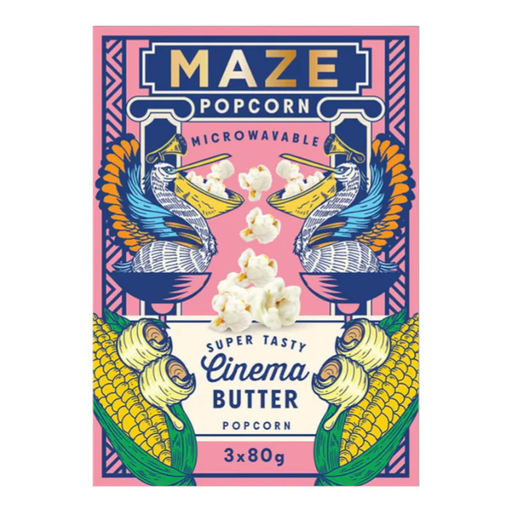 No image available
The product name describes cinema-style flavoured popcorn; if calories are a factor in your choice, check the nutritional information on the packaging.
Pack size: 240 g.
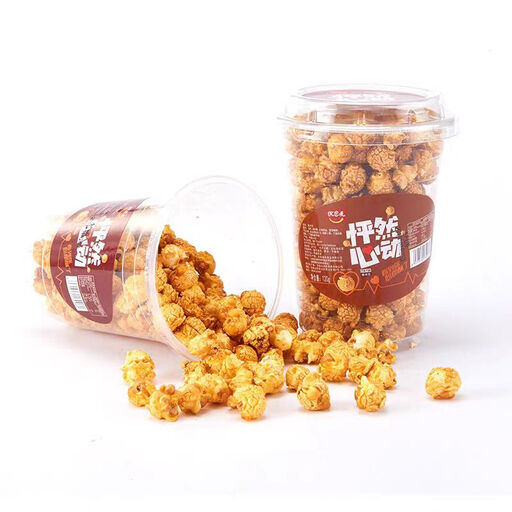 No image available
This ready-to-eat caramel-flavoured variety is a good option if you’re looking for sweet popcorn that doesn’t need preparing; the figures shown apply to this product.
The product information lists 502 kcal, 35 g of sugars and 15 g of saturated fat per 100 g. The stated energy content is above the European limit for the ‘low energy’ claim for solid foods.
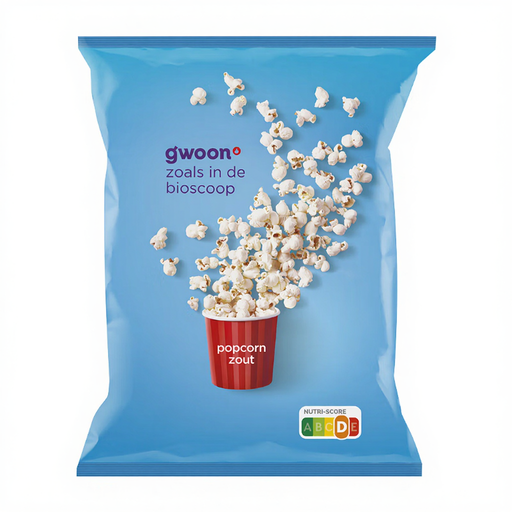 No image available
This salted popcorn is a ready-to-eat option if you want to measure out a savoury snack to take with you.
The product information lists 543 kcal and 3.9 g of saturated fat per 100 g. The stated energy content is above the European limit for the ‘low energy’ claim for solid foods.
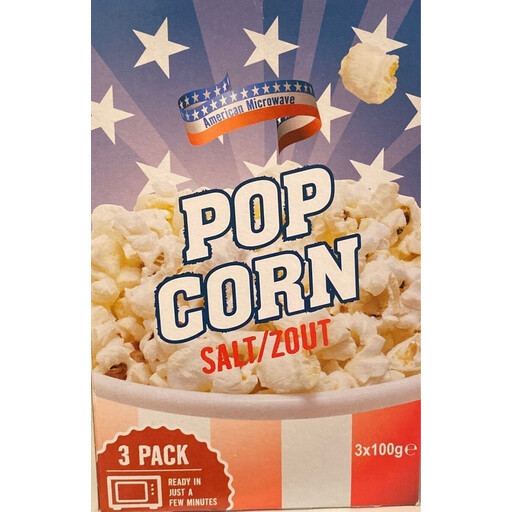 No image available
This variety needs to be prepared in the microwave, so allow time to make it before packing your popcorn.
Pack size: 3 x 100 g. Follow the preparation instructions on the product packaging.
 No image available
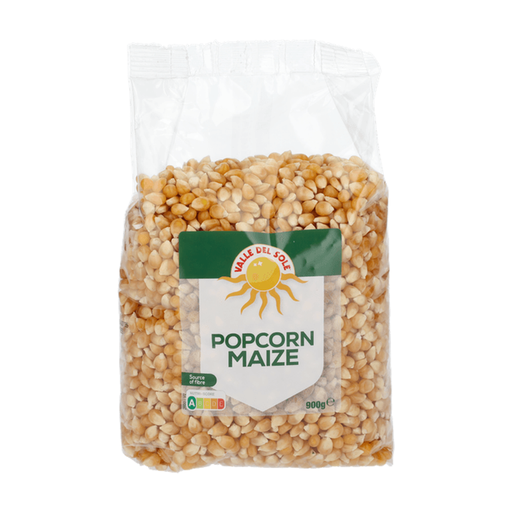
These kernels are intended for popping at home; the preparation instructions add oil, so the values for the dry kernels aren’t the values for the prepared popcorn.
The product information lists 350 kcal and 0.8 g of saturated fat per 100 g as sold. The stated energy content is above the European limit for the ‘low energy’ claim for solid foods.
According to the European Commission, the ‘low energy’ claim, or any claim with the same meaning, can only be used for solid foods containing no more than 40 kcal (170 kJ) per 100 g. A small portion doesn’t change that limit. The ‘reduced energy’ claim has different conditions, including at least 30% less energy and a statement of the characteristic that makes the reduction possible.
No. The Voedingscentrum lists popcorn as a food that can cause young children to choke. Stay nearby while they’re eating and make sure they sit calmly. The Voedingscentrum doesn’t specify a universal age at which popcorn automatically becomes safe.
Follow the instructions for your particular variety. AH Magnetron Popcorn Zout gives a cooking time that depends on the microwave’s power, advises you to stay nearby and warns about heat and steam when opening the pack. Jumbo warns that children shouldn’t prepare its microwave variety without adult supervision. Instructions aren’t automatically interchangeable between products.
No. The nutrition declaration applies to the product as sold. Dry kernels, an unprepared microwave popcorn bag and ready-to-eat popcorn are different bases for comparison. If you prepare popcorn yourself, remember to include any oil and toppings you use.
For the ready-to-eat popcorn varieties reviewed, Albert Heijn recommends storing them in a cool, dark and dry place and resealing the pack carefully after use. Follow the storage and use-by information for your own product; this advice doesn’t give a general storage period for all popcorn.