
Snackers who want to limit their portion
If you want to decide in advance how much popcorn you’ll eat, compare the energy per equal weight and weigh out your portion. Albert Heijn and Jumbo list nutritional values for their specific varieties.


Choose based on how much popcorn you actually want to eat and whether you can prepare it at home or need something ready to eat. Calculate the energy content for your portion; a smaller portion does not automatically make a product low in energy. Weighing out your portion in advance can help you keep track of how much you eat, while ingredients, potential allergens and preparation are separate things to consider.
If you want to decide in advance how much popcorn you’ll eat, compare the energy per equal weight and weigh out your portion. Albert Heijn and Jumbo list nutritional values for their specific varieties.
If you’re looking for a snack at Schiphol, check the difference between ready-to-eat popcorn and products that need to be prepared first. Royal Schiphol Group lists Albert Heijn as a shopping option at Schiphol, but that doesn’t guarantee that a specific pack of popcorn will be available.
If you can pop it at home, you can decide for yourself which toppings to use. Also check the packaging of your chosen corn for potential allergens.
| What to consider | What should you check? | Who is this important for? |
|---|---|---|
| Energy in your portion | Compare kcal per 100 g and calculate this for the amount you eat. | If I want to limit my snack portion, I want to know how much popcorn I’m actually eating; around 31% of consumers prioritise calories per portion. |
| Ready to eat or needs preparation | Check whether the popcorn is ready to eat or needs preparing or a microwave. | If you want something to eat straight away at the airport, a product that still needs preparing won’t be much use; around 25% of consumers prioritise immediate snacking convenience and an easy-to-follow shopping route. |
| Ingredients and allergens | Read the nutritional information, ingredients list and allergen warning for the exact variety. | If the ingredients are the deciding factor for me, I want to consider sugar and potential allergens separately from energy; around 19% of consumers give this top priority. |
| Preparing it yourself | Check the preparation method, equipment needed and any ingredients you add yourself. | If you want to make popcorn yourself before you leave and control the toppings, you’ll need to allow time for preparation; around 13% of consumers prioritise having that control. |
| Packaging and spending | Compare the current selling price, net weight and the amount you’ll use for your snack. | If I’m mainly considering how much I’ll spend and how much I can use, I want to avoid taking more than I need; around 12% of consumers prioritise this balance. |
Calculate the energy in a portion using: kcal per 100 g × weight eaten in grams ÷ 100. This lets you compare varieties using the same portion size, without confusing the nutritional value per 100 g with the energy in your snack.
For solid foods, the European Commission defines the ‘low energy’ nutrition claim as no more than 40 kcal (170 kJ) per 100 g. A smaller portion does not change the product’s nutritional value per 100 g. The shop information mentioned is specific to products listed by Albert Heijn and Jumbo; it is not based on our own measurements.
If you want to choose once you’re at Schiphol, check the packaging available at the shop you visit. Royal Schiphol Group lists Albert Heijn as a shopping option at the airport; this does not guarantee that popcorn will be in stock there.
The legal limit for the ‘low energy’ claim applies per 100 g, not per small tub.
Use the nutritional values on the exact pack and calculate them for the portion you’ve weighed out. Don’t call a product low in energy just because you eat a small amount of it.
Based on the stated 406 kcal per 100 g, a 175 g pack of Jumbo Sweet Popcorn contains a calculated 710.5 kcal. Jumbo lists around six portions per pack.
Decide in advance how much you want to eat and seal the rest properly after opening.
Flavour, sugar content and energy are different things. The specific Jumbo Sweet Popcorn variety lists 48.6 g of sugars per 100 g.
Compare the nutritional information for the exact varieties using the same weight, and check ingredients and allergens separately.
Microwave popcorn needs to be prepared first; AH Salted Microwave Popcorn requires a microwave.
Prepare the popcorn before you leave, or choose a product that the packaging says is ready to eat. Follow the preparation instructions and take care around hot steam.
The product information mentioned includes ready-to-eat salted popcorn, microwave popcorn and organic popping corn. Each calls for different preparation considerations.
The ready-to-eat varieties described are sweet and salted popcorn. The nutritional values apply to the specific products listed by Jumbo.
Lidl lists sweet and salted popcorn under its Snack Day brand, as well as microwave popcorn.
ALDI Nederland lists SUN SNACKS Salted Popcorn in a 100 g pack.
This selection includes ready-to-eat popcorn and popcorn kernels to prepare yourself. Check the nutritional information and preparation instructions on each pack.
 Image unavailable
The product name describes popcorn with a cinema butter flavour.
Net weight: 240 g.
 Image unavailable
The product name describes salted popcorn.
Net weight: 100 g.
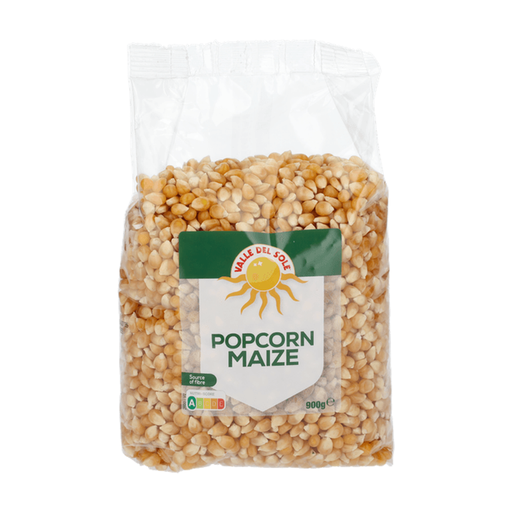 Image unavailable
This unpopped corn needs to be prepared before eating; the preparation instructions call for a pan and oil.
The stated value is 350 kcal per 100 g of corn. Any oil you add contributes to the nutritional value of the finished portion.
Net weight: 900 g.
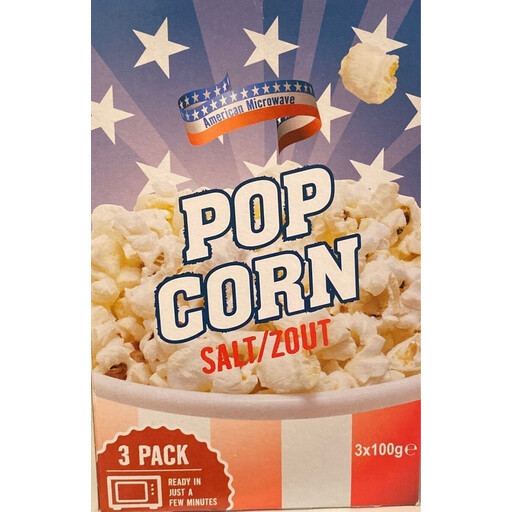 Image unavailable
According to the product information, this popcorn needs to be prepared in the microwave; open the pack carefully to avoid hot steam.
The stated nutritional value is 510 kcal per 100 g.
Pack: 3 x 100 g.
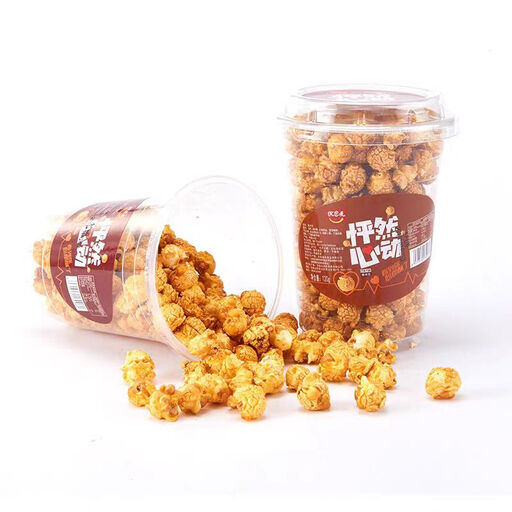 Image unavailable
This product listing describes ready-to-eat caramel-flavoured popcorn.
The stated nutritional values are 502 kcal and 35 g of sugars per 100 g; the product information lists milk as an allergen.
Net weight: 120 g.
Only if the product meets the requirements for that nutrition claim. For solid foods, the European Commission sets a limit of no more than 40 kcal (170 kJ) per 100 g. So compare the nutritional value of the exact variety, and don’t treat the size of a portion as proof that the product is low in energy.
Multiply the kcal per 100 g by the number of grams you eat, then divide the result by 100. Use the value on the exact pack; if you prepare the popcorn yourself, remember to include any ingredients you add.
Choose a variety that the packaging says is ready to eat; loose popping corn and microwave popcorn need to be prepared first. Royal Schiphol Group lists Albert Heijn at Schiphol as a shopping option, but check on site to see which products are available.
Plain dry popcorn is solid food and is not covered by the liquids rules. Schiphol does distinguish between solid foods and liquid or spreadable foods, so check the rules separately for items such as a sauce or dip. Being allowed through security says nothing about the import rules at your destination.
Follow the preparation instructions on the pack and make sure you have access to a microwave. For AH Salted Microwave Popcorn, Albert Heijn recommends staying by the microwave while the popcorn pops and taking care around hot steam when opening the pack.