What should you look for when buying?
Check the allergen information for the specific substance you need to avoid, and calculate the total carbohydrates in your weighed portion. The NVWA and Stichting Voedselallergie provide information about allergens and warnings; diabetes.nl and the Diabetes Fonds cover carbohydrate planning.
| What to consider |
What should you check? |
Who is this important for? |
| The substance to avoid |
Check the ingredients, the specific free-from claim and any warnings about possible presence on the packaging of the exact variety. |
If I need to account for a specific allergy or intolerance, I want to check the information for that particular substance. Around 34% of consumers put this need first. |
| Carbohydrates per portion |
Check the carbohydrates per 100 g and weigh the amount you actually eat. |
I want to fit my portion into my carbohydrate plan rather than looking only at sugars. Around 33% of consumers prioritise this calculation. |
| Preparation method |
Check whether the popcorn is ready to eat, microwaveable or unpopped kernels; follow the instructions on the exact pack for microwave popcorn. |
If I want to eat popcorn straight away or prepare it myself, the effort involved makes a difference to my snack time. Around 20% of consumers prioritise this choice of preparation method. |
| Other nutritional values |
Check the salt and saturated fat per 100 g, and take into account how much you eat. |
Once I’ve found an option that works for me, I also want to consider salt and fat as part of my overall diet. Around 13% of consumers prioritise this nutritional balance. |
Popcorn at Joybuy
This Joybuy selection includes ready-to-eat popcorn. Check the nutritional values and allergen information for each variety, and weigh the portion you actually eat.
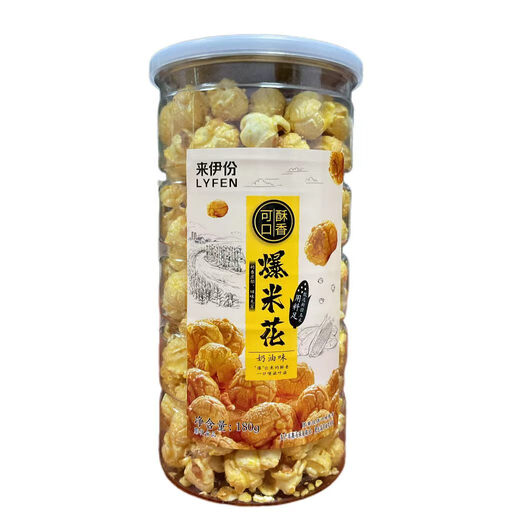 Image unavailable
LYFEN Popcorn 180 g
An option if you’re looking for ready-to-eat popcorn and don’t need to avoid soya.
The product information lists 68,2 g of carbohydrates per 100 g and soya as an allergen.
Joybuy
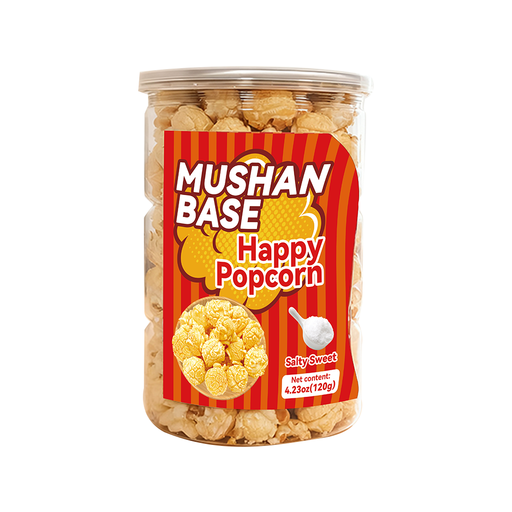 Image unavailable
MUSHAN BASE Popcorn Sweet Salty Flavor 120 g
A good fit if you’re looking for ready-to-eat popcorn and don’t need to avoid soya or possible traces of gluten.
The product information lists 62,4 g of carbohydrates per 100 g, soya and possible traces of gluten.
Joybuy
 Image unavailable
Yousmai Pengranxindong Popcorn Caramel 120 g
A caramel variety for anyone looking for ready-to-eat sweet popcorn who doesn’t need to avoid milk.
The product information lists 65 g of carbohydrates per 100 g, including 35 g of sugars, and milk as an ingredient and allergen.
Joybuy
 Image unavailable
SNACK MAZE Popcorn Cinema Butter 240 g
An option if you’re looking for popcorn with a cinema butter flavour for a snack.
The product name lists a 240 g pack.
Joybuy
 Image unavailable
g'woon Salted Popcorn 100 g
An option if you’re looking for ready-to-eat salted popcorn.
The product information lists 57,5 g of carbohydrates per 100 g and none of the 14 major EU allergens. This is not a general guarantee for every dietary restriction; check the ingredients for the exact variety.
Joybuy
Frequently asked questions
Is lactose-free popcorn the same as popcorn suitable for someone with a milk allergy?
No. Lactose intolerance affects the digestion of milk sugar; a milk allergy is an immune reaction to milk proteins. Stichting Voedselallergie therefore advises people with a milk allergy to also look out for milk ingredients and warnings that the product may contain milk.
How do I calculate the carbohydrates in a bowl of popcorn?
Multiply the carbohydrates per 100 g by the weight of your weighed portion, then divide the result by 100. Diabetes.nl and the Diabetes Fonds stress that the amount you eat matters; this calculation is not a recommended portion size or insulin dose.
Does ‘no added sugar’ mean popcorn contains no carbohydrates?
No. Popcorn can also contain carbohydrates from starch. So check the total carbohydrates and the amount you eat, not just the added sugars.
What does ‘may contain’ mean on a popcorn pack?
It is a warning about the possible unintended presence of an allergen, for example due to cross-contamination. According to the NVWA, rules for these warnings have applied in the Netherlands since 1 January 2026, and the warning must be based on a risk assessment. The absence of a warning does not mean that analysis has confirmed the complete absence of allergens.
Can I treat ‘diabetic friendly’ on a pack as a personal guarantee?
No. Don’t treat that description as proof that a product is suitable for your personal diet or treatment plan. The NVWA states that voluntary food information must not be misleading, confusing or ambiguous; you should also assess the product’s composition and how much you eat.


