
Mindful snacking alongside your rides
For anyone who snacks on popcorn and wants to keep an eye on portion size and added ingredients. Product information from Albert Heijn and Jumbo shows why it pays to check each variety individually.


If you want to enjoy popcorn as a snack alongside cycling, choose based on the portion you actually eat and how much control you want over oil and other additions. For long, strenuous rides, keeping calories as low as possible is not necessarily the right goal: the Netherlands Nutrition Centre highlights the importance of getting enough carbohydrates during endurance sport. The label values reviewed do not justify a ‘low calorie’ claim; compare the exact product and the amount you eat.
For anyone who snacks on popcorn and wants to keep an eye on portion size and added ingredients. Product information from Albert Heijn and Jumbo shows why it pays to check each variety individually.
For anyone who sees getting enough fuel for endurance sport as more important than keeping calories as low as possible. The Netherlands Nutrition Centre highlights the importance of getting enough carbohydrates; popcorn is not automatically a complete replacement for food during a ride.
For anyone who values convenience and is happy with a fixed recipe, but still wants to check the exact product, the amount eaten and the preparation instructions.
Start by deciding what matters most: the energy in your portion, nutrition around a strenuous ride, minimal preparation or ingredients that suit you. Then check the information on the exact packaging.
Choose this when: you want to decide how much corn and which extras to use.
Trade-off: Albert Heijn lists 374 kcal per 100 g for dried corn; this does not include oil or toppings in your recipe.
Choose this when: you want to make popcorn at home without putting together your own recipe.
Trade-off: Jumbo lists 391 kcal per 100 g and Albert Heijn 435 kcal per 100 g for the varieties reviewed. These are label values, not measurements of portions prepared in the same way.
Choose this when: you want to skip the preparation and can weigh out your own snack portion.
Trade-off: Jumbo lists 481 kcal per 100 g and Albert Heijn 543 kcal per 100 g for the salted varieties reviewed; these label values do not apply to all brands.
| What to consider | What to look for | Who this matters to |
|---|---|---|
| Energy in your portion | Compare kcal per 100 g for the exact variety with the amount you actually eat. Also check whether the value is for dried corn or a ready-to-eat product. | If I want to know how much energy my snack provides, I weigh what I eat rather than just looking at the bag. Around 36% of consumers consider the energy in a portion first. |
| Purpose of the snack | Decide whether you’re having popcorn as a snack or around a long, strenuous ride. The Netherlands Nutrition Centre highlights the importance of getting enough carbohydrates during endurance sport. | When I choose food for a long, strenuous ride, I want enough fuel, not just the lowest possible calorie count. Around 29% of consumers put nutrition for exercise first. |
| Preparation and portions | Check the product format, the preparation instructions and the difference between the pack contents and a label serving. | If I want minimal preparation, a fixed recipe suits my preferences better, but I still check how much I eat. Around 21% of consumers prioritise convenience. |
| Ingredients and allergens | Read the ingredients and allergen warning on the packaging of the exact variety; information for another variety does not automatically apply. | When ingredients or allergens determine my choice, I want to read the warning on that exact pack. Around 14% of consumers start with ingredients and personal tolerances. |
For solid foods, the European Commission sets a maximum of 40 kcal (170 kJ) per 100 g as the condition for a ‘low calorie’ claim. A small portion does not change that threshold; the Netherlands Food and Consumer Product Safety Authority points to the applicable European rules on nutrition claims.
Compare the label value per 100 g and the amount you eat. Do not use the claim for varieties that do not meet the condition.
The label value for dried corn does not include the oil or toppings you add during preparation.
Add up the energy from all the ingredients and work out what proportion of the recipe you eat.
Oil and toppings add ingredients and energy that are not included in the value for dried corn.
Jumbo sells the microwave popcorn reviewed in 90 g bags and lists nutrition values per 30 g. The bag and the label serving are therefore not the same amount.
Weigh what you actually eat and follow the preparation instructions on the exact pack.
The Netherlands Nutrition Centre highlights that getting enough carbohydrates is important during endurance sport. Choosing to restrict calories and choosing fuel for exercise do not automatically serve the same purpose.
First decide whether you’re looking for a snack or food for a long, strenuous ride.
The own-brand varieties reviewed include loose organic popcorn kernels, microwave popcorn and ready-to-eat salted popcorn.
The own-brand varieties reviewed are ready-to-eat Popcorn Zout 100 g and Magnetron Popcorn Zout 3 × 90 g.
The Dutch product listing describes Snack Day Popcorn zeezout as ready-to-eat popcorn in a 200 g pack.
The Dutch product listing describes SUN SNACKS Zoute popcorn in a 100 g pack.
These Joybuy products are suited to anyone who wants to weigh out a portion of popcorn or make it at home in the microwave. Check the energy per 100 g listed for each product and bear in mind the difference between the pack and your own portion.
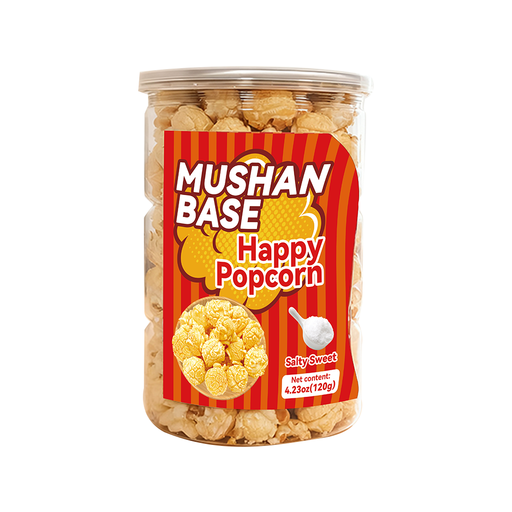 Image unavailable
Suited to anyone looking for a snack that needs no preparation and who wants to weigh out the amount they eat.
The product information lists 541 kcal per 100 g. This is above the maximum of 40 kcal (170 kJ) per 100 g required for a ‘low calorie’ claim on solid foods (European Commission; Netherlands Food and Consumer Product Safety Authority).
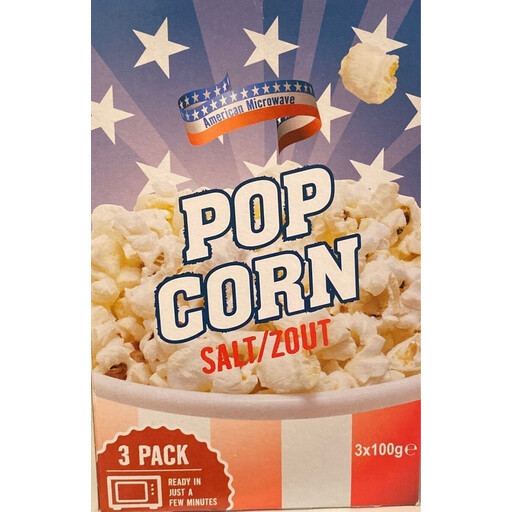 Image unavailable
Suited to anyone who wants to make popcorn at home in the microwave and prefers a fixed recipe.
The product information lists microwave preparation, a pack size of 3 × 100 g and 510 kcal per 100 g. This label value is above the maximum of 40 kcal (170 kJ) per 100 g required for a ‘low calorie’ claim on solid foods (European Commission; Netherlands Food and Consumer Product Safety Authority).
 Image unavailable
Suited to anyone who wants to assess the energy in a weighed portion of salted popcorn using the product information.
The product information lists 543 kcal per 100 g. This is above the maximum of 40 kcal (170 kJ) per 100 g required for a ‘low calorie’ claim on solid foods (European Commission; Netherlands Food and Consumer Product Safety Authority).
No. For a nutrition claim meaning ‘low calorie’, solid foods must contain no more than 40 kcal (170 kJ) per 100 g. A small portion does not meet this product-level condition. For ‘reduced energy’, the European Commission requires an energy reduction of at least 30% and the characteristic responsible for the reduction must be stated; the Netherlands Food and Consumer Product Safety Authority points to the applicable European rules on claims.
Add up the energy from the dried corn, oil and toppings you use, then work out what proportion of the recipe you eat. Albert Heijn lists 374 kcal per 100 g for AH Biologisch Popcorn mais; this value is for dried corn, not your fully prepared recipe.
Follow the instructions on the exact pack and stay nearby while it pops. Albert Heijn warns that the bag is hot and contains steam, so it must be opened carefully. Jumbo says that children should only prepare it under supervision and that you should not restart the cooking process after an interruption.
No. The fact that popcorn contains carbohydrates does not, by itself, mean it does. The Netherlands Nutrition Centre highlights the importance of getting enough carbohydrates during endurance sport; the general statement that popcorn contains carbohydrates does not prove that a particular shop-bought variety or portion meets all your needs during a ride.
Follow the storage advice on the exact pack. Albert Heijn recommends storing AH Zoute popcorn in a cool, dark, dry place and sealing it well after use. The Netherlands Food and Consumer Product Safety Authority distinguishes between ‘best before’ and ‘use by’ dates; Albert Heijn’s advice to look, smell and taste the product after its best-before date applies to that product listing and is not an exemption for a product carrying a safety warning.