
Hosts who are mindful of portions
You want to serve popcorn and make an informed choice about how much energy your party portion provides. To compare, use values based on the same weight and distinguish a smaller portion from a low-energy claim.


Choose popcorn based on the nutritional information for the exact variety and the amount you’ll actually serve. A smaller portion isn’t the same as a product carrying a low-energy claim. Then consider your preferred flavour, the time you have for preparation and your guests’ needs. The Voedingscentrum’s general popcorn value can help you calculate portions, but it isn’t the nutritional information for a specific supermarket product.
You want to serve popcorn and make an informed choice about how much energy your party portion provides. To compare, use values based on the same weight and distinguish a smaller portion from a low-energy claim.
You want to decide in advance how much work suits your party: put out ready-to-eat popcorn, prepare microwave popcorn or pop and season it yourself.
You’re taking allergies or young children into account. Check the ingredients and allergen information on the packaging. The Voedingscentrum also lists popcorn as a food that children can choke on, so this is worth bearing in mind if young children will be there.
Start with the nutritional information for the exact variety and the portion you plan to serve. Then decide which flavour and preparation method will suit your party.
| What to consider | What should you check? | Who should pay particular attention? |
|---|---|---|
| Energy per portion | Check the energy per 100 g for the exact variety, the preparation basis and the weight of your portion. Include any additions. | If I want to know how much energy my party portion provides, I compare labels on the same basis. Around 36% of consumers put the energy in a portion first. |
| Preparation | Check whether the popcorn is ready to eat or needs preparing, and whether you have the required pan or microwave. | If I want to spend little time preparing food during the party, the convenience of the option I choose matters. Around 29% of consumers prioritise convenience when it comes to preparation. |
| Flavour | Look at the flavour and ingredients. Seasoning it yourself gives you a different option from choosing a ready-flavoured variety. | If I want to choose a flavour my guests will enjoy, I look beyond the flavour name alone. Around 21% of consumers prioritise how well the flavour will be received. |
| Guests’ specific needs | Check the latest ingredients and allergen information, and consider whether popcorn is suitable for any young children attending. | If a guest has an allergy or a young child will be there, I check the packaging and suitability separately. Around 14% of consumers prioritise guests’ specific needs. |
For solid foods, the European Commission sets a maximum of 40 kcal (170 kJ) per 100 g for a ‘low energy’ claim. A claim that a product has reduced energy requires at least 30% less energy, and the characteristic responsible for the reduction must be stated. A smaller portion on its own doesn’t prove that a product meets these conditions.
A smaller portion of a product may provide less energy than a larger portion of the same product, but it doesn’t change the nutritional value per 100 g. For solid foods, the European Commission bases a low-energy claim on a maximum of 40 kcal (170 kJ) per 100 g.
First compare the nutritional information per 100 g, then calculate the energy in the amount you’ll actually serve.
The Voedingscentrum gives 154 kcal per 40 g bowl as a general reference, not as the product specification for every flavour or preparation method. Albert Heijn warns that product information, including nutritional values, may change.
Use the current label for the exact variety and check whether the nutritional information applies to the product as sold or after preparation.
The Voedingscentrum lists popcorn as a food that children can choke on. A smaller portion doesn’t remove this concern.
If young children will be there, first consider whether popcorn is a suitable snack for your guests.
Albert Heijn lists salted popcorn and salted microwave popcorn. This gives you a choice between a ready-made popcorn variety and microwave preparation.
Jumbo lists ready-to-eat salted and sweet popcorn, as well as microwave popcorn in salted and sweet varieties.
Lidl lists Snack Day Sea Salt Popcorn in a 200 g pack as an in-store product.
ALDI Nederland lists SUN SNACKS Salted Popcorn in a 100 g pack.
These products come in a range of flavours and pack formats, with different preparation options. Before choosing, check the nutritional information for the exact variety and the portion you plan to serve.
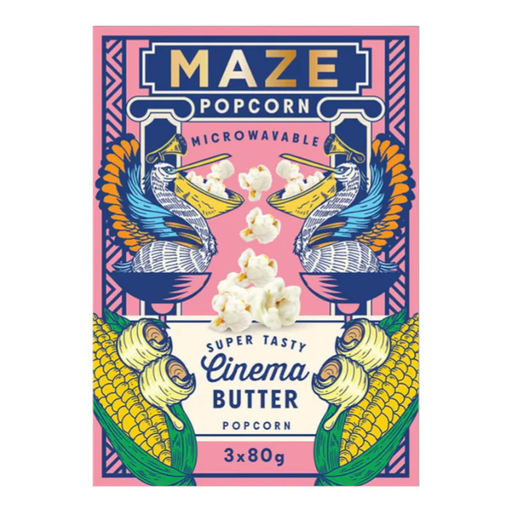 No image available
The product name describes cinema-flavoured popcorn in a 240 g pack.
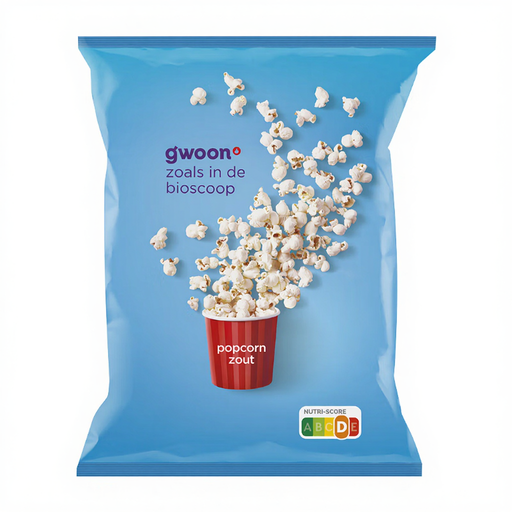 No image available
The product name describes salted popcorn in a 100 g pack.
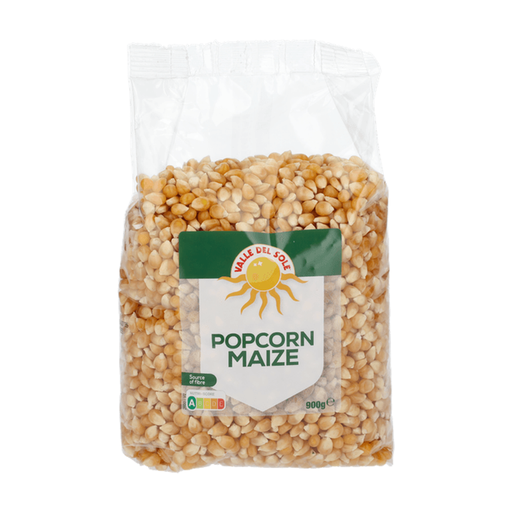 No image available
An option if you want to pop your own popcorn; the product description suggests cooking it in a pan with oil and a lid.
Include any additions when calculating the nutritional value of your prepared portion.
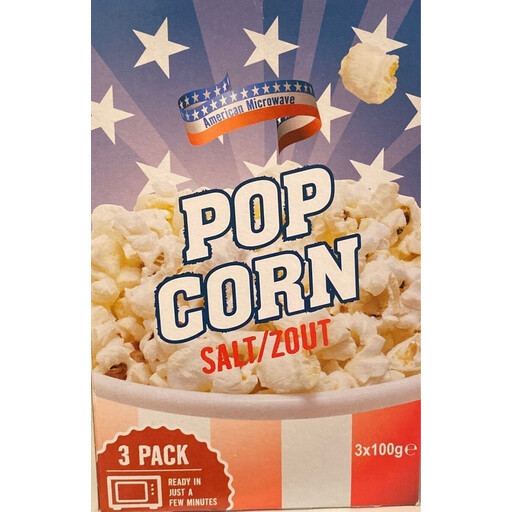 No image available
The product description lists three 100 g bags and microwave preparation.
The stated nutritional value is 510 kcal per 100 g. For solid foods, the European Commission sets a maximum of 40 kcal per 100 g for a ‘low energy’ claim.
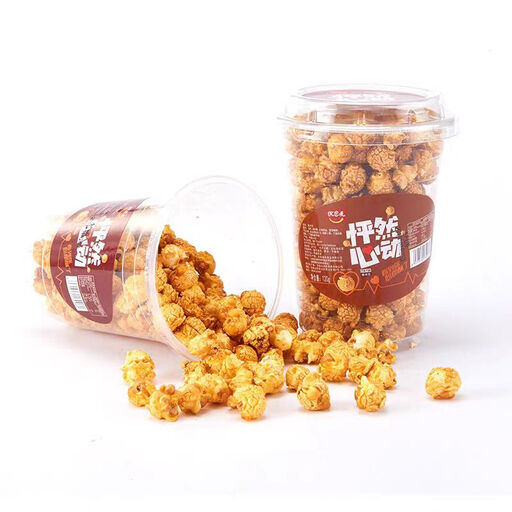 No image available
The product description lists caramel, sugar and glucose syrup.
The stated nutritional value is 502 kcal per 100 g. For solid foods, the European Commission sets a maximum of 40 kcal per 100 g for a ‘low energy’ claim.
No. Nutrition claims have to meet certain conditions. For solid foods, the European Commission sets a maximum of 40 kcal (170 kJ) per 100 g for a ‘low energy’ claim. A claim that a product has reduced energy requires at least 30% less energy, and the characteristic responsible for the reduction must be stated. A small portion on its own doesn’t prove that a product meets these conditions.
Multiply the energy per 100 g for the exact variety by the portion weight in grams, then divide by 100. As an example, using the Voedingscentrum’s general value of 154 kcal per 40 g, a 20 g portion provides 77 kcal. This result applies to that reference value and not automatically to a branded product.
Yes. The Voedingscentrum suggests cinnamon or spiced biscuit seasoning as flavour options for homemade popcorn. Check the ingredients in the seasoning you use and include any additions; this preparation suggestion doesn’t prove that the popcorn is low-calorie or allergen-free.
No. Consider this separately if young children will be there. The Voedingscentrum lists popcorn as a food that children can choke on. This is safety advice, not a legally established minimum age.
No. The Voedingscentrum doesn’t guarantee that the ingredients used in its recipe are free from allergens. So check the current packaging, as well as the ingredients in any seasonings or other products you add yourself.