What should you look for when choosing?
Start by identifying your main nutritional priority, then decide whether you want to prepare your popcorn in advance or take it with you ready to eat. The percentages below reflect the different needs people have when buying popcorn to enjoy with coffee on the go.
| What to consider |
What to check |
Who is this important for? |
| Fat content and claims |
Compare fat per 100 g. For solid foods, the European Commission sets a maximum of 3 g of fat per 100 g for a ‘low fat’ claim; this is not the limit for a ‘reduced fat’ claim. |
If less fat is my main priority, I compare figures on the same basis and check the exact claim. Around 36% of consumers put limiting fat first. |
| Taking it with you straight away |
Check whether the popcorn is ready to eat or needs to be prepared; also check the net weight and storage advice on the packaging. |
If I want to head out without any extra preparation, I weigh up the convenience against the fixed recipe and my own portion size. Around 29% of consumers prioritise being able to take it with them straight away. |
| Sugar, energy and portion size |
Compare sugar and kcal per 100 g, then calculate the figures for the amount you’ll actually eat. For the sweet popcorn examined, Albert Heijn lists 45 g of sugar and 419 kcal per 100 g. |
If I mainly want to consider sugar or energy, I look beyond the fat content alone. Around 21% of consumers put sugar or energy ahead of limiting fat. |
| Preparation and ingredients |
When preparing it yourself, factor in oil and toppings; compare the preparation involved with a variety you can take with you straight away. |
If I want to make my snack in advance, I check how many steps and ingredients are involved. Around 14% of consumers prioritise preparation and the ingredients needed. |
Popcorn at Joybuy
This selection includes ready-to-eat salted and sweet popcorn, as well as a variety that the product information says is prepared in the microwave. Compare each variety individually and choose according to your portion and when you plan to eat the popcorn.
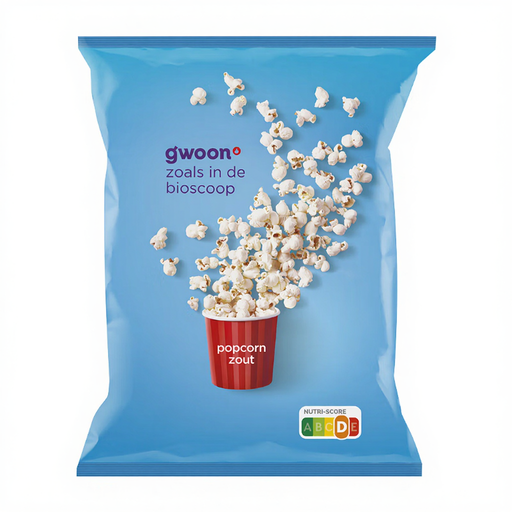 No image available
g'woon Salted Popcorn, 100 g
The product name indicates a salted popcorn variety in a 100 g pack; weigh out your own portion to take with you.
View at Joybuy
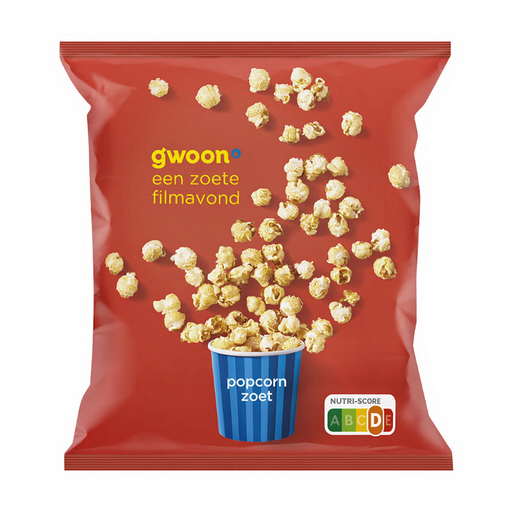 No image available
g'woon Sweet Popcorn, 175 g
This sweet variety may suit you if you want to take popcorn with you straight away, but the product information also lists sugar and energy values you may want to consider.
Per 100 g, the product information lists 4 g of fat, 44,5 g of sugar and 419 kcal. The pack contains 175 g.
View at Joybuy
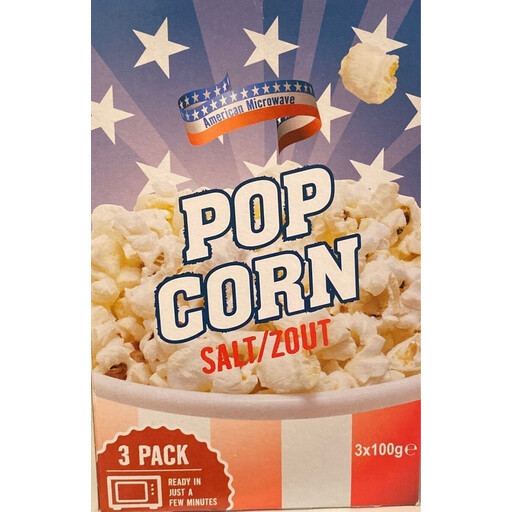 No image available
Pop Corn, 3 x 100 g
The product information says it is prepared in the microwave, so bear in mind that you’ll need to prepare this variety before taking it with you.
Per 100 g, the product information lists 23 g of fat, 1 g of sugar and 510 kcal.
View at Joybuy
Frequently asked questions
When can popcorn be called ‘low fat’ in the Netherlands?
For solid foods, the European Commission sets a maximum of 3 g of fat per 100 g for a ‘low fat’ claim. A small portion doesn’t change the assessment per 100 g.
How do you make popcorn with a measured amount of oil?
The Voedingscentrum recipe uses 50 g of popping corn, 1 teaspoon of oil and herbs in a pan with a well-fitting lid. Include the oil and any other additions when assessing the nutritional value of your prepared portion; the recipe doesn’t prove that the popcorn meets the ‘low fat’ claim.
What should you look out for with microwave popcorn?
Follow the instructions on the packaging for the exact variety. The instructions for AH Magnetron Popcorn Zout vary according to microwave wattage and advise you to stay by the microwave; the bag may be hot and steam may escape when you open it.
How should you store an opened bag of popcorn?
The storage advice for the ready-to-eat AH popcorn examined here is to keep it in a cool, dark and dry place and reseal the pack securely after use. Follow the storage and best-before information on your own pack.
Is popping corn automatically suitable if you need to avoid gluten or soya?
No, check the information on the exact pack. Albert Heijn states that its organic popping corn may contain gluten-containing cereals, soya and wheat. The Netherlands Food and Consumer Product Safety Authority explains that allergens must be clearly stated on the label.
How do you compare homemade popcorn with ready-to-eat popcorn?
Compare the amount you actually eat and, if you make it yourself, include the oil and seasonings you use. Dry corn cannot simply be compared gram for gram with prepared popcorn as a snack to take with you.


