If you have coeliac disease, first choose popcorn whose suitability for a strict gluten-free diet is clear from the information on the specific packaging. Then compare the protein content with the portion you actually eat: the Netherlands Nutrition Centre lists 5.2 g of protein per 40 g serving for popcorn in general, but this is not the nutritional value of a specific branded product. According to the Netherlands Nutrition Centre, most people who take part in sport do not need special high-protein snacks if they eat a varied diet.
Who is this choice relevant to?
People with coeliac disease who take part in sport
You want to know whether popcorn fits into your gluten-free shopping and how much protein your portion provides. The Netherlands Nutrition Centre gives general nutritional values for popcorn; don’t use these as the label values for a branded product.
Label-conscious snack shoppers
You check the information on the specific packaging, including the gluten-free label and any warnings. The Dutch Coeliac Society recommends reading labels carefully.
Practical meal planners
You’re choosing between ready-to-serve popcorn and a microwave version. The preparation method doesn’t remove the need to prevent cross-contamination during preparation and serving.
What should you look for when buying?
Popcorn positioned as a high-protein snack
A good fit when: extra protein is your main reason for buying and you can assess the nutritional values for your own portion.
Bear in mind: a product name doesn’t tell you how much protein is in your portion or prove that it’s suitable for coeliac disease.
Regular popcorn as a snack
A good fit when: you mainly want to eat popcorn and are considering your protein intake as part of your overall diet.
Bear in mind: the Netherlands Nutrition Centre’s general reference isn’t a nutritional declaration for a specific variety.
| What to consider |
What should you check? |
Who is this most important for? |
| Gluten-free suitability |
Check the exact variety, the gluten-free label and any cross-contamination warnings. The Dutch Coeliac Society recommends reading the label carefully. |
If I’m buying popcorn for someone with coeliac disease, I want to know first whether that specific variety is suitable for a strict gluten-free diet. Around 39% of consumers prioritise this reassurance from the label. |
| Protein per serving |
Compare the protein and energy values for the same serving size with the product’s nutrition table. The Netherlands Nutrition Centre lists 5.2 g of protein and 154 kcal per 40 g for popcorn in general; these aren’t values for a branded product. |
When I want to include popcorn in my sports diet, I want to know what the portion I actually eat contributes. Around 38% of consumers prioritise the protein content of the serving. |
| Preparation and serving |
Choose a type that suits your needs and follow the instructions on the packaging. The Dutch Coeliac Society recommends using clean utensils, washing your hands and cleaning the work surface to prevent cross-contamination. |
If I’m taking popcorn with me or preparing it at home, I want a type that suits the occasion and helps prevent cross-contamination. Around 23% of consumers prioritise convenience. |
Common mistakes
-
Assuming a high-protein name proves it’s suitable for a gluten-free diet
A nutrition claim and an assessment of suitability for coeliac disease are two different things.
First check the information on the packaging for that exact variety, then look at the nutrition table.
-
Using general popcorn values for a branded product
The Netherlands Nutrition Centre’s reference of 5.2 g of protein per 40 g describes popcorn in general, not the supermarket products reviewed.
Use the general value for context only, and work out the contribution using the nutrition table for the product you’re buying.
-
Confusing another snack or a party box with popcorn
Croky lists Pop’d potatoes as one of its product lines; Smiths Sticks Paprika is a potato and maize snack. The Croky party box reviewed contains several snacks and other items, so it’s not clear which brand the individual popcorn is.
Compare popcorn with popcorn. If you’re looking at a bundle, check the information for the individual popcorn item, not just the name on the box.
-
Forgetting about cross-contamination after you’ve bought it
Popcorn can accidentally come into contact with gluten during preparation or serving.
Follow the Dutch Coeliac Society’s advice: use clean hands and utensils, clean the work surface and keep the popcorn separate from snacks containing gluten.
Brands for reference
Albert Heijn
The product pages reviewed are for AH Salted Popcorn and AH Microwave Popcorn Salt.
- The products are available as regular and microwave popcorn.
- Albert Heijn warns that ingredients, nutritional values and allergy information can change. So check the current packaging; the product listing doesn’t prove a protein claim or suitability for a gluten-free diet.
Jumbo
The product range includes salted, sweet and microwave popcorn, among other varieties.
- The range offers product names and preparation types to compare.
- A product appearing in the popcorn category doesn’t, by itself, prove a protein claim or suitability for coeliac disease.
Lidl
The Dutch product page reviewed is for Snack Day Sea Salt Popcorn, 200 g.
- The product page states the flavour and net weight.
- The product listing doesn’t support a protein claim or confirm suitability for a gluten-free diet; check the information on the current packaging.
Aldi
The Dutch product page reviewed identifies Sun Snacks Salted Popcorn, 100 g.
- The product name makes the variety and net weight clear.
- The name and packaging don’t prove a protein claim or suitability for coeliac disease.
Croky
The official Dutch product range includes crisps and Pop’d potatoes, among other products. A retailer’s page also describes a party box containing crisps, sweet popcorn and other items.
- The available product information distinguishes between the snack types mentioned.
- Pop’d potatoes aren’t popcorn. The party box information doesn’t confirm the brand of the individual popcorn item or its nutritional values and gluten status.
Smiths
The Smiths Sticks Paprika product reviewed is a potato and maize snack.
- The product description lists potato and maize as its ingredients.
- This product isn’t popcorn, so it isn’t a popcorn option for this comparison.
Popcorn at Joybuy
The product below is regular salted popcorn. If you have coeliac disease, first check the current packaging for information about gluten-free suitability and cross-contamination.
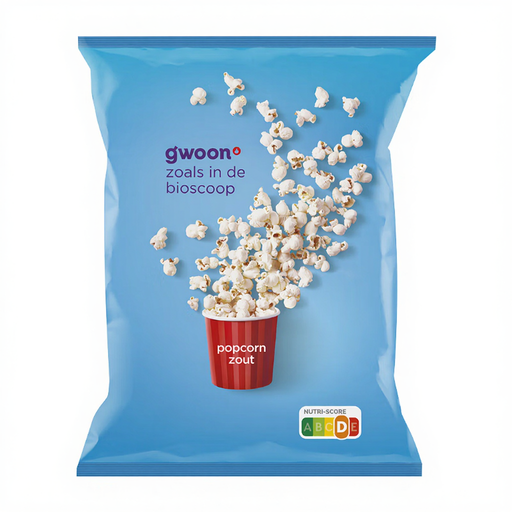 No image available
g'woon Salted Popcorn 100 g
If you’re looking for regular salted popcorn and want to take the protein content per serving into account, check the current packaging for gluten-free suitability and warnings before buying.
The product information lists 8.3 g of protein and 543 kcal per 100 g, with maize, sunflower oil and salt as ingredients. Adjust the values to match the portion you actually eat.
View at Joybuy
Frequently asked questions
Is coeliac disease the same as a gluten allergy?
No. The Netherlands Nutrition Centre distinguishes between coeliac disease, gluten allergy and gluten intolerance. So don’t assess a product for someone with coeliac disease based only on general allergen information.
Do you always need to buy a special high-protein snack if you take part in sport?
No. According to the Netherlands Nutrition Centre, most people who take part in sport don’t need special protein shakes or bars if they eat a varied diet. Consider the contribution of popcorn as part of your overall diet.
How can you prevent cross-contamination when preparing or sharing popcorn?
Use clean hands and utensils, and clean the work surface. Keep popcorn separate from snacks containing gluten, and make sure hands or other foods don’t transfer gluten to the popcorn.
What do Dutch rules mean for a ‘may contain’ warning?
The Netherlands Food and Consumer Product Safety Authority says that new rules for warnings about the unintended presence of allergens have applied since 1 January 2026. Businesses must assess the risk; if reference values aren’t exceeded, they aren’t allowed to put a warning on the label. This general allergen policy doesn’t replace an assessment of the specific popcorn for someone with coeliac disease.
What should you do if the online product information differs from the packaging?
Use the current packaging as your guide and check the ingredients, nutritional values and allergy information on it. Albert Heijn recommends reading the packaging before eating the product and contacting customer services if you have any questions.


