Who is this popcorn choice relevant to?

Party planners who are mindful of portions

You want to serve popcorn and know how much energy you’re offering each guest. Compare the same weight of ready-to-eat popcorn and weigh out the portions. Product labels from Albert Heijn and Jumbo, along with portion information from the Netherlands Nutrition Centre, can help you make that comparison.

Hosts short on preparation time

You want to serve popcorn quickly and are choosing between popcorn that’s ready to eat and popcorn that still needs popping. The preparation method and packaging both matter; product information from Jumbo and Lidl describes different options.

Hosts who want control over added ingredients

You want to decide for yourself what to add to the popcorn and take any potential allergens for your guests into account. Making it yourself lets you choose the recipe, but remember to check the warnings on the packaging too. The Netherlands Food and Consumer Product Safety Authority (NVWA) explains where allergen information appears on pre-packed products.

What should you consider when choosing popcorn for a Christmas party?

First decide what matters most to you: the energy in each portion, the flavour, how easy it is to serve or whether it’s suitable for your guests.

What to consider What should you look for? Who is this most relevant to?
Calories per portion Compare kcal per 100 g on the same product basis and weigh your portion. Calculate the portion using: kcal per 100 g × portion weight in grams ÷ 100. If I want to keep track of the energy on the Christmas table, I need to know how many grams I’m serving, not just how large the bowl looks. Around 36% of consumers prioritise portion weight and kcal.
Flavour, sugars and fats As well as the flavour, check the sugar and fat values per 100 g. The Albert Heijn and Jumbo labels list these alongside the energy value. If I choose sweet or savoury popcorn, I want to know how that affects the nutritional values. Around 29% of consumers place the most importance on flavour and how it relates to sugars and fats.
Preparation and quantity Check whether you’re buying ready-to-eat popcorn, dry kernels or a microwave variety. These forms don’t have the same preparation basis or yield the same quantity of ready-to-eat snack. If I’m serving a group, I want to know how much preparation is needed and how the pack translates into portions. Around 21% of consumers prioritise ease of serving.
Allergens Read the warnings on the exact pack. Jumbo Popcorn Salt states that it may contain milk; AH Organic Popcorn Kernels lists possible traces of cereals containing gluten, soya and wheat. If a guest has a food allergy, I want to check the product information in advance and keep the packaging available when serving. Around 14% of consumers prioritise suitability for guests with allergies.

Common pitfalls when choosing popcorn

  • Confusing a small portion with a low-calorie product

    A smaller portion contains less energy overall because you eat less, but it doesn’t change the kcal per 100 g of the product. For solid foods, the European Commission sets a maximum of 40 kcal per 100 g for the ‘low energy’ claim. The declared values for the AH and Jumbo ready-to-eat varieties examined are above this limit.

    Weigh your portion and calculate the energy using the label. Don’t use the claim ‘low calorie’ unless the product meets the relevant requirements.

  • Assuming that savoury popcorn always contains fewer calories than sweet popcorn

    For the four ready-to-eat AH and Jumbo products examined, the official labels state 406 and 419 kcal per 100 g for the sweet varieties, compared with 481 and 543 kcal for the savoury varieties. The sweet varieties also contain more sugars: 48.6 and 45 g per 100 g, compared with 0.6 and 1.2 g for the savoury varieties. This is a comparison of these four products, not a claim about all popcorn.

    Compare energy, sugars and fats per 100 g, then choose based on what matters most for your party.

  • Comparing dry kernels, microwave popcorn and ready-to-eat popcorn on the same basis

    The weight of dry kernels or a microwave bag isn’t equivalent to the same weight of popped popcorn. When making it yourself, the amount of oil and any other ingredients you actually use also count.

    Calculate the energy in the ingredients you use and divide it across the portions you actually serve. Use the preparation instructions on the packaging as your starting point.

    Making popcorn yourself also takes time and preparation, so bear that in mind if you’re planning to serve it just before the party.

  • Assuming that corn is automatically suitable for every guest with an allergy

    The word ‘corn’ doesn’t tell you everything about potential allergens or cross-contamination. AH Organic Popcorn Kernels lists possible traces of cereals containing gluten, soya and wheat; Jumbo Popcorn Salt states that it may contain milk.

    Check the packaging for the exact product and choose according to your guest’s allergy. Don’t rely on the main ingredients alone.

Brands and product ranges to consider

Albert Heijn

The product ranges examined include sweet and savoury ready-to-eat popcorn, as well as organic popcorn kernels for popping at home.

  • The official labels state 419 kcal per 100 g for AH Sweet Popcorn and 543 kcal per 100 g for AH Salted Popcorn. These values apply to these products, not the whole brand.
  • AH Organic Popcorn Kernels give you the option to choose your own additions; the product information describes cooking them in a pan with oil.
  • The pack of kernels lists possible traces of cereals containing gluten, soya and wheat. So being organic doesn’t automatically mean the product is suitable for every guest with an allergy.

Jumbo

The options examined include ready-to-eat sweet and savoury popcorn, as well as a microwave variety for popping at home.

  • According to the official Jumbo labels, Jumbo Sweet Popcorn contains 406 kcal per 100 g and Jumbo Salted Popcorn 100 g contains 481 kcal per 100 g.
  • The different preparation methods give you a choice between serving it straight away and popping it yourself.
  • Jumbo Salted Popcorn states that it may contain milk. For the microwave variety, follow the instructions on the packaging and don’t compare its nutritional values with ready-to-eat popcorn unless you’re using a clear, like-for-like preparation basis.

Lidl / Snack Day

Lidl describes Snack Day as its own brand, offering sweet and savoury popcorn. The sea salt variety examined is an option if you’re looking for a savoury flavour.

  • The Lidl product page lists Snack Day Sea Salt Popcorn in a 200 g pack and states that it’s ‘in store only’.
  • The product description can help you choose by flavour and pack size, but it doesn’t support any conclusions about calories or health.

ALDI / Sun Snacks

The official Dutch product page identifies Sun Snacks Salted Popcorn as a ready-to-eat savoury option.

  • The ALDI product page lists a 100 g pack.
  • The name and pack weight alone aren’t enough to draw conclusions about energy, sugars or suitability for people with allergies.

Popcorn options at Joybuy

This selection includes microwave popcorn, kernels for popping at home and ready-to-eat varieties. Compare the nutritional values per 100 g and per portion you actually serve. For kernels and microwave popcorn, also take the preparation method into account.
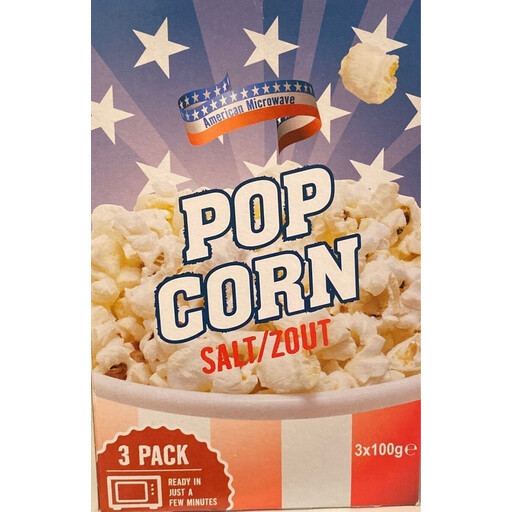
Pop Corn microwave popcorn, 3 x 100 g

Pop Corn microwave popcorn, 3 x 100 g

The pack contains three 100 g bags, and the product description says they’re prepared in the microwave.

Follow the preparation instructions on the packaging and compare the nutritional values on an appropriate preparation basis.

View at Joybuy
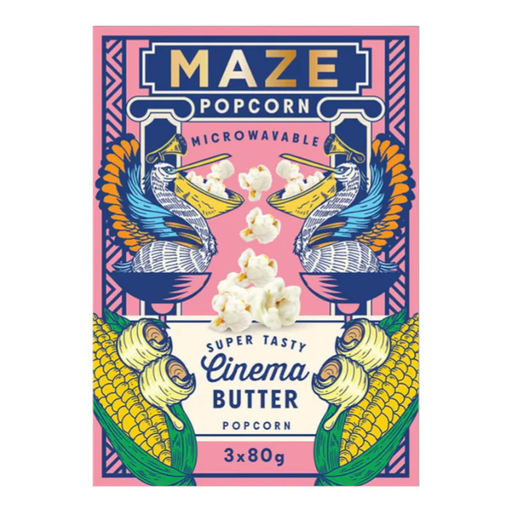
Snack Maze Cinema Butter popcorn, 240 g

Snack Maze Cinema Butter popcorn, 240 g

Butter-flavoured popcorn in a 240 g pack; the product description suggests it for parties and sharing.

Weigh the amount you serve if you want to calculate the energy per portion.

View at Joybuy
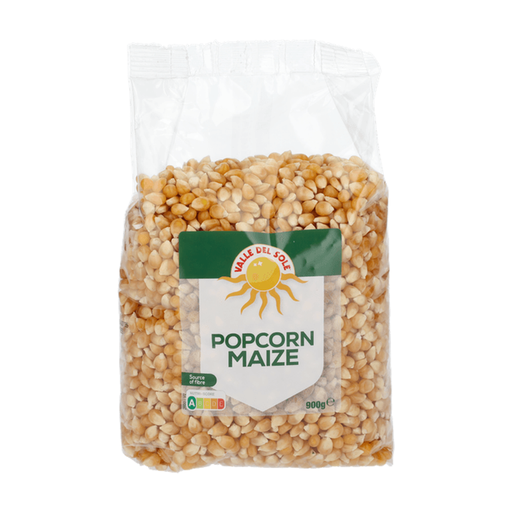
Valle Del Sole Butterfly popcorn kernels, 900 g

Valle Del Sole Butterfly popcorn kernels, 900 g

Popcorn kernels for making your own popcorn and choosing what to add.

The pan-cooking method described uses vegetable oil and takes some preparation. Include the oil you use when calculating the energy in your portion.

View at Joybuy
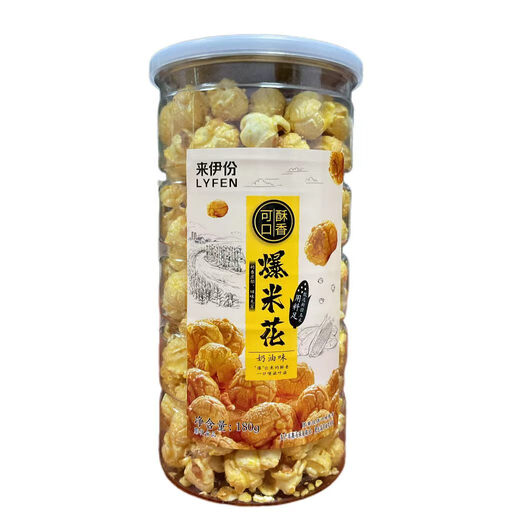
LYFEN popcorn, 180 g

LYFEN popcorn, 180 g

A ready-to-eat option if you want to serve popcorn without popping it yourself.

The product information lists 530 kcal and 33.1 g of sugars per 100 g. The product contains soya.

View at Joybuy
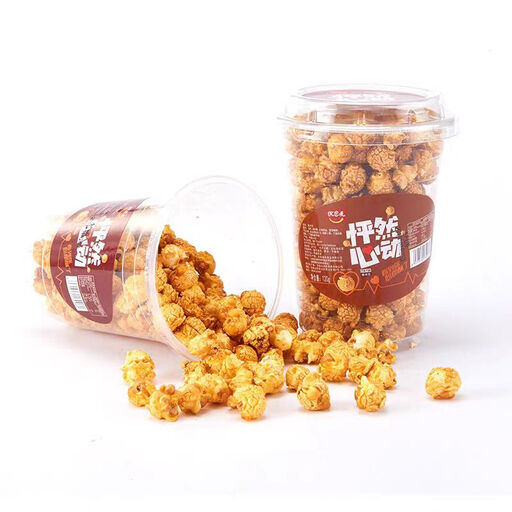
Yousmai Pengranxindong caramel popcorn, 120 g

Yousmai Pengranxindong caramel popcorn, 120 g

Ready-to-eat caramel popcorn in a 120 g pack.

The product information lists 502 kcal and 35 g of sugars per 100 g. The product contains milk.

View at Joybuy

Frequently asked questions about popcorn for a Christmas party

Can popcorn be described as a low-energy food?

Only if the product meets the requirements for that claim. For solid foods, the European Commission sets a maximum of 40 kcal (170 kJ) per 100 g for the ‘low energy’ claim. According to their official labels, the AH and Jumbo ready-to-eat products examined are above this limit, so give specific nutritional values and portion weights instead.

How do I calculate the energy in homemade popcorn?

Add together the energy in the kernels and all the ingredients you actually use, then divide the total across the portions you serve. Don’t use the nutritional value for dry kernels directly as the value per 100 g of popped popcorn. For example, the Netherlands Nutrition Centre lists 151 kcal per 40 g bowl for the category of popcorn popped without oil or salt.

Does sweet popcorn always contain more calories than savoury popcorn?

Not in the comparison examined: according to the Jumbo and Albert Heijn labels, their sweet varieties contain 406 and 419 kcal per 100 g, while their savoury varieties contain 481 and 543 kcal per 100 g. In this comparison, the sweet varieties do contain more sugars. This applies only to these four products, not every type of popcorn.

What should I check if a guest has a food allergy?

Check the allergen information and warnings on the packaging for the exact product, then choose accordingly. Jumbo Salted Popcorn states that it may contain milk; AH Organic Popcorn Kernels lists possible traces of cereals containing gluten, soya and wheat. Keep the packaging available when serving.

What should I know about Jumbo Microwave Salted Popcorn?

Follow the manufacturer’s preparation instructions on the packaging. For Jumbo Microwave Salted Popcorn, the manufacturer says not to restart cooking after it has been interrupted. Don’t use a general cooking time instead of the instructions for this product.
