What should you look for when choosing?
First decide whether managing fat, calories per serving, convenience or flavour matters most to you. Then compare the nutritional information on a like-for-like basis.
Make your own popcorn
Choose this if: you want to decide how much oil, sugar or salt to add.
Bear in mind: you’ll need to prepare the corn and count any additions; dry popping corn is not fat-free.
Ready-to-eat sweet popcorn
Choose this if: convenience and a sweet flavour matter to you, and you can weigh out a portion.
Bear in mind: the sweet AH and Jumbo varieties list 45 and 48,6 g of sugars per 100 g respectively.
Ready-to-eat salted popcorn
Choose this if: you want a savoury snack without having to prepare it.
Bear in mind: the salted Jumbo variety lists 23,9 g of fat per 100 g; check the nutritional information on the specific pack.
Microwave popcorn
Choose this if: you want to pop popcorn at home using a ready-prepared bag.
Bear in mind: the recipe is fixed. Check total fat and saturated fat, and follow the preparation instructions for your chosen variety.
| What to consider |
What should you check? |
Who is this most important for? |
| Fat in your portion |
Check total fat per 100 g, the ingredients and how much oil goes into the portion you prepare. |
If you want to decide how much fat you eat, remember to include any oil you add during preparation. Around 34% of consumers prioritise managing their fat intake. |
| Calories per serving |
Use the kcal per 100 g alongside the weight of your own portion, using the same preparation basis. |
If you want to know how much energy you’re actually eating, weigh your portion rather than treating the whole pack as one serving. Around 33% of consumers prioritise calories per serving. |
| Ease of preparation |
Check whether you’re buying dry popping corn, ready-to-eat popcorn or a microwave bag, and follow the instructions. |
If you want to do as little preparation as possible before snacking, a ready-to-eat variety may suit you; microwave popcorn still needs to be prepared correctly. Around 20% of consumers prioritise convenience. |
| Flavour and recipe |
For sweet varieties, check the sugars; for recipes higher in fat, check the saturated fat too. |
If you’re mainly looking for a sweet, salted or seasoned flavour, compare the ingredients and nutritional information rather than relying on the flavour name alone. Around 13% of consumers prioritise flavour. |
Popcorn products at Joybuy
This selection includes dry maize for popping at home and ready-to-eat popcorn. Check the nutritional information and serving size for each variety.
 No image available
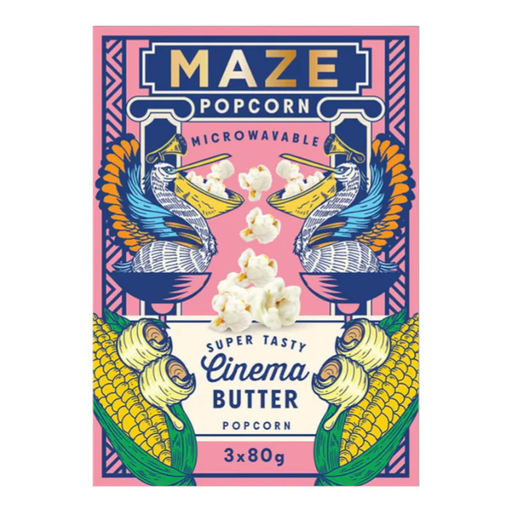
SNACK MAZE Popcorn Cinema Butter, 240 g
A ready-to-eat option if you’re looking for butter-flavoured popcorn; check the nutritional information on the pack when comparing fat or calories.
View at Joybuy
 No image available
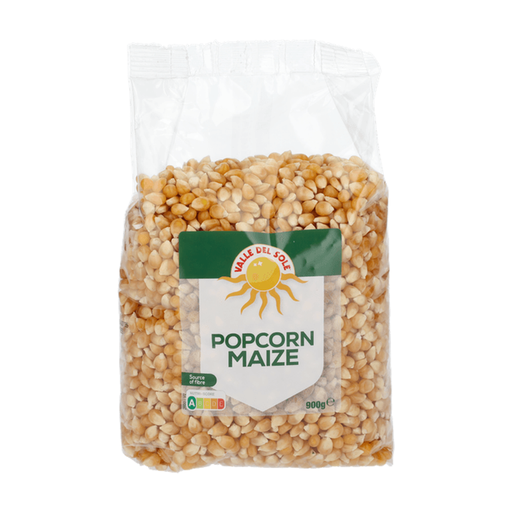
Valle Del Sole Popcorn Maize (Butterfly), 900 g
Dry popping corn for making your own popcorn and measuring out the additions; the preparation information recommends cooking it in a pan with vegetable oil, which you should include in your comparison.
View at Joybuy
 No image available
g'woon Salted Popcorn, 100 g
A ready-to-eat salted variety; check the nutritional information per 100 g and compare it with the amount you actually eat.
View at Joybuy
 No image available
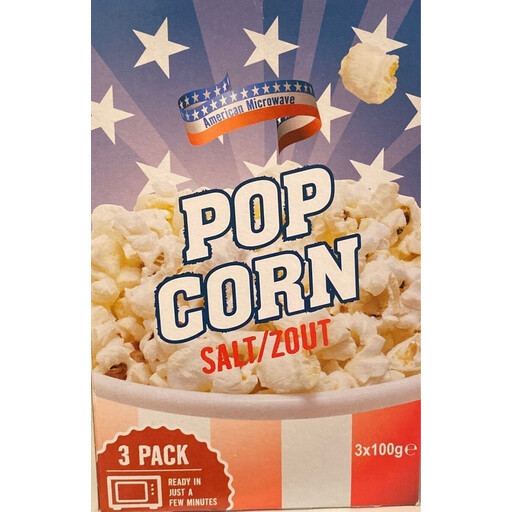
Pop Corn, 3 x 100 g
A popcorn product in three packs that, according to its product name, is intended for microwave preparation; follow the instructions on the specific pack.
View at Joybuy
 No image available
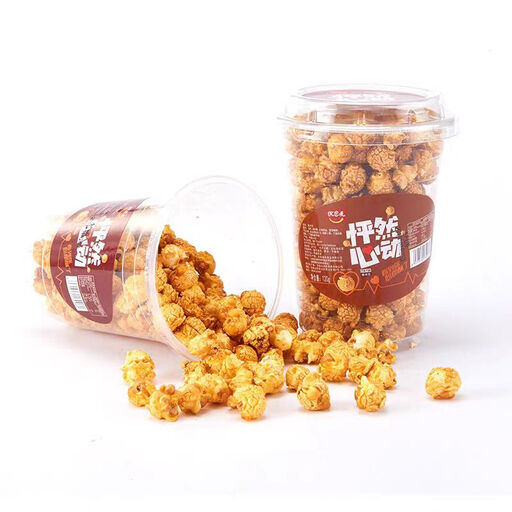
Yousmai Pengranxindong Popcorn (Caramel), 120 g
A ready-to-eat caramel variety if you’re looking for a sweet flavour; compare the nutritional information and serving size with your own preferences.
View at Joybuy
Frequently asked questions
Can popcorn with few calories per serving be described as low calorie?
No, not on the basis of the serving alone. According to the European Commission, solid foods must contain no more than 40 kcal (170 kJ) per 100 g to carry the low-calorie or low-energy claim; the limit for the low-fat claim is 3 g of fat per 100 g. You can, however, state the nutritional value of a weighed portion as a fact.
What does the claim ‘reduced energy value’ mean?
According to the European Commission, a product must contain at least 30% less energy than a comparable product to make this claim, and it must state which property accounts for the lower energy value. This is a different claim from low calorie.
How do I compare the calories in my portion of popcorn?
Use the kcal per 100 g and the weight of the amount you eat, using the same preparation basis. Albert Heijn lists a 25 g label serving for AH Popcorn zoet; if you eat more, calculate using the actual weight.
What should I look out for with microwave popcorn?
Follow the instructions on your specific pack. For Jumbo Magnetron Popcorn Zout, Jumbo states that children should only prepare the popcorn under adult supervision and that you should not restart the cooking process after interrupting it.
Is popcorn made with only maize automatically suitable for people with allergies?
No. AH Biologisch Popcorn mais states that it may contain cereals containing gluten, soya and wheat. If this is relevant to you, check the allergen information on the current packaging.


