Who is this guide for?

Snackers who want to keep an eye on portions

If you want to snack mindfully while you’re on holiday, compare the nutritional information for the exact variety with the weight of your own portion. Jumbo points out that nutritional information is shown on the packaging.

Holidaymakers who want to take popcorn with them

If preparing popcorn while you’re out and about isn’t practical, check the product type and portion out how much you want to eat. The weight on the pack doesn’t automatically tell you how much your portion is.

People making popcorn in their holiday kitchen

If you want to choose your own additions and have a suitable pan and heat source, you can make popcorn using the ingredients you prefer. The Netherlands Nutrition Centre describes a method using a heavy-based pan with a well-fitting lid.

What should you look for when choosing?

Ready-to-eat popcorn

A good fit if: you want to take popcorn with you without preparing it while you’re out.

Bear in mind: the recipe and pack size are fixed, so decide for yourself how much to eat.

Microwave popcorn

A good fit if: your accommodation has a suitable microwave and you want to make popcorn there.

Bear in mind: follow the preparation instructions on the exact pack.

Making popcorn yourself

A good fit if: you have a suitable pan and heat source, and want to choose your own additions.

Bear in mind: preparation takes time, and you’ll need to include the oil and flavourings in your calculations.

What to consider What to look for Who is this important to?
Energy per portion Compare kcal per 100 g and calculate it for your portion: kcal per 100 g × grams eaten ÷ 100. Check whether the nutritional information applies to the product before or after preparation. If I want to match my bowl to my calorie target, I need to know how much energy my own portion provides. Around 36% of consumers prioritise the energy content of the amount they actually eat.
Taking it with you without preparation Check whether the popcorn is ready to eat and how many grams are in the pack. If I don’t have anywhere to prepare food while I’m out, I’m looking for popcorn I can take with me and portion out straight away. For around 29% of consumers, having a snack that needs no preparation is the top priority.
Choosing how it’s prepared Check that you have a suitable pan, lid and heat source, and include all the ingredients you use. With a holiday kitchen, I can choose how much oil and flavouring to use. Around 21% of consumers put control over preparation first.
Flavour and additions Check energy, sugars, salt and ingredients separately; one value doesn’t tell you about the others. If flavour is my main concern, I want to consider it separately from the nutritional information. Around 14% of consumers give flavour or additions top priority.

Common pitfalls

  • Confusing a small portion with a low-calorie product

    A smaller portion may contain less energy than a larger portion of the same product, but that doesn’t tell you whether the product meets the requirements for a nutrition claim.

    Compare the nutritional information per 100 g, then calculate the energy in the amount you actually eat. For solid foods, the European Commission says the ‘low energy’ claim can only be used for products containing no more than 40 kcal (170 kJ) per 100 g.

  • Treating a pack as a single portion

    A bag or microwave pack doesn’t determine how much popcorn you want to eat. What’s more, the identified varieties come in different pack sizes.

    Choose your portion separately from the pack size, and use the weight you actually eat in your calculation.

  • Only counting the popcorn kernels when making it yourself

    Oil and flavourings are part of the preparation too. Counting only the popcorn kernels won’t give you a complete picture of the ingredients you’re using.

    Keep track of the amounts of all the ingredients and divide the full batch into the portions you eat.

Brands and varieties to look out for

Albert Heijn

AH Salted Popcorn is an identified own-brand variety.

  • The product page recommends reading the packaging before eating.
  • ‘Salted’ in the product name doesn’t tell you anything about its energy content; check the nutrition table.

Jumbo

Jumbo has identified varieties of both ready-to-eat popcorn and popcorn for microwave preparation.

  • The product names distinguish between Salted Popcorn 100 g and Microwave Salted Popcorn 3 × 90 g.
  • For its microwave variety, Jumbo says not to restart preparation if it has been interrupted.

Lidl

Snack Day Sea Salt Popcorn is an identified ready-to-eat Lidl variety.

  • Lidl states that this pack contains 200 g.
  • Sea salt in the product name doesn’t indicate a lower energy content; check the nutritional information on the pack.

ALDI

SUN SNACKS Salted Popcorn is an identified ALDI variety.

  • The product name gives a pack size of 100 g.
  • Don’t use the pack weight as a substitute for the portion you actually eat.

Popcorn products at Joybuy

These Joybuy products are popcorn for ready-to-eat snacking or microwave preparation. Pack types and available energy information vary, so compare the nutritional information per 100 g where possible.
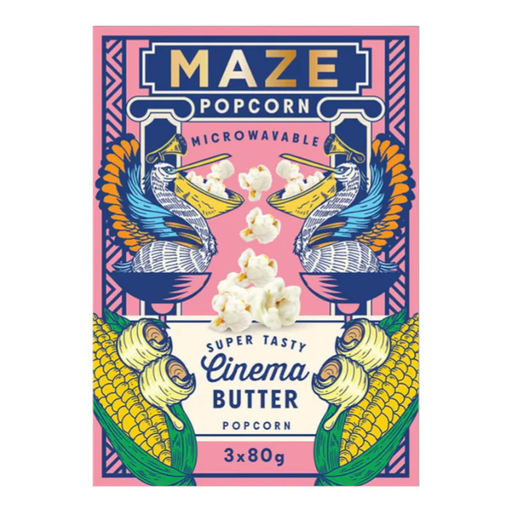
SNACK MAZE Cinema Butter popcorn, 240 g

SNACK MAZE Cinema Butter popcorn, 240 g

A good choice for a film night if you want to share ready-to-eat popcorn; the product description mentions film nights as a suggested occasion.

The pack contains 240 g. Check the nutrition table for the exact variety when comparing calories.

View at Joybuy
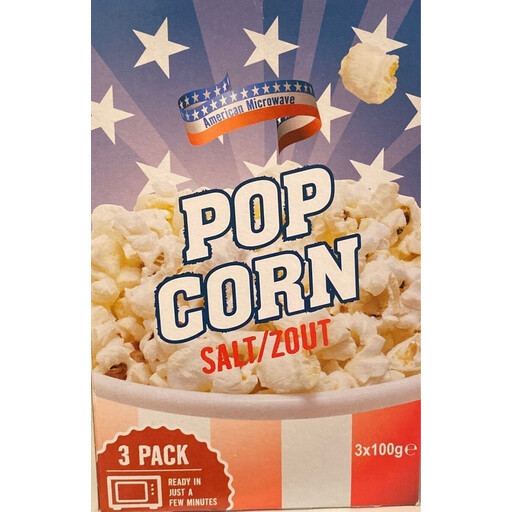
Pop Corn microwave popcorn, 3 × 100 g

Pop Corn microwave popcorn, 3 × 100 g

A good choice for preparing popcorn at holiday accommodation with a microwave; the product description specifies microwave preparation.

The pack contains three 100 g portions. The product information states 510 kcal per 100 g; check the pack to see whether the nutritional information applies before or after preparation.

View at Joybuy
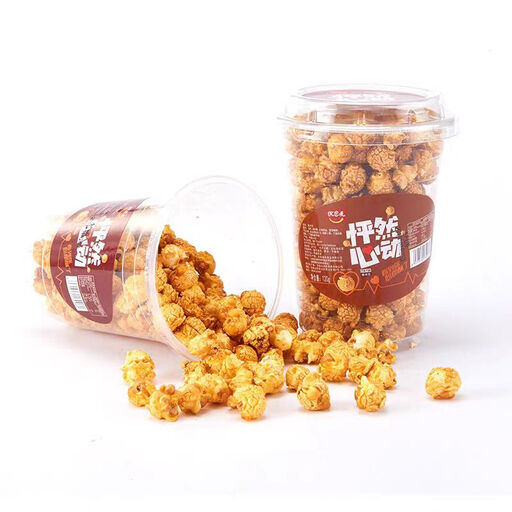
Yousmai Pengranxindong Caramel popcorn, 120 g

Yousmai Pengranxindong Caramel popcorn, 120 g

A good choice if you’re looking for ready-to-eat popcorn with a caramel flavour.

The pack contains 120 g. The product information states 502 kcal per 100 g; check the nutritional information on the exact pack.

View at Joybuy
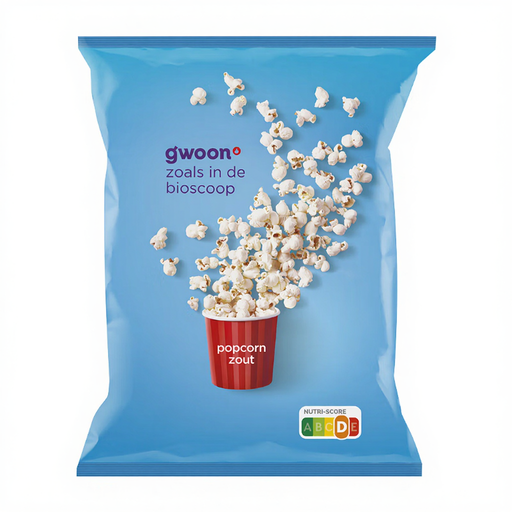
g'woon salted popcorn, 100 g

g'woon salted popcorn, 100 g

A good choice if you’re looking for ready-to-eat salted popcorn and want to decide on the portion yourself.

The pack contains 100 g. The product information states 543 kcal per 100 g; check the nutritional information on the exact pack.

View at Joybuy

Frequently asked questions about popcorn and calories

Can popcorn simply be called ‘low calorie’?

No. A small portion alone isn’t enough to justify calling a product that. According to the European Commission, solid foods can only carry the ‘low energy’ claim if they contain no more than 40 kcal (170 kJ) per 100 g.

How do I calculate the energy in my own bowl?

Multiply the kcal per 100 g for the exact variety by the number of grams you eat, then divide the result by 100. Use the product’s nutrition table and check whether it refers to popcorn before or after preparation.

Is a bag of microwave popcorn automatically one portion?

No. Base your portion on how much you eat, not just on the microwave bag. Follow the instructions on the exact pack too; for its Microwave Salted Popcorn, Jumbo says not to restart preparation if it has been interrupted.

What do I need to make popcorn myself?

You’ll need popping corn, a suitable heat source and a heavy-based pan with a well-fitting lid. The Netherlands Nutrition Centre describes a method using oil and herbs; include all the ingredients you use when calculating the nutritional value of your portions.

What should I check if I have a food allergy?

Check the current packaging for the popcorn and any oil or seasoning mix you plan to use. The Netherlands Nutrition Centre warns that, for its recipe, it can’t guarantee the ingredients used are free from allergens.
