
Portion-conscious snackers
You want to take a measured amount with you and compare calories for the same number of grams, rather than different portion sizes.


First, decide how much popcorn you want to take with you, then compare the energy content for the same weight. Based on the labels from Albert Heijn and Jumbo, 25 g of the two sweet varieties compared here provide 101.5 and 104.75 kcal; the two salted varieties provide 120.25 and 135.75 kcal. The sweet varieties also contain more sugar, so make your choice based on both taste and nutritional information.
You want to take a measured amount with you and compare calories for the same number of grams, rather than different portion sizes.
You’re looking for popcorn that’s ready to eat, and decide in advance how much to pack in your gym bag.
You make your popcorn in advance and want to choose which extras to add yourself.
| What to consider | What to look for | Who is this important to? |
|---|---|---|
| Energy per portion | Compare kcal per 100 g, then calculate the amount for your measured portion. | If I decide on my portion in advance, I want to know how much energy my chosen amount contains. Around 36% of consumers prioritise energy per portion. |
| Convenience | Check whether the popcorn is ready to eat or needs to be prepared first; also check the storage instructions. | If I want a snack straight away while I’m out, I’d rather take something that doesn’t need cooking or popping first. Around 29% of consumers prioritise convenience. |
| Flavour and added ingredients | Read the ingredients list and compare the energy, sugars, fat and salt in the exact variety. | If I’m choosing between sweet and savoury, I also want to know the nutritional values for each flavour. Around 21% of consumers prioritise flavour and added ingredients. |
| Role around your workout | Decide whether you’re looking for a snack or want to meet a nutritional need around your workout. | If I’m taking something for around my workout, I don’t want to assume that a snack automatically counts as sports nutrition. Around 14% of consumers prioritise its role around their workout. |
For solid foods, the European Commission sets a maximum of 40 kcal (170 kJ) per 100 g for the ‘low energy’ claim. A smaller portion doesn’t change the value per 100 g.
Compare the nutritional value per 100 g, and treat a measured portion as a portion choice, not proof that the product meets the claim’s requirements.
The labels for the Albert Heijn and Jumbo varieties compared here show that the sweet varieties contain less energy for the same weight, but more sugar.
Compare the nutritional values of the exact products and decide what matters most to you: flavour, energy or sugar.
Pack sizes may contain several portions. Your results will differ if you compare different amounts.
Weigh the amount you’re taking with you and compare products by the same weight.
The nutritional value of dried corn isn’t directly comparable with that of ready-made popcorn. Oil and other added ingredients are also part of the preparation.
Include everything used in the preparation in your calculation, then divide it between the portions you’re actually taking with you.
The range includes ready-to-eat sweet and salted popcorn, microwave popcorn and popcorn kernels.
The own-brand range includes ready-to-eat popcorn, microwave popcorn and dried corn.
The Dutch product information lists sea salt popcorn under the Snack Day own brand.
Aldi lists salted popcorn from Sun Snacks in a 100 g pack.
This selection includes popcorn to take with you and varieties to prepare in advance. For a calorie comparison, check the nutritional information on the exact pack.
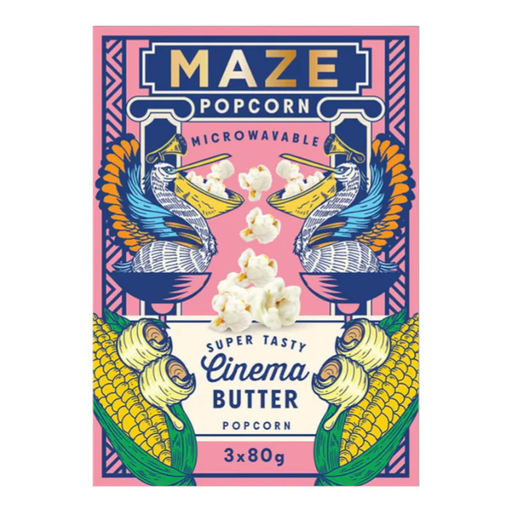 No image available
Ideal if you want to take butter-flavoured popcorn with you, ready to eat. Weigh out your own portion and check the nutritional information on the pack.
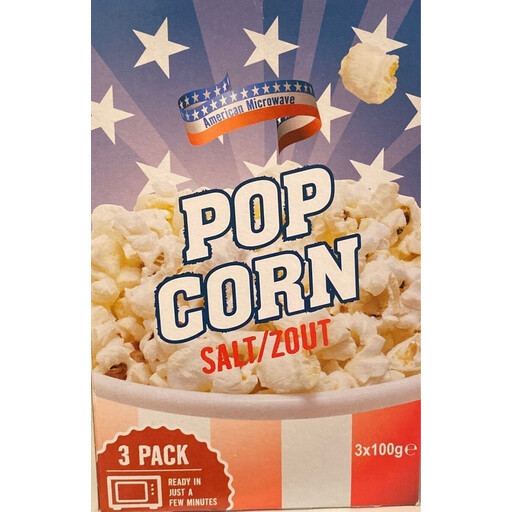 No image available
Ideal if you want to prepare microwave popcorn in advance and take a portion with you afterwards.
The pack contains 3 bags of 100 g. Follow the pack instructions and don’t restart the cooking process after an interruption.
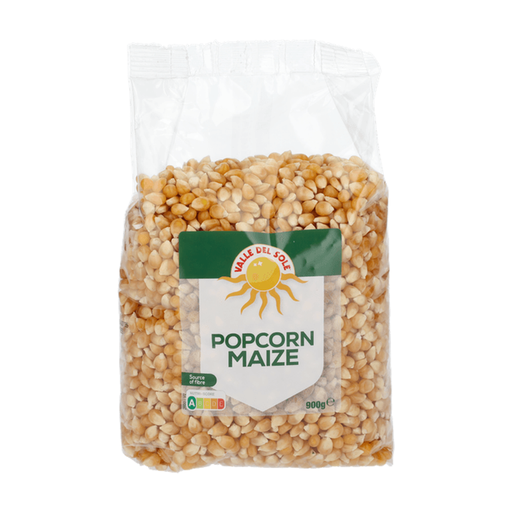 No image available
Ideal if you want to pop your own popcorn in advance and choose how much to add.
The preparation instructions recommend popping it in a pan with vegetable oil. Include any added ingredients you use when assessing the nutritional value of your portion.
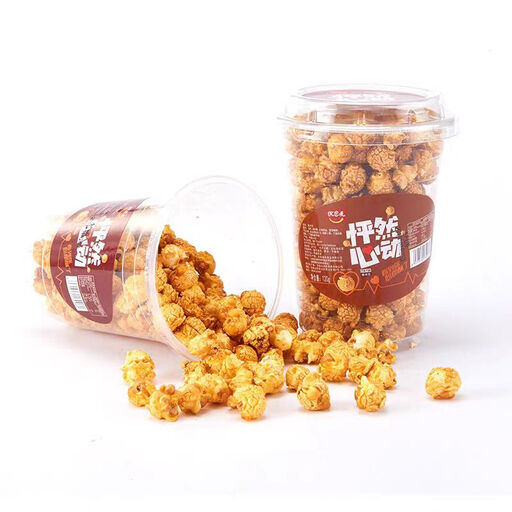 No image available
Ideal if you’re looking for ready-to-eat caramel-flavoured popcorn. Check the energy and sugars on the label for this exact variety.
The pack contains 120 g. Weigh out the amount you want to take with you.
 No image available
Ideal if you want to take ready-to-eat salted popcorn with you. Compare its nutritional information with that of other varieties.
The pack contains 100 g, which doesn’t have to equal one portion.
Not as a commercial nutrition claim unless it meets the relevant requirements. For solid foods, the European Commission sets a maximum of 40 kcal (170 kJ) per 100 g for the ‘low energy’ claim. A smaller portion doesn’t automatically make a product with a higher value per 100 g eligible for that claim.
Not without first checking what the nutritional values are based on. According to the European Union, nutritional values should generally refer to the product as sold; for products that need to be prepared, information may be provided for the prepared product. If you prepare it yourself, include any added ingredients you use.
Follow the instructions on the exact pack. Albert Heijn advises staying by the microwave while the popcorn is popping and opening the bag carefully because of the heat and steam. Jumbo warns against restarting the cooking process after an interruption.
Not as a general rule: the Netherlands Nutrition Centre says that exercising intensively isn’t, in itself, a reason to eat more salt. So don’t choose popcorn based solely on that assumption.
Read the label on the exact variety and pack. Jumbo states that its ready-to-eat sweet and salted popcorn checked here may contain milk. For its Organic Popcorn Corn, Albert Heijn lists the possible presence of cereals containing gluten, soya and wheat. So a corn-based product isn’t necessarily suitable for your allergy.