
Guests keeping an eye on portions
You want to know how many calories are in the amount of popcorn on your plate. Compare equal weights, and consider preparation and additions separately.


Compare ready-to-eat popcorn by weight, then choose between serving it straight away, preparing it in the microwave or popping it yourself. If you’re making it yourself, factor in any additions. A smaller portion tells you how much you’re eating, but it doesn’t automatically make popcorn ‘low calorie’: according to the European Commission, solid foods must contain no more than 40 kcal per 100 g to make that claim.
You want to know how many calories are in the amount of popcorn on your plate. Compare equal weights, and consider preparation and additions separately.
You’re looking for something you can serve straight away or prepare during the get-together. Pack size, preparation instructions and the equipment you have available will help you decide what’s practical.
You want to check the sugar, salt and allergens in the exact variant. The ingredients and warnings on the packaging matter more than the general product name ‘popcorn’.
Compare ready-to-eat varieties by their nutritional values per 100 g, then work out what that means for the portion you’ll serve. Keep dried corn and microwave popcorn separate from ready-to-eat popcorn if they’re not being compared on the same preparation basis.
| What to consider | What should you check? | Who is this for? |
|---|---|---|
| Energy per portion | Use the kcal per 100 g shown on the label and calculate the amount for the weight you’ll actually serve. Compare ready-to-eat popcorn with ready-to-eat popcorn. | I want to know how much energy is in my own bowl, not just what the pack says per 100 g. Around 39% of consumers prioritise the energy content of the portion they eat. |
| Preparation and serving | Check whether the variety is ready to eat, needs to go in the microwave or has to be cooked in a pan. Follow the instructions on the exact pack. | As a host, I want to do as little preparation as possible during the get-together and know what equipment I’ll need. Around 23% of consumers prioritise ease of serving. |
| Sugar, salt and allergens | Check the nutritional information, ingredients and warnings about possible traces on the packaging of the variety you’ve chosen. | I want to consider what my guests eat or need to avoid, so I look beyond calories. Around 23% of consumers prioritise ingredients and suitability for their guests. |
| How much you need for the group | Check the net weight and work out how many portions you want to serve from the pack. Factor in oil and flavourings if you’re making the popcorn yourself. | I want to have enough ready without being left with too much afterwards. Around 15% of consumers prioritise the amount needed for the group and planning ahead. |
The amount in your bowl determines how much you eat, but it doesn’t change the nutritional value per 100 g. According to the European Commission, the threshold for making a low-calorie claim on solid foods is no more than 40 kcal per 100 g.
Compare the kcal per 100 g and calculate the energy in the portion you plan to serve. Don’t call it ‘low calorie’ just because you’ve chosen a small portion.
For the ready-to-eat varieties from Albert Heijn and Jumbo, the sweet products list fewer kcal per 100 g than the salted ones, but the sweet varieties contain more sugar.
Compare the energy, sugar and salt content of the exact products separately, using the same portion weight.
The nutritional values for dried corn don’t automatically reflect the recipe after preparation. Oil and other additions change what you end up serving.
Keep the nutritional information for each preparation method separate. For homemade popcorn, calculate the values using the complete recipe and the number of portions you make.
Albert Heijn warns that AH Biologisch Popcorn mais may contain cereals containing gluten, soya and wheat. For the ready-to-eat varieties reviewed, Jumbo warns that they may contain milk.
Check the exact packaging and ask guests with allergies what information they need.
Albert Heijn’s popcorn range includes corn to pop yourself, microwave popcorn, and ready-to-eat sweet and salted varieties.
Jumbo sells ready-to-eat salted and sweet popcorn, as well as microwave popcorn. Check the nutritional information and preparation method for each variety.
Lidl lists Snack Day popcorn in salted and sweet varieties. Its Dutch product page also features Snack Day Popcorn zeezout 200 g.
Sun Snacks Zoute popcorn 100 g is a popcorn variety sold by ALDI in the Netherlands.
This selection includes ready-to-eat sweet and salted popcorn, as well as corn to pop yourself. Compare the portion and preparation method that suit your neighbourhood get-together.
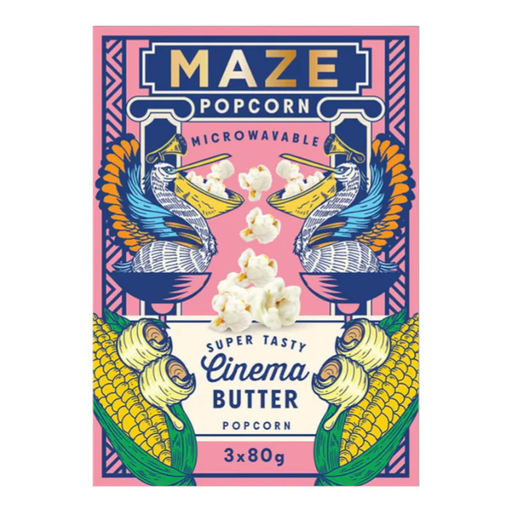 Image unavailable
The product title describes popcorn with cinema butter flavour. If kcal per portion will influence your choice, check the nutritional information on the pack.
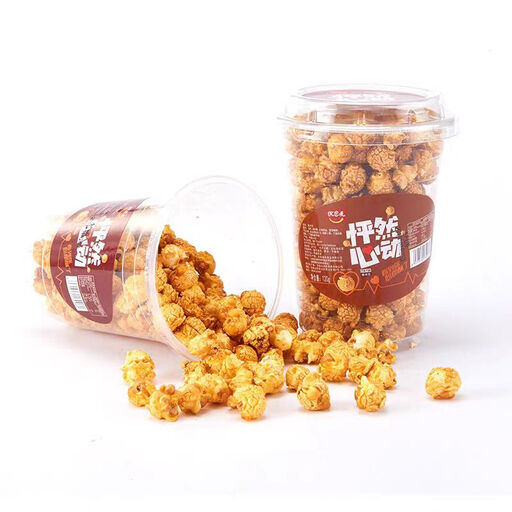 Image unavailable
This ready-to-eat caramel popcorn is made to be served straight away. The product information lists 502 kcal and 35 g of sugars per 100 g, and milk as an allergen.
 Image unavailable
This salted popcorn lists 543 kcal and 1.525 g of salt per 100 g. Calculate the energy content for the weight you’ll actually serve.
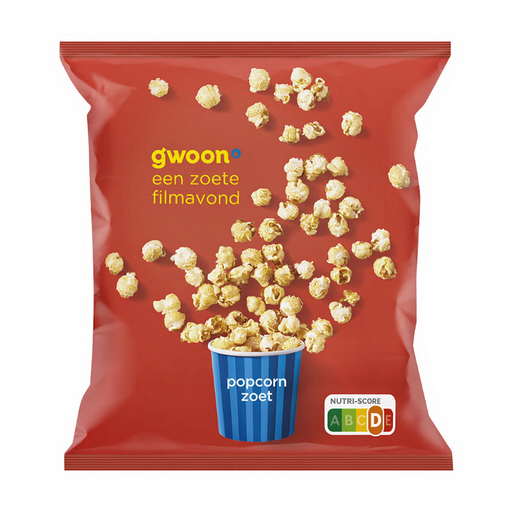 Image unavailable
This sweet popcorn lists 419 kcal and 44.5 g of sugars per 100 g. Consider sugar separately from energy when comparing varieties.
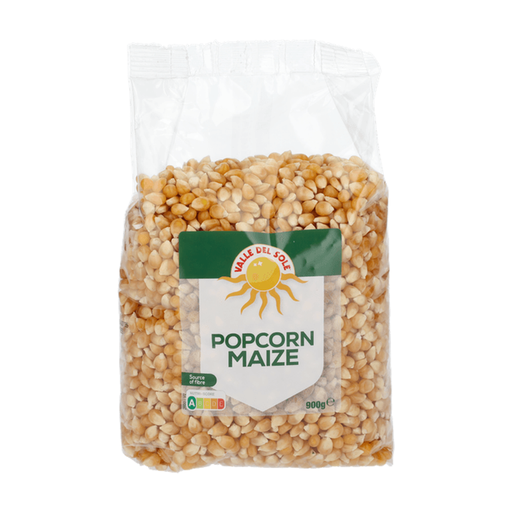 Image unavailable
The listed 350 kcal per 100 g is for the corn before preparation. The preparation information mentions vegetable oil, so don’t compare these values directly with those for prepared popcorn.
Weigh the ready-to-eat popcorn, then multiply its weight in grams by the kcal per 100 g and divide by 100. Voedingscentrum’s figure of 154 kcal for a 40 g bowl is a general average and doesn’t replace the label on your product.
Not just because the portion is small. According to the European Commission, the ‘low calorie’ claim can only be used for solid foods containing no more than 40 kcal per 100 g. The Netherlands Food and Consumer Product Safety Authority explains that nutrition claims must comply with European rules.
That isn’t automatically true of all popcorn, but for these ready-to-eat products, the listed values are lower for sweet than for salted popcorn. Albert Heijn lists 419 kcal per 100 g for AH Popcorn zoet and 543 kcal for AH Zoute popcorn; Jumbo lists 406 kcal for Popcorn Zoet and 481 kcal for Popcorn Zout. The sweet varieties also contain more sugar: 45 g per 100 g at Albert Heijn and 48.6 g at Jumbo.
Follow the instructions on the exact pack and stay by the microwave. Albert Heijn recommends 2–3 minutes at 800 Watt or 3–4 minutes at 600 Watt for its microwave popcorn, stopping when there are 1–2 seconds between pops. Open the bag carefully, as the steam will be hot. Jumbo warns that children should not prepare the popcorn without adult supervision.
Check the exact variety and packaging. Albert Heijn describes AH Zoute popcorn as gluten-free, but warns that AH Biologisch Popcorn mais may contain cereals containing gluten, soya and wheat. Jumbo warns that the ready-to-eat varieties featured here may contain milk.