What should you look for when choosing popcorn?
Ready-to-eat and sweet
A good fit if: you want something ready to eat and fancy a sweet flavour.
The trade-off: Jumbo lists 406 kcal per 100 g for Popcorn Zoet 175 g; Albert Heijn lists 419 kcal per 100 g for AH Popcorn zoet. The sugar figures are separate: 48,6 and 45 g per 100 g respectively (Jumbo; Albert Heijn).
Ready-to-eat and salted
A good fit if: you want a savoury snack with no preparation.
The trade-off: Jumbo Popcorn Zout lists 481 kcal per 100 g, while AH Zoute popcorn lists 543 kcal per 100 g. A lower sugar content doesn’t indicate the total energy content.
Microwave popcorn
A good fit if: you have a microwave at home and want to make popcorn without measuring out the ingredients yourself.
The trade-off: Albert Heijn lists 435 kcal per 100 g and Jumbo 391 kcal per 100 g. It hasn’t been confirmed that these figures use the same nutritional basis before or after preparation, so they aren’t a definitive comparison of the prepared popcorn. Follow the instructions on the exact pack.
Popping loose corn yourself
A good fit if: you want to decide how much corn and which extras to use, and have time to make popcorn.
The trade-off: Jumbo and Albert Heijn both list 374 kcal per 100 g for their dried corn. This isn’t automatically the nutritional value of the finished portion; include the ingredients you use in your calculations.
Popcorn from Lidl or Aldi
A good fit if: you’re already visiting these shops and want to pick up some popcorn while you’re there.
The trade-off: Lidl lists Snack Day Popcorn zeezout 200 g as available in store only; Aldi lists Sun Snacks Zoute popcorn 100 g. Compare the nutritional information on the pack of the variety you choose.
| What to consider |
What to look for |
Who is this important to? |
| Calories per portion |
Compare kcal per 100 g using the same preparation basis, then work out the weight you actually eat. |
If I mainly want to know how much energy is in my portion, I compare equal quantities; around 31% of consumers prioritise the calories in the portion they eat. |
| Sugar, fat and salt |
Check these nutritional values alongside the energy and ingredients; less sugar doesn’t automatically mean fewer kcal. |
If I’m also keeping an eye on sugar, fat, salt or added ingredients, I check each separately; around 25% of consumers prioritise the ingredients and nutritional composition. |
| Ease of preparation |
Choose between ready-to-eat popcorn, a microwave bag or loose corn, and check the preparation instructions. |
If I’m short on time or don’t have a suitable way to prepare it, I look for a convenient option; around 19% of consumers prioritise convenience. |
| Quantity |
Compare the net weight, number of microwave bags and portion you want to eat separately. |
If I don’t want to buy more than I need for a small top-up shop, I check the total pack size; around 13% of consumers prioritise the quantity they buy. |
| Allergens |
Check the ingredients and allergen information for the exact variety and pack. |
If an allergy or dietary requirement is relevant, I check the label on that exact popcorn; around 12% of consumers prioritise whether a product is suitable for them. |
To calculate the calories in your own portion, multiply the stated kcal per 100 g by the weight you eat in grams, then divide by 100. For products you still need to prepare, use the appropriate nutritional basis and include any ingredients you add yourself.
Popcorn options at Joybuy
This selection at Joybuy includes popcorn in different flavours and popcorn kernels for you to pop yourself. Compare the preparation method and nutritional values using the right basis.
 Image unavailable
SNACK MAZE Popcorn Cinema Butter, 240 GR
A good choice if you’re looking for popcorn with a cinema butter flavour.
View at Joybuy
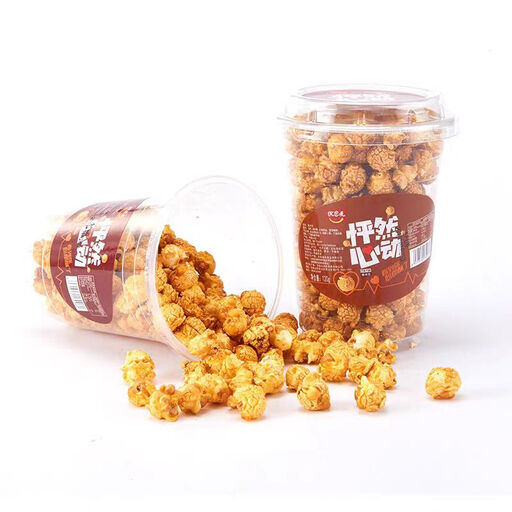 Image unavailable
Yousmai Pengranxindong Popcorn Caramel, 120 g
A good choice if you’re looking for ready-to-eat popcorn with a caramel flavour.
The product information lists 502 kcal, 35 g of sugars and 15 g of saturated fat per 100 g.
View at Joybuy
 Image unavailable
g'woon Salted Popcorn, 100 g
A good choice if you’re looking for salted popcorn.
The product description lists 543 kcal per 100 g.
View at Joybuy
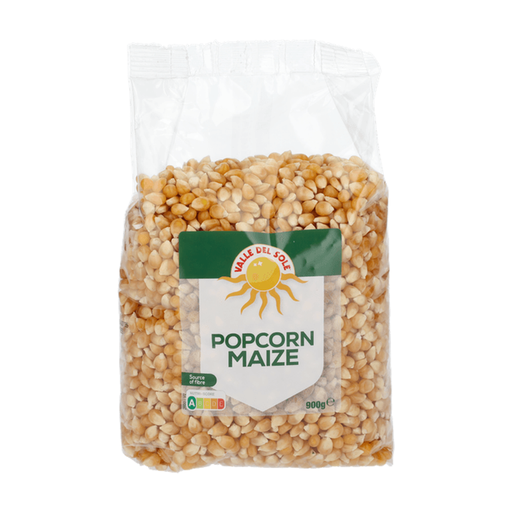 Image unavailable
Valle Del Sole Popcorn Maize Butterfly, 900 g
A good choice if you want to pop your own popcorn; the product description suggests cooking it in a pan with vegetable oil.
The product information lists 350 kcal per 100 g. Remember to include the oil you use when calculating the finished portion.
View at Joybuy
Frequently asked questions
Can popcorn in the Netherlands simply be labelled ‘low calorie’?
No. For solid foods, the claim ‘low energy’ is subject to a limit of no more than 40 kcal (170 kJ) per 100 g. A small portion or fewer calories than another product isn’t enough. The European Commission sets out this condition, and the NVWA directs Dutch businesses to the European rules on claims.
Does ‘reduced energy’ mean the same as ‘low energy’?
No. According to the European Commission, the claim ‘reduced energy’ requires a reduction of at least 30% and a statement explaining what feature reduces the total energy value. This is a different claim from the limit for ‘low energy’.
How do I calculate the calories in my own portion?
Multiply the stated kcal per 100 g by the weight you eat, then divide the result by 100. For a product you still need to prepare, use the appropriate nutritional basis and include any ingredients you add yourself.
How do I prepare AH Magnetron Popcorn Zout?
Follow the instructions for this AH variety: the product page recommends 2–3 minutes at 800 watts or 3–4 minutes at 600 watts, and says to stop when there are 1–2 seconds between pops. Stay by the microwave and open the hot bag carefully to avoid the steam. These instructions don’t automatically apply to other popcorn bags.
Is loose popcorn corn automatically suitable for people with a gluten allergy or coeliac disease?
Don’t assume so. AH Biologisch Popcorn mais states that it may contain gluten-containing cereals, soya and wheat. Always check the information for the exact variety you’re buying to make sure it meets your dietary requirements.


