If you’re choosing popcorn for a quick morning bite, compare the fat content per 100 g and first decide whether you need a ready-to-eat bag or have time to make it. A lower total fat content doesn’t tell you everything about saturated fat or the portion once prepared. Also, think of popcorn as a snack alongside breakfast, rather than an automatic replacement for a breakfast staple: the Netherlands Nutrition Centre lists wholegrain products, dairy or a fortified alternative, and fruit among its breakfast options.
Who is this choice relevant to?
Morning shoppers keeping an eye on fat
You want to check the fat and saturated fat content of the exact variety, rather than relying on a brand name or the word ‘plain’. The Netherlands Nutrition Centre’s guidance can help you understand nutrition claims on packaging.
People who need something to take with them, with no time to prepare it
You don’t want to make popcorn before you leave. So it matters whether it’s ready to eat, comes in a microwave bag or still needs preparing.
Morning shoppers who are also thinking about breakfast
You don’t want to base your choice on fat alone. Think about the rest of your breakfast too, and check the label for things such as sugar and salt. The Netherlands Nutrition Centre outlines breakfast options from its Wheel of Five healthy eating guide.
What should you look for when choosing?
Start with the nutritional information for the exact variety and decide whether you want to take it with you straight away or have time to prepare it. That way, convenience, total fat or a packaging claim won’t become your only measure.
| What to consider |
What to look for when buying |
Who is this important to? |
| Fat content and claims |
Compare total fat and saturated fat per 100 g. Also check exactly which claim appears on the packaging. |
If you’re basing your choice mainly on fat content, you’ll want to compare the figures for the variety you’ve chosen; around 29% of consumers put fat content first. |
| Preparation and convenience |
Check whether the popcorn is ready to eat, needs microwaving or still needs to be prepared. |
If you need something to take with you before you leave, preparation time matters a lot; around 29% of consumers prioritise immediate convenience. |
| Its place in your breakfast |
Decide whether you want a snack alongside breakfast or a breakfast staple. Check the rest of the nutritional information too, including sugar and salt. |
If you’re mainly looking for a suitable morning meal, consider more than just fat or preparation; around 24% of consumers prioritise what their breakfast is made up of. |
| Portion and packaging |
Compare the net weight with the stated portion and the amount you actually want to take with you. |
If you want to set out a portion in advance, the serving size on the label is relevant; around 18% of consumers put portion control first. |
Common buying mistakes
-
Treating a fat claim as breakfast advice
A claim about one nutritional characteristic doesn’t automatically tell you whether popcorn is a suitable breakfast staple. The Netherlands Nutrition Centre lists wholegrain products, dairy or a fortified alternative, and fruit among its breakfast options.
First decide whether you want popcorn as a snack alongside breakfast or as a staple. Don’t let a single claim determine your whole choice.
-
Looking only at total fat
Jumbo’s product information lists 12.4 g of total fat and 5.1 g of saturated fatty acids per 100 g for Salted Microwave Popcorn. These figures describe different aspects of the same variety.
Check both fat figures and compare products on the same per-100 g basis.
-
Assuming the figures for dried kernels are the same as for prepared popcorn
The nutritional information for dried kernels doesn’t necessarily describe the popcorn you eat after preparation if you add oil or flavourings.
Assess the prepared portion with the additions you actually use.
Oil and any flavourings are added to the kernels and require extra preparation.
-
Treating the whole bag as one portion
For Salted Popcorn, Jumbo lists nutritional information per 30 g portion and around three portions per pack.
Check the stated portion and decide how much you actually want to take with you.
Brands and varieties for comparison
Albert Heijn
AH Organic Popcorn Maize is dried maize to prepare yourself, not ready-to-eat popcorn.
- Albert Heijn lists 4 g of fat per 100 g for the maize.
- The preparation instructions add oil, so the figures for the maize don’t necessarily describe the prepared portion. The product page warns that it may contain traces of cereals containing gluten, soya and wheat.
Jumbo
The product information describes ready-to-eat salted popcorn and a separate microwave variety.
- For Salted Popcorn, Jumbo lists 23.9 g of fat and 2.1 g of saturated fatty acids per 100 g.
- For Salted Microwave Popcorn, Jumbo lists 12.4 g of fat and 5.1 g of saturated fatty acids per 100 g. These are label values for two different varieties, not a general assessment of the brand or a taste comparison.
Lidl — Snack Day
The Dutch product page describes Snack Day Sea Salt Popcorn as a 200 g pack.
- The product information specifies the product type and pack size.
- The variety name alone doesn’t substantiate any claim about fat content.
Aldi — Sun Snacks
The Dutch product page describes Sun Snacks Salted Popcorn in a 100 g pack.
- The product information confirms the salted popcorn variety and pack weight.
- The product name isn’t a nutrition claim about fat content.
Popcorn kernels at Joybuy
This product selection is for anyone who can prepare dried popcorn kernels in advance and wants to distinguish the nutritional values of the kernels from those of the prepared portion.
 No image available
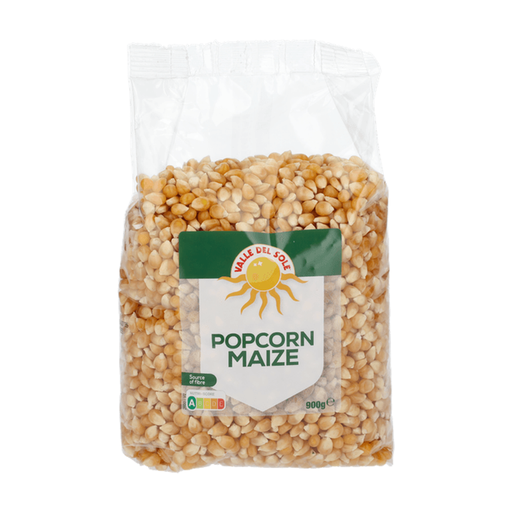
Valle Del Sole Popcorn Maize (Butterfly), 900 g
This is a good choice if you have time to prepare dried popcorn kernels in a pan beforehand.
The product information lists 5 g of fat and 0.8 g of saturated fatty acids per 100 g of kernels. The preparation instructions call for 2 tablespoons of vegetable oil, so the figures for the kernels don’t apply unchanged to the prepared popcorn.
View on Joybuy
Frequently asked questions
Can I use the nutritional information for popcorn kernels for homemade popcorn?
Not without allowing for any additions. Albert Heijn lists figures for dried maize and recommends preparing it with oil. The European Commission explains that nutritional information may apply to the product as sold or, under certain conditions, to the prepared product.
Does ‘less fat’ mean the same as ‘low fat’?
No. Don’t assume that from the wording on the front of the pack alone. Compare the nutritional information per 100 g and check the exact claim. The Netherlands Food and Consumer Product Safety Authority (NVWA) states that nutrition claims must comply with European rules; the European Commission says that claims must not be inaccurate, ambiguous or misleading.
What should I look out for with microwave popcorn?
Follow the instructions for the exact variety. For Salted Microwave Popcorn, Jumbo states that children may prepare it only under adult supervision and that you shouldn’t restart the cooking process after an interruption.
Is AH Organic Popcorn Maize suitable if I need to avoid gluten or wheat?
The product page warns that it may contain cereals containing gluten and wheat, as well as soya. If this is relevant to you, check the allergen information on the current packaging.
Is popcorn a nutritious breakfast on its own?
Looking at fat content alone won’t answer that question. The Netherlands Nutrition Centre lists wholegrain products, dairy or a fortified alternative, and fruit among its breakfast options, so consider popcorn in the context of the rest of your breakfast.


