
Party hosts keeping an eye on fat
You want to choose popcorn for your birthday drinks party based on its fat content, without automatically treating a lower fat figure as ‘low fat’ or as an overall nutritional benefit.


For a birthday drinks party, you can choose between popping your own, making microwave popcorn and serving ready-to-eat popcorn. The right option depends on how much preparation you want to do and which flavour you’re after. Compare nutritional values on the same basis and bear your own portion size in mind: a lower fat figure doesn’t automatically mean ‘low fat’. For solid foods, the European Commission sets a maximum of 3 g of fat per 100 g for a ‘low fat’ claim.
You want to choose popcorn for your birthday drinks party based on its fat content, without automatically treating a lower fat figure as ‘low fat’ or as an overall nutritional benefit.
You’re looking for ready-to-eat popcorn so you don’t have to prepare anything during the party. The flavour, packaging and portion size should suit your serving plans.
You want to use loose popcorn kernels and add your own oil and seasonings. Remember that dry maize and prepared popcorn are not directly comparable.
| What to consider | What should you check? | Who should bear this in mind? |
|---|---|---|
| Fat content and claims | Compare fat and saturated fatty acids per 100 g on the same product basis, and check the exact claim on the packaging. | If I’m mainly watching fat, I compare like-for-like products and check saturated fat too. Around 36% of consumers give fat content top priority. |
| Sugars and salt | Check the values per 100 g and the ingredients for the exact flavour variant. | If I want to consider sugar and salt as well as fat, I check the recipe before choosing a flavour. Around 29% of consumers prioritise this balance. |
| Preparation and ease of serving | Check whether the popcorn is ready to eat, needs to be microwaved or is made from loose kernels; follow the packaging instructions. | If I want to do as little preparation as possible while entertaining, I check what still needs to be done before serving. Around 21% of consumers choose mainly for ease of preparation and serving. |
| Packaging and portions | Check the net weight, number of bags and the portion size used as the basis for the nutritional information. | If I want to plan how much I need for my party, I check how easily the contents can be shared between guests. Around 14% of consumers give quantity and portion planning top priority. |
A relatively lower fat figure doesn’t prove that a product meets the requirements for a ‘low fat’ claim. For solid foods, the European Commission sets a maximum of 3 g of fat per 100 g. AH Sweet Popcorn lists 4 g of fat per 100 g.
Compare the declared values and only use a nutrition claim when the relevant requirements are met.
As well as 4 g of fat, AH Sweet Popcorn lists 45 g of sugars per 100 g; Jumbo Sweet Popcorn lists 48.6 g of sugars per 100 g. The Jumbo microwave variant reviewed lists 5.1 g of saturated fatty acids per 100 g.
Look at fat, saturated fatty acids, sugars and salt together, and calculate based on the portion you plan to serve.
The nutritional values for dry maize don’t automatically describe the prepared snack. The preparation method may involve oil and other additions.
Compare products on the same basis. If you want to calculate values per portion, take the ingredients and final yield of your prepared recipe into account.
A product described as a potato snack or crisps isn’t necessarily popcorn kernels or popcorn.
Check the product name, main ingredient and ingredients list before including a product in your popcorn choice.
The AH products described include loose kernels for popping at home and ready-to-eat sweet popcorn.
The Jumbo products described include loose popcorn kernels, ready-to-eat sweet and salted popcorn, and salted microwave popcorn.
Lidl describes Snack Day popcorn in sweet and salted varieties, including options for parties.
Aldi describes SUN SNACKS Salted Popcorn as a ready-to-eat snack option.
These Joybuy products are suitable for serving at a party, with packaged sweet and salted varieties as well as loose kernels for popping at home.
 Image unavailable
The product listing describes cinema butter-flavoured popcorn to share with friends at parties.
Net weight: 240 g.
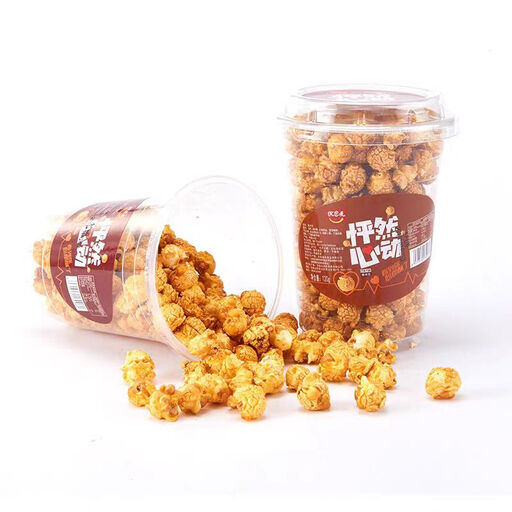 Image unavailable
The product description lists ready-to-eat caramel popcorn for parties.
Per 100 g: 25 g of fat and 35 g of sugars. The fat value is above the 3 g per 100 g limit set by the European Commission for a ‘low fat’ claim on solid foods.
Net weight: 120 g.
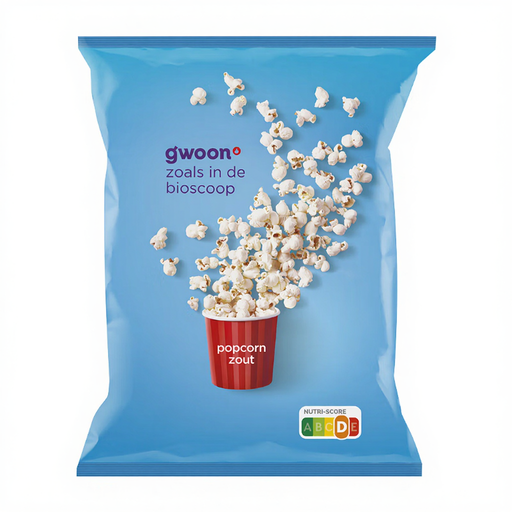 Image unavailable
The product name indicates salted popcorn for a savoury party snack.
Per 100 g: 29.2 g of fat, 3.9 g of saturated fatty acids and 1.525 g of salt. The fat value is above the 3 g per 100 g limit set by the European Commission for a ‘low fat’ claim on solid foods.
Net weight: 100 g.
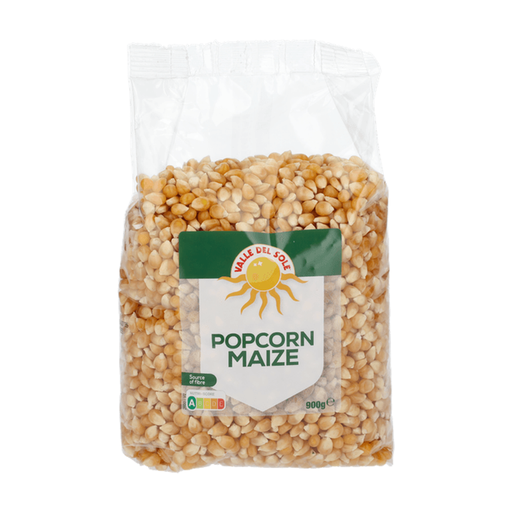 Image unavailable
Loose popcorn kernels for anyone who wants to pop their own and choose what to add; the described pan method uses vegetable oil.
Per 100 g of dry maize: 5 g of fat and 0.8 g of saturated fatty acids. These values describe the dry maize, not the prepared popcorn.
Net weight: 900 g.
For solid foods, the European Commission sets a maximum of 3 g of fat per 100 g for a ‘low fat’ claim. AH Sweet Popcorn lists 4 g of fat per 100 g, so based on that figure it doesn’t meet this limit. ‘Relatively lower in fat’ and ‘low fat’ don’t mean the same thing.
Not directly for 100 g of prepared popcorn. The nutrition table for AH Organic Popcorn Kernels describes dry maize; the pan method described adds oil. Compare the ingredients and the final yield of your own preparation. European food labelling information also distinguishes between a product as sold and information for a prepared product.
Follow the instructions on the packaging for the exact variant. For Jumbo Salted Microwave Popcorn, the instructions say to remove the film, that children should only prepare it under adult supervision, and that you shouldn’t restart it after an interruption.
No, check the allergen information and warnings on the packaging too. According to the product information, AH Organic Popcorn Kernels contains only maize, but it may contain gluten-containing cereals, soya and wheat. The Netherlands Food and Consumer Product Safety Authority explains that relevant allergens must be clearly declared.
For AH Sweet Popcorn, Albert Heijn recommends sealing the pack securely after use and storing the popcorn somewhere cool, dark and dry. For other varieties, follow the storage and use-by information on the packaging.