
Office snackers who watch their portions
You want to know in advance how much energy your snack break will provide. Weigh your portion and compare it with the nutritional values per 100 g.


Choose popcorn based on the portion you actually eat and the preparation method that works at your workplace. Only compare kcal per 100 g when products are listed on the same basis. For solid foods, the European Commission sets the threshold for a ‘low energy’ claim at no more than 40 kcal (170 kJ) per 100 g. Check sugars, saturated fat and salt too: a lower energy value doesn’t automatically mean a product is better across all nutritional measures.
You want to know in advance how much energy your snack break will provide. Weigh your portion and compare it with the nutritional values per 100 g.
You’re looking for popcorn you can eat straight away or prepare in advance. Microwave instructions are only relevant if you can actually use a microwave.
You want to choose the amount of corn and added ingredients yourself, and are happy to factor in the preparation time and the need to count those ingredients.
First decide whether you want to keep a closer eye on your portion, prioritise convenience, compare ingredients or weigh up the cost per snack break.
| What to consider | What to look for when buying | Who is this important for? |
|---|---|---|
| Energy per portion | Check the kcal per 100 g, weigh your portion and see whether the nutritional values apply to the product before or after preparation. | If I want to limit my snack break, I weigh out the amount instead of treating the whole pack as one portion. Around 36% of consumers prioritise energy per portion. |
| Ease of preparation | Check whether the popcorn is ready to eat, needs to be microwaved or must be prepared from scratch. Take the available equipment and time into account. | When I want something quick to eat during the working day, I look at the preparation steps and whether I can portion it out in advance. Around 29% of consumers prioritise ease of preparation. |
| Ingredients and nutritional content | As well as energy, check the values for sugars, saturated fat and salt, along with the ingredients and allergen information. | If sugar, fat, salt or a dietary requirement influences my choice, I check the details on the exact pack. Around 21% of consumers prioritise ingredients and nutritional content. |
| Cost per snack break | Compare the current price with the number of portions you plan to have. If you’re preparing it yourself, include oil and any other additions. | When I mainly want to manage the cost of each planned portion, I look beyond the price of the whole bag. Around 14% of consumers prioritise cost per snack break. |
The EU threshold for a ‘low energy’ claim on solid foods applies per 100 g, not per small bowl. The European Commission sets the threshold at no more than 40 kcal (170 kJ) per 100 g.
Assess a product using its nutritional values per 100 g, then work out the energy in the amount you actually eat. Don’t describe a product as ‘low calorie’ just because you have a small portion.
Albert Heijn’s product pages list 419 kcal and 45 g of sugars per 100 g for the sweet variety, compared with 543 kcal per 100 g for the salted variety. These figures show the difference between these two specific products; they aren’t a general rule for sweet and salted popcorn.
Choose according to your main priority and compare the energy and nutritional content of the exact product pack.
Albert Heijn’s product information for loose popcorn kernels covers dried corn; oil is used during preparation. The values for the corn alone therefore don’t describe the finished recipe.
Calculate the ingredients together and divide the result by the portions you actually eat.
Oil and other additions count towards both the energy calculation and the cost per portion.
Croky’s range page describes crisps and potato snacks. A broad category description doesn’t prove that a specific product is popcorn.
Check the product description and ingredients before comparing a puffed potato snack with popcorn.
Albert Heijn’s product pages feature loose popcorn kernels, microwave popcorn, and ready-to-eat sweet and salted varieties.
Jumbo’s product information includes ready-to-eat salted popcorn and microwave popcorn, including a pack of 3 x 90 g.
Lidl Netherlands lists sweet and salted popcorn under Snack Day. Product information is also available for Snack Day Sweet Popcorn.
ALDI Netherlands lists SUN SNACKS Salted Popcorn in a 100 g pack.
This product selection includes popcorn and popcorn kernels to suit different snacking and preparation preferences. Check the portion, nutritional information and any preparation steps for each product.
 No image available
The product name indicates popcorn with a cinema-style butter flavour; check the portion and nutritional information on the pack.
 No image available
The product name identifies this as salted popcorn. Compare the portion and nutritional information on the pack with your own snack break.
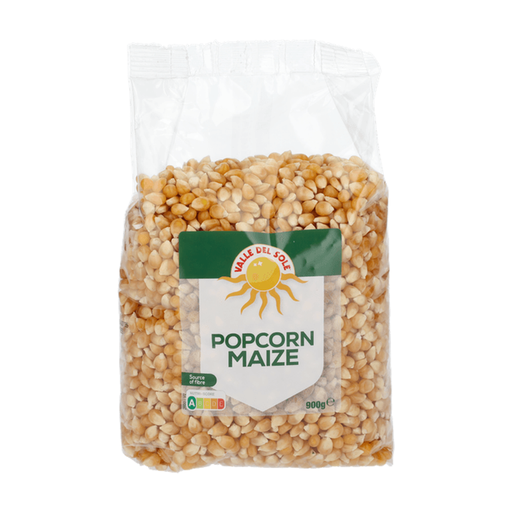 No image available
For anyone who wants to prepare popcorn kernels themselves; the product information describes popping them in a pan with vegetable oil.
The pack contains 900 g of popcorn kernels. Include the oil when calculating the nutritional values of the finished recipe.
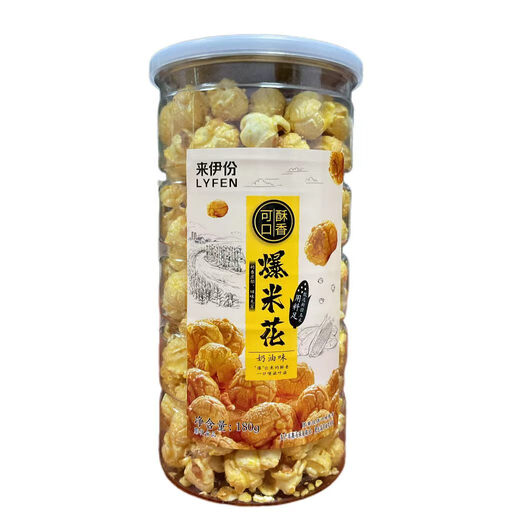 No image available
According to the product information, this popcorn is ready to eat with no preparation needed.
The product details list 530 kcal and 33.1 g of sugars per 100 g; compare these values with the portion you plan to eat.
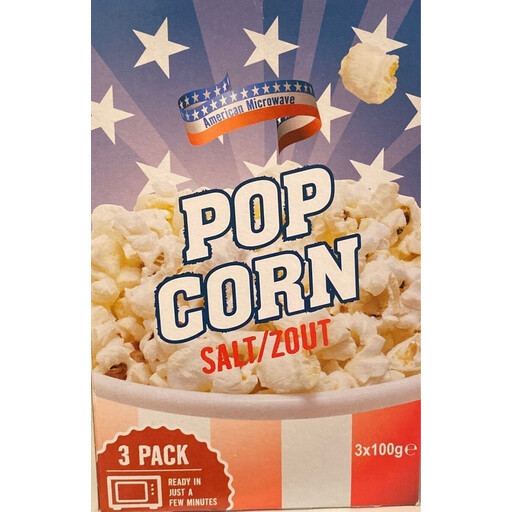 No image available
The product information describes microwave preparation, making this variety suitable if you have access to a microwave.
The pack contains 3 x 100 g. The product details list 510 kcal per 100 g; use the same basis when comparing products.
Not just because a portion is small. For solid foods, the European Commission sets the threshold for a ‘low energy’ claim at no more than 40 kcal (170 kJ) per 100 g. So assess the claim on that product basis, not by the amount you eat at a time.
No. According to the European Commission, this claim requires an energy reduction of at least 30%, and the reason for the reduction must be stated. Comparing arbitrary popcorn products doesn’t in itself prove that these conditions have been met.
Multiply the kcal per 100 g by the weight of your portion in grams, then divide by 100. If you’re preparing it yourself, use the correct basis from the nutrition table and include any additions. Don’t compare dried corn directly with the same weight of popped popcorn.
Follow the instructions on the exact pack and stay by the microwave. Albert Heijn warns that the bag gets hot and contains steam; Jumbo says not to restart the preparation after it has been interrupted.
No, you can’t tell from the main ingredient alone. Albert Heijn’s product information for AH Organic Popcorn Corn states that it may contain cereals containing gluten, soya and wheat. Check the allergen information on the exact pack.