First, check the ingredients and allergen warnings relevant to your allergy, then compare fat, sugar and energy per 100 g. The sweet AH and Jumbo popcorn products reviewed contain 4 g and 4.6 g of fat per 100 g respectively, so neither meets the low-fat threshold. Making popcorn yourself gives you more control over what you add, but the nutritional values for dry maize are not the same as those for the finished snack.
Who is this guide for?
Check allergens first
You want to check whether the ingredients and warnings about possible cross-contamination are suitable for your allergy before comparing nutritional values. The Netherlands Food and Consumer Product Safety Authority (NVWA) explains what allergen information must appear on pre-packed products.
Compare carefully to eat less fat
You’re looking for a product with less fat, but don’t want to confuse ‘low fat’ with simply having a lower fat content. You also pay attention to sugar and energy. The European Commission sets out the conditions for the ‘low fat’ claim, while the Voedingscentrum recommends comparing products per 100 g or 100 ml.
Choose your own additions
You want to choose the oil and flavourings yourself, while taking into account the ingredients and allergen information for both the maize and anything you add. Product information from Albert Heijn and Jumbo shows that details about dry maize can vary between products.
What should you look for when buying?
First, check the allergen information for the exact product. Then compare the nutritional values per 100 g, and if you’re making popcorn yourself, take the additions into account too.
| What to consider |
What should you check? |
Who is this important for? |
| Allergens and cross-contamination |
Read both the ingredients and the warning about possible cross-contamination on the packaging. |
If I need to avoid a particular substance, I want to know what’s in the product and what warnings apply before anything else. Around 36% of consumers make allergen suitability their top purchasing priority. |
| Fat per 100 g |
Compare products on the same basis. For solid foods, the ‘low fat’ claim means no more than 3 g of fat per 100 g. |
If I’m specifically looking to eat less fat, I want to distinguish the ‘low fat’ claim from a product that simply contains less fat than another. Around 29% of consumers make a demonstrable reduction in fat their top purchasing priority. |
| Sugar and energy |
Check sugar and energy alongside fat, and don’t compare portions of different sizes. |
If I want to weigh up my overall diet, I look beyond the fat content alone. Around 21% of consumers give the balance of fat, sugar and energy the highest priority. |
| Preparation and additions |
When assessing dry maize, factor in the oil, sugar, salt and any other additions used to make the snack. |
If I want to choose what I add, I need to know how the popcorn is prepared and what ingredients I’ll be using myself. Around 14% of consumers make control over preparation their top priority. |
The European Commission sets a maximum of 3 g of fat per 100 g for the ‘low fat’ claim on solid foods. Sweet popcorn can exceed this limit and also contain relatively high levels of sugar: Albert Heijn lists 4 g of fat and 45 g of sugars per 100 g for AH Popcorn zoet, while Jumbo lists 4.6 g of fat and 48.6 g of sugars per 100 g for Jumbo Popcorn Zoet. These figures are specific to those products and are not general characteristics of sweet popcorn.
Common pitfalls
-
Assuming a short ingredients list proves a product cannot be cross-contaminated
AH Biologisch Popcorn mais lists maize as an ingredient, but also carries a warning that it may contain cereals containing gluten, soya and wheat.
Read the ingredients and information about possible cross-contamination separately, and assess both in relation to your allergy.
-
Assuming less fat automatically means a lighter snack
The sweet AH and Jumbo popcorn products reviewed contain 45 g and 48.6 g of sugars per 100 g respectively. A lower fat content on its own doesn’t tell you what the overall nutritional value is.
Compare fat, sugar and energy per 100 g, and bear in mind how much you eat.
-
Comparing dry maize directly with prepared popcorn
The values for dry maize don’t automatically reflect the snack once you’ve added oil, sugar, salt or other ingredients.
Compare products in the same state, and include the ingredients in your full recipe if you’re making popcorn yourself.
-
Assuming a dietary claim means a product is suitable for every allergy
A claim such as ‘lactose-free’ doesn’t automatically tell you whether a product is suitable for someone with an allergy to another substance. For example, AH Biologisch Popcorn mais carries a warning that it may contain soya and wheat, among other things.
Check the information about the substances you need to avoid rather than relying on a general dietary claim.
Relevant brands to consider
Albert Heijn
The products mentioned offer different options: dry maize to prepare yourself, and ready-to-eat sweet or salted popcorn.
- Albert Heijn lists 4 g of fat and 45 g of sugars per 100 g for AH Popcorn zoet.
- AH Biologisch Popcorn mais carries a warning that it may contain cereals containing gluten, soya and wheat. These details apply to the products mentioned.
Jumbo
The products mentioned include popcorn maize, ready-to-eat sweet popcorn and microwave popcorn.
- Jumbo lists maize as an ingredient in Jumbo Popcorn Maïs.
- Jumbo Popcorn Zoet lists 4.6 g of fat and 48.6 g of sugars per 100 g, and states that it may contain milk. This information applies only to the products concerned.
Lidl
Lidl Netherlands lists Snack Day Popcorn zeezout as a popcorn product that, according to its product page, is only available in store.
- The product page confirms the product name Snack Day Popcorn zeezout.
- The product name alone tells you nothing about its fat content or suitability for a specific allergy, so check the packaging.
Aldi
ALDI Netherlands lists SUN SNACKS Zoute popcorn as a ready-to-eat salted variety.
- The Dutch product information confirms the product name SUN SNACKS Zoute popcorn.
- The product name and flavour don’t tell you whether this variety is low in fat or suitable for your allergy. Check the nutritional and allergen information on the packaging.
Popcorn products at Joybuy
This selection includes ready-to-eat popcorn in different flavours, as well as popcorn maize to prepare yourself. Check the nutritional and allergen information for each product before choosing.
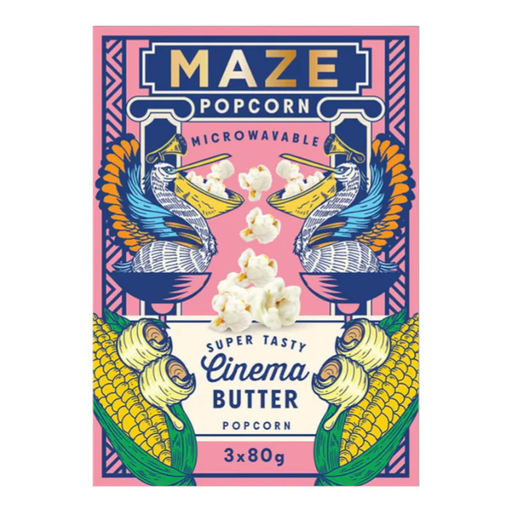 Image unavailable
SNACK MAZE Popcorn Cinema Butter 240 g
The product name indicates popcorn with a cinema butter flavour. Use this variety to compare flavours, not as evidence that it contains less fat.
View at Joybuy
 Image unavailable
g'woon Salted Popcorn 100 g
The product name identifies this as salted popcorn. If they’re important to your choice, check the nutritional values and allergen information on the exact product packaging.
View at Joybuy
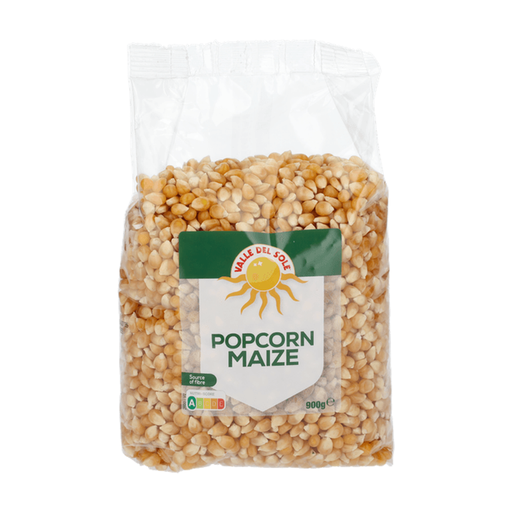 Image unavailable
Valle Del Sole Popcorn Maize (Butterfly) 900 g
A good option if you want to make popcorn yourself and choose what to add. The preparation instructions suggest using a pan with 2 tablespoons of vegetable oil; the values for dry maize don’t automatically reflect those for the finished snack.
View at Joybuy
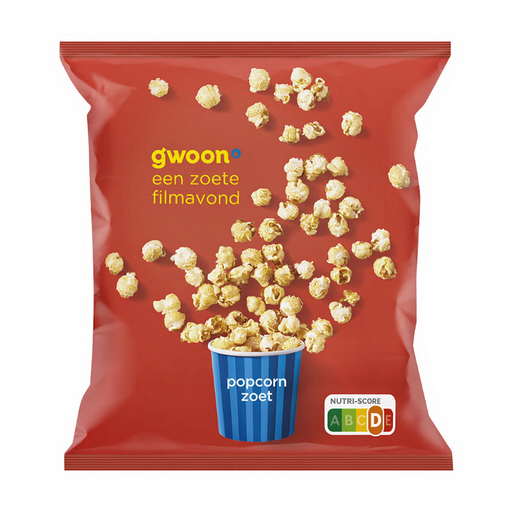 Image unavailable
g'woon Sweet Popcorn 175 g
If you want to compare ready-to-eat sweet popcorn, the product information lists 4 g of fat and 44.5 g of sugars per 100 g. According to the European Commission, 4 g is above the low-fat threshold for solid foods.
View at Joybuy
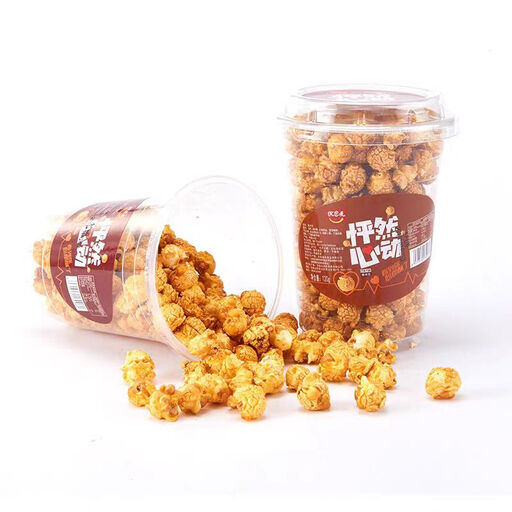 Image unavailable
Yousmai Pengranxindong Popcorn (Caramel) 120 g
If you want to compare caramel popcorn with other ready-to-eat varieties, the product information lists milk as an allergen, along with 25 g of fat, 15 g of saturated fat and 35 g of sugars per 100 g.
View at Joybuy
Frequently asked questions
When can popcorn be called low fat?
For solid foods, the European Commission sets a maximum of 3 g of fat per 100 g for the ‘low fat’ claim. A smaller portion doesn’t change this requirement; popcorn containing 4 g of fat per 100 g exceeds the limit.
Is maize as the only ingredient enough if I’m allergic to wheat or soya?
No. Check the warning about possible cross-contamination too. AH Biologisch Popcorn mais lists maize as an ingredient and warns that it may contain cereals containing gluten, soya and wheat. Assess this information in line with the guidance for your allergy.
What does ‘May contain’ mean on packaging?
It warns that a substance may be present unintentionally due to cross-contamination; it isn’t a personal guarantee that a product is suitable for everyone. Since 1 January 2026, the NVWA has been overseeing the rules on allergen warnings. The permitted wording is ‘May contain X’ and ‘Not suitable for people with an X allergy’.
Are the nutritional values for popcorn maize the same as for homemade popcorn?
Not necessarily. If you’re using dry maize, also include the oil, sugar, salt and other ingredients you add. Compare products in the same state and check the basis on which the nutritional values are given.
What should I look for in microwave popcorn?
Follow the instructions on the packaging for the exact product. The instructions for Jumbo Magnetron Popcorn Zout say not to restart the cooking process if it stops part-way through. Follow the other directions on the packaging too.


