Who is this choice relevant to?

Choosing a lower-fat snack

You want to eat popcorn after a workout and look beyond its fat content to consider energy, sugars and the portion you’re having. Dutch product information from Albert Heijn and Jumbo shows why it’s worth comparing these nutritional values.

Recovery comes first

After intense or prolonged exercise, you want to know how a snack fits into your nutrition plan. Assess protein and carbohydrates separately: lower fat alone doesn’t tell you how much of these nutrients you need. The Association of Sports Nutrition Experts Netherlands says your needs depend on the type and duration of your exercise.

Taking control of portions

You want to decide for yourself how much oil, sugar or salt to add, and are happy to spend extra time preparing your snack. Keep the nutritional values for dried maize separate from those for the popcorn you end up making; Albert Heijn includes oil in its preparation instructions.

What should you look for in popcorn after a workout?

First, compare nutritional values on the same basis. Then decide whether convenience, limiting sugar, recovery nutrition or control over preparation matters most to you.

What to consider What to look for when buying Who might prioritise this?
Fat and portion size Compare ready-to-eat popcorn per 100 g, then check the portion you eat. For solid foods, the European Commission defines a ‘low fat’ claim as no more than 3 g of fat per 100 g. If your main aim is to choose a lower-fat snack, check both the label and your portion size. Around 34% of consumers prioritise limiting fat.
Recovery nutrition Assess protein and carbohydrates per portion eaten; according to the Association of Sports Nutrition Experts Netherlands, how much you need to refuel depends on your exercise. After an intense or prolonged workout, you’ll want to know whether the snack fits into your nutrition plan. Around 33% of consumers prioritise recovery nutrition.
Sugars Check sugars alongside fat and energy. Albert Heijn lists 45 g of sugars per 100 g for its Sweet Popcorn; Jumbo lists 48.6 g per 100 g for its Sweet Popcorn. If you want to limit sugar, factor this in even if a sweet variety contains less fat than another option. Around 20% of consumers prioritise limiting sugar.
Preparation Check whether the popcorn is ready to eat, needs to be microwaved or is made from dried maize. Factor in any added oil and other ingredients. If you want to decide what goes into your snack, making it yourself could suit you, as long as you factor in the extra preparation. Around 13% of consumers prioritise having control over preparation.

Common pitfalls

  • Assuming lower fat automatically makes a better recovery snack

    Comparing fat content won’t tell you how much protein you’re getting from the portion you eat. Whether you need to refuel after exercise also depends on the type and duration of your workout.

    First decide whether you need recovery nutrition, then assess the protein and carbohydrate content of the portion you’ll actually eat.

  • Looking only at fat in sweet popcorn

    Albert Heijn lists 4 g of fat and 45 g of sugars per 100 g for its Sweet Popcorn. Jumbo Sweet Popcorn contains 4.6 g of fat and 48.6 g of sugars per 100 g.

    Look at fat, energy and sugars together, then decide which nutritional factor matters most to you.

  • Comparing dried maize with prepared popcorn

    The nutritional values for dried maize don’t describe the finished product if you add oil or other ingredients.

    Keep the values for uncooked maize separate and factor in anything you add. Albert Heijn’s preparation instructions call for 2 tablespoons of vegetable oil.

    Making popcorn yourself takes extra time, and you’ll need to factor the oil and any other additions into your nutritional choices.

  • Assuming a whole pack is one portion

    A pack and the portion size shown on the label aren’t always the same. Albert Heijn lists a 25 g portion for its Sweet Popcorn; Jumbo uses a 30 g portion for the varieties mentioned.

    Work out how much you eat and compare nutritional values for the same portion size.

Brands to consider

Albert Heijn

A useful option for ready-to-eat sweet popcorn and dried maize to prepare yourself.

  • The product information lists 4 g of fat and 45 g of sugars per 100 g for its Sweet Popcorn.
  • The values for dried maize don’t include any oil you add during preparation.

Jumbo

The Dutch range includes ready-to-eat sweet and salted popcorn, as well as a microwave variety.

  • Product labels make it possible to compare fat, sugars and protein for specific products. The sweet variety lists 4.6 g of fat and 48.6 g of sugars per 100 g; the salted variety lists 23.9 g of fat and 0.6 g of sugars per 100 g.
  • The microwave variety needs to be prepared according to the pack instructions; the nutrition table doesn’t show the values for the portion you prepare.

Lidl

Lidl Netherlands lists Snack Day popcorn in sweet and salted varieties. Its Dutch product page also describes sea salt popcorn in a 200 g pack.

  • The product page gives the product type and pack size.
  • The flavour description alone doesn’t tell you how much fat the popcorn contains; check the nutritional values for the specific pack.

ALDI

The Dutch product page identifies Sun Snacks Salted Popcorn in a 100 g pack.

  • The product name and pack help you identify the specific variety.
  • If you want to choose a lower-fat option, use the pack label rather than relying on the name ‘salted popcorn’.

Popcorn at Joybuy

This selection focuses on ready-to-eat sweet popcorn, so you can take nutritional values and portion size into account.
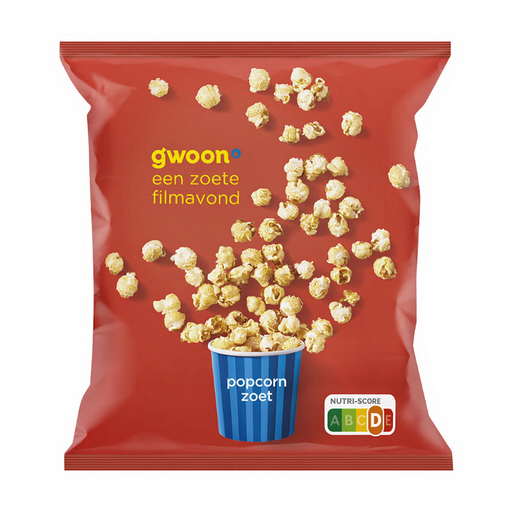
g'woon Sweet Popcorn, 175 g

g'woon Sweet Popcorn, 175 g

A ready-to-eat sweet popcorn option if you want to consider the label when choosing a post-workout snack.

Pack size: 175 g.

Joybuy

Frequently asked questions

Do you need special recovery nutrition after every workout?

No, not automatically. According to the Association of Sports Nutrition Experts Netherlands, your need to refuel depends on the type and duration of your exercise. So consider your workout and overall nutrition plan.

Does ‘low fat’ mean the same as ‘reduced fat’?

Don’t use these terms interchangeably. For solid foods, the European Commission defines a ‘low fat’ claim as no more than 3 g of fat per 100 g. This limit doesn’t, in itself, determine the requirements for making a reduced-fat claim.

Can you use the nutritional values for popcorn kernels to work out the values for homemade popcorn?

Not without factoring in how you prepare it. Albert Heijn’s values apply to dried maize, and its preparation instructions include vegetable oil. When assessing the finished product, account separately for any oil, sugar and salt you add.

What should you look out for with microwave popcorn?

Follow the instructions on the pack for the specific variety. Jumbo advises you not to restart cooking after an interruption.

Can I rely on the flavour name alone if I have a food allergy?

No. Albert Heijn says its dried maize may contain cereals containing gluten, soya and wheat. Jumbo says the sweet and salted popcorn varieties examined may contain milk. If you have a relevant allergy, always check the label on the exact pack.
