
People who want to limit added ingredients
You want to decide for yourself how much oil, salt or sugar to add after exercise. Loose popcorn kernels let you adapt the recipe, but how you prepare them also affects their nutritional value.


If you want to decide how much oil and how many other additions to use, loose popcorn kernels are a practical option. However, the snack you end up with also depends on how you prepare them. The dry kernels tested from Albert Heijn and Jumbo contain 4 g and 4.5 g of fat per 100 g respectively. The European Commission sets a maximum of 3 g per 100 g for a ‘low fat’ claim on solid foods. If you want a snack that’s ready to eat, check the nutritional information and serving size for the exact variant. Popcorn alone won’t tell you whether your diet meets your protein needs after exercise.
You want to decide for yourself how much oil, salt or sugar to add after exercise. Loose popcorn kernels let you adapt the recipe, but how you prepare them also affects their nutritional value.
You’re looking for something that doesn’t need cooking, and you pay attention to the exact variant, pack size and amount you eat. One pack doesn’t necessarily equal one serving.
You see popcorn as a snack, but also take into account the protein in your daily diet and your training goals.
First decide whether you want to prepare it yourself or eat it straight away. Then compare the nutritional information for the exact variant and consider how much you’ll actually have.
| What to consider | What should you check? | Who should pay extra attention? |
|---|---|---|
| Fat and oil | Check the fat per 100 g, the ingredients and whether the table describes dry kernels or prepared popcorn. | If reducing fat is a priority, you’ll want to know what’s in the product and what you add during preparation. Around 33% of consumers considering popcorn after exercise put limiting fat ahead of their other purchasing priorities. |
| Portion size and energy | Compare kcal per 100 g with the amount you actually weigh out, and check how many servings the pack contains. | If you want to limit how much you eat, weighing out a portion can help rather than treating the whole pack as one serving. For around 27% of these consumers, portion size and energy intake are the top priorities. |
| Preparation and taking it with you | Check whether you’re buying loose kernels, microwave popcorn or ready-popped popcorn, and follow the instructions. | If you want something to eat straight after exercise or a snack to take with you, preparation time may affect your choice. Around 20% of consumers give convenience the highest priority. |
| Snack or recovery food | Check the protein per portion you actually eat and assess your protein intake over the day. | If your main aim is to make sure your diet supports your training goals, consider popcorn as just one part of your eating pattern. For around 20% of consumers, supporting recovery nutrition is the top priority. |
Nutritional information for dry kernels doesn’t automatically describe the snack you eat after adding oil or other ingredients.
Take the preparation method into account when assessing it. For solid foods, the European Commission sets a maximum of 3 g of fat per 100 g for a ‘low fat’ claim.
Albert Heijn lists four 25 g servings in a 100 g bag of AH Zoute popcorn. The nutritional information per serving is therefore different from that for the whole bag.
Weigh out the amount you actually want to eat and compare it with the serving information on the pack.
The name or its role as a snack doesn’t tell you whether your daily diet provides enough protein for your training goals.
Consider popcorn as part of your eating pattern. The Netherlands Nutrition Centre lists ordinary foods as a possible source of any additional protein you need.
The AH products mentioned include loose organic popcorn kernels and ready-popped salted popcorn. The product types and preparation methods differ.
The Jumbo product information mentioned includes loose popcorn kernels and microwave popcorn. One type needs to be prepared from scratch, while the other follows a pre-set recipe.
Snack Day is a product type worth considering if you’re looking for microwave popcorn.
The ALDI Netherlands product information mentioned is for SUN SNACKS Zoute popcorn in a 100 g pack.
This product selection is for anyone who wants to prepare loose popcorn kernels at home and decide for themselves what to add.
 No image available
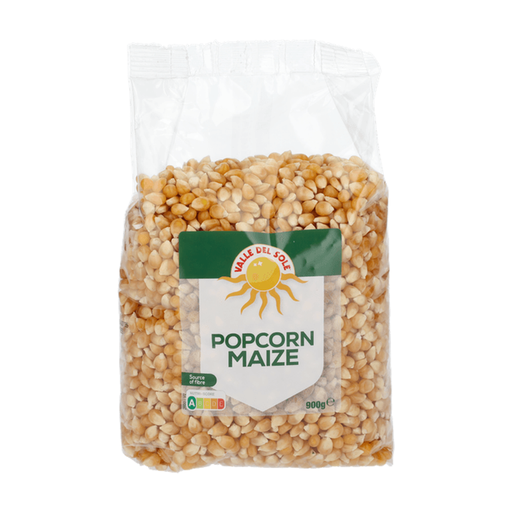
Popcorn kernels for cooking in a pan at home; the product description calls for 2 tablespoons of vegetable oil.
For solid foods, the European Commission sets a maximum of 3 g of fat per 100 g for a ‘low fat’ claim. This is a requirement for using the claim; it doesn’t mean the product suits every individual dietary goal.
Not necessarily. According to the Netherlands Nutrition Centre, most people who exercise don’t need special protein shakes or bars if they eat a healthy, varied diet. Consider your daily diet and training goals; any additional protein you need can also come from ordinary foods.
No, check the pack for the exact variant. AH Biologisch Popcorn mais states that it may contain cereals containing gluten, soya and wheat. If you have a relevant allergy, don’t just check whether maize is the main ingredient.
Follow the instructions for your chosen variant. For AH Biologisch Popcorn mais, Albert Heijn describes cooking it in a pan with oil and recommends storing it in a cool, dark and dry place. For Magnetron Popcorn Zout, Jumbo warns against restarting the cooking process if it has been interrupted. Seal AH Zoute popcorn properly after use.
Read the packaging of the variant you bought before eating it. Albert Heijn warns that ingredients, nutritional information and allergy information may change. If you have a question about a product, keep the pack handy so you can identify the exact variant.