Who is this guide for?

Gluten-free snack seekers

Looking for popcorn that is clearly labelled gluten-free, perhaps because you need to follow a gluten-free diet? An explicit product claim or Crossed Grain certification can help you choose with confidence, rather than relying on the product category alone. The Coeliac Association of the Netherlands explains what this certification means.

Shoppers with a food allergy

If you need to avoid a specific allergen, check both the ingredients and any warnings about possible cross-contamination. Jumbo Salted Popcorn, for example, states ‘May contain: Milk’; assess each variety individually.

Lactose-free snack seekers

A lactose-free claim can help you find snacks that suit lactose intolerance, but it does not automatically tell you whether a product contains milk proteins. HagaZiekenhuis explains that lactose and milk proteins are different substances.

What should you look for in popcorn?

What to consider What should you look for? Who is this important for?
Gluten-free options Look for an explicit gluten-free claim or verifiable Crossed Grain certification on the exact product packaging. If I need to eat gluten-free, I want information about the finished product, rather than relying on the ingredients alone. Around 29% of consumers put making an informed gluten-free choice first.
Specific allergen Read the ingredients and warnings, such as ‘May contain X’ or ‘Not suitable for people with an X allergy’. If I need to avoid a specific allergen, I check the packaging of that exact variety, including for possible cross-contamination. Around 29% of consumers say avoiding a specific food allergen is their main concern.
Lactose-free Work out whether you need to avoid lactose or need information about milk proteins; these are not interchangeable concerns. If I need to avoid lactose, I look for a product that suits that need, without treating a lactose-free claim as proof that it is free from milk allergens. Around 21% of consumers start by looking for lactose-free options.
Nutrition Compare sugar and salt on the same basis, for example per 100 g, then take your portion size into account. Once my dietary requirements are covered, I also want to know how much sugar or salt a variety contains. Around 14% of consumers make checking nutritional information their main follow-up question.
Preparation method Check whether the popcorn is ready to eat or needs preparing, what equipment is required and which instructions apply. Once I’ve checked my dietary requirements, I choose an option that suits the time and equipment I have available. Around 7% of consumers prioritise ease of preparation next.

Common pitfalls

  • Assuming lactose-free means free from milk proteins

    Lactose intolerance and milk allergy have different causes. A lactose-free claim therefore does not automatically tell you whether a product contains milk proteins.

    If you have a milk allergy, check the ingredients and cross-contamination warnings rather than relying on the lactose-free claim alone.

  • Assuming a vegan logo or short ingredients list guarantees a product is allergen-free

    A short ingredients list can still come with a warning about the possible presence of an allergen. Jumbo Salted Popcorn, for example, states ‘May contain: Milk’. The Dutch Vegetarian Association points out that the V-Label is not an allergen declaration.

    Look specifically for the allergen you need to avoid and read the warnings on the packaging.

  • Confusing free-from claims with low sugar or salt

    A gluten-free or lactose-free claim does not tell you how much sugar or salt a product contains. AH Sweet Popcorn lists 45 g of sugars per 100 g; AH Salted Popcorn lists 1.53 g of salt per 100 g.

    Once you’ve chosen a product that suits your dietary needs, check the nutrition table and compare products per 100 g, as recommended by the Netherlands Nutrition Centre.

  • Skipping the instructions for microwave popcorn

    Microwave popcorn has instructions specific to its packaging. Jumbo advises, among other things, not to restart the cooking process after an interruption and to ensure children prepare it only under adult supervision. Incorrect preparation can waste ingredients.

    Follow the instructions on the packaging and supervise children if they are involved in preparing it.

Relevant brands to consider

Albert Heijn

The Dutch product information gives examples of ready-to-eat salted and sweet popcorn.

  • Albert Heijn lists AH Salted Popcorn 100 g and AH Sweet Popcorn 200 g as gluten-free, lactose-free and vegan.
  • These claims apply to the varieties named; they do not mean that every product from the brand is allergen-free. AH Sweet Popcorn lists 45 g of sugars per 100 g, while AH Salted Popcorn lists 1.53 g of salt per 100 g.

Jumbo

The range includes ready-to-eat salted popcorn and microwave popcorn, catering for different preparation preferences.

  • The product information for Jumbo Salted Popcorn 100 g lists the ingredients and includes a warning about the possible presence of milk.
  • Assess Jumbo Microwave Popcorn Salted 3 x 90 g separately: the ingredients and preparation warnings for one variety do not automatically apply to another.

Lidl

According to Lidl Netherlands, Snack Day Microwave Popcorn Salted is a microwave option in a 3 x 100 g pack.

  • The product page confirms the preparation method and pack size.
  • Do not infer that it is gluten-free, lactose-free or allergen-free from this product information; check the packaging for your specific dietary needs.

ALDI

Sun Snacks Salted Popcorn 100 g is a ready-to-eat product line in the supermarket range.

  • ALDI Netherlands’ product information confirms the product name and pack size.
  • The product name alone does not show whether this popcorn is suitable for a specific allergy or intolerance. Check the packaging to make your choice.

Popcorn at Joybuy

This selection at Joybuy includes salted, sweet and caramel popcorn. Before choosing, check the ingredients and allergen information on the packaging of each variety.

g'woon Salted Popcorn 100 g

g'woon Salted Popcorn 100 g

The product information states that this salted popcorn contains none of the 14 main EU allergens; check the current packaging for your specific dietary needs.

View at Joybuy
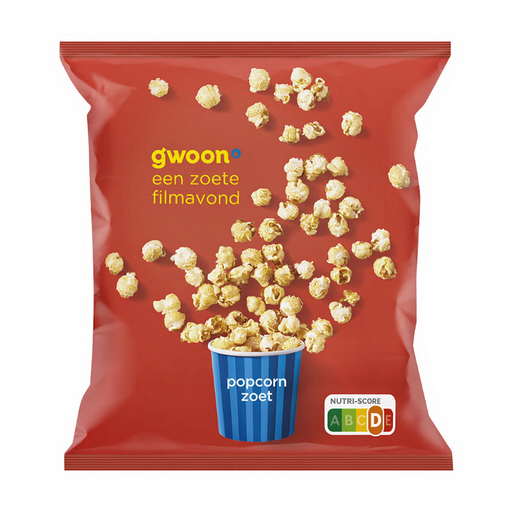
g'woon Sweet Popcorn 175 g

g'woon Sweet Popcorn 175 g

The product information states that this sweet popcorn contains none of the 14 main EU allergens; check the current packaging for your specific dietary needs.

View at Joybuy
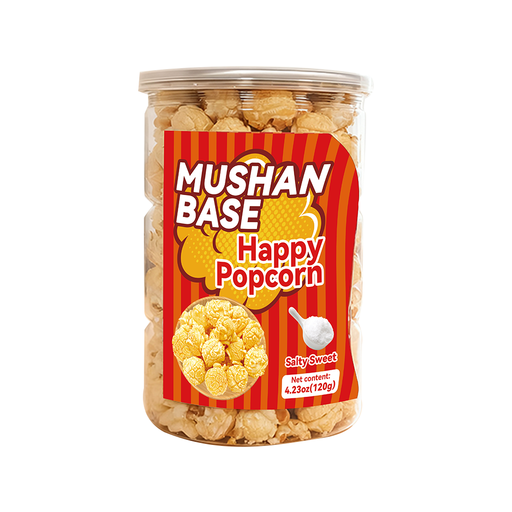
MUSHAN BASE Popcorn Sweet Salty Flavor 120 g

MUSHAN BASE Popcorn Sweet Salty Flavor 120 g

This ready-to-eat sweet and salty popcorn is an option if you want the ingredients and allergen information to hand. The product information lists soya and states that the popcorn may contain gluten; avoid this variety if you need to avoid these allergens.

View at Joybuy
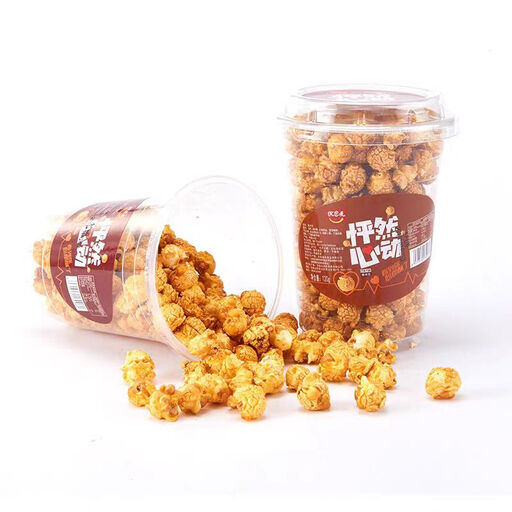
Yousmai Pengranxindong Popcorn Caramel 120 g

Yousmai Pengranxindong Popcorn Caramel 120 g

The product information lists milk. This caramel popcorn is therefore not suitable for anyone who needs to avoid milk because of an allergy.

View at Joybuy
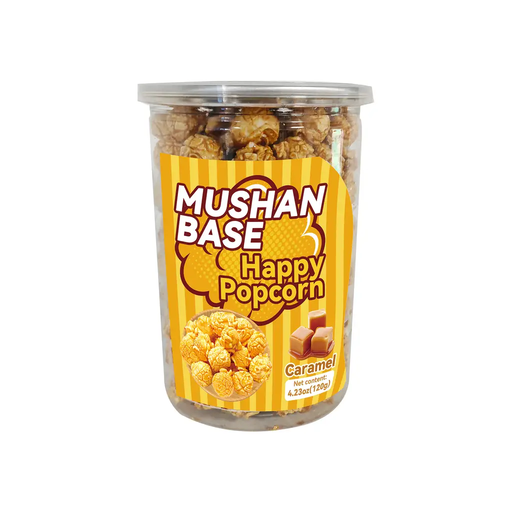
MUSHAN BASE Caramel Popcorn 120 g

MUSHAN BASE Caramel Popcorn 120 g

The product information lists soya. Avoid this caramel popcorn if you need to avoid soya.

View at Joybuy

Frequently asked questions

Is lactose-free popcorn also suitable for someone with a milk allergy?

Not automatically. Lactose is milk sugar, whereas a milk allergy involves milk proteins. HagaZiekenhuis explains the difference. If you have a milk allergy, check the ingredients and relevant cross-contamination warnings, rather than relying on the lactose-free claim alone.

Can a vegan logo replace checking for allergens?

No. According to the Dutch Vegetarian Association, the V-Label is not an allergen declaration. Use it to help you choose vegan products, but check separately which allergens may be present.

What allergen information should you expect when buying unpackaged popcorn at a market?

According to the Netherlands Food and Consumer Product Safety Authority, the seller must be able to provide allergen information before you buy. This information can be given in writing or verbally, provided it is made clear that you can ask for it. This is an obligation to provide information, not a guarantee that the popcorn is free from your allergen.

What do the Dutch cross-contamination warnings mean from 1 January 2026?

Since 1 January 2026, the Netherlands Food and Consumer Product Safety Authority has been checking the strengthened rules for warnings on prepacked products. The manufacturer must assess the remaining risk of cross-contamination. The permitted wording is ‘May contain X’ and ‘Not suitable for people with an X allergy’.

Is the term gluten-free regulated by law in the Netherlands?

Yes. Implementing Regulation (EU) No 828/2014 sets out the conditions for providing information about the absence or reduced presence of gluten. The European Commission confirms that the rules also apply to non-prepacked food; EUR-Lex lists the regulation as in force.
