When choosing popcorn if you have diabetes, focus on the total carbohydrates in the portion you actually eat. A low sugar or fat content doesn’t, on its own, tell you how many carbohydrates that portion contains. If you want a lower-fat snack, also compare how it’s prepared, the total and saturated fat, and the salt. And don’t treat ‘low fat’ and ‘reduced fat’ as the same claim.
Who is this guide for?
Snackers keeping an eye on carbohydrates
If you’re watching your carbohydrate intake because you have diabetes, compare the total carbohydrates with the amount you actually eat. Diabetes.nl explains why carbohydrates matter; ‘of which sugars’ is not a substitute for the total carbohydrate value.
Snackers looking to eat less fat
Compare total and saturated fat, and check the oil and other ingredients. The European Commission and the Dutch Bakery Centre explain that fat claims can mean different things. A claim about fat doesn’t tell you how many carbohydrates a portion contains.
Convenience-minded portion pickers
If you’re looking for ready-to-eat or microwave popcorn, check the pack weight, number of portions and preparation instructions for that particular product. AH product pages, for example, provide portion and preparation details for specific products.
What should you look for when buying?
For solid foods, the European Commission sets a maximum of 3 g of fat per 100 g for a ‘low fat’ claim. The Dutch Bakery Centre describes ‘reduced content’ as a comparative claim meaning at least 30% less than comparable products. If you see this claim, check the exact wording and comparison.
If you’re looking for popcorn that is lower in fat and suitable for keeping an eye on carbohydrates, these may be your first priorities when buying:
| What to consider |
What should you check? |
Who is this important for? |
| Total carbohydrates per portion |
Work out the carbohydrates per 100 g and the weight you eat. Only compare values based on the same preparation method. |
If I want to match my portion to my personal dietary guidance, I count the total carbohydrates; around 36% of consumers make carbohydrates their top priority. |
| Total fat and the claim |
Check the total fat per 100 g, the ingredients and the exact claim. For a comparative claim, also check what comparison is given. |
If you’re mainly looking to reduce total or added fat, you’ll still want to consider the other nutritional values; around 29% of consumers put total fat first. |
| Saturated fat and salt |
Check saturated fat and salt alongside total fat. If the label information is inconsistent, use the current packaging for your comparison. |
If saturated fat or salt is relevant to my personal dietary guidance, I want to be able to check these values separately; around 21% of consumers give these nutritional factors top priority. |
| Convenience and portioning |
Check the pack weight, number of portions, whether it can be resealed and any preparation instructions. |
If you want to take a snack with you, prepare it quickly or weigh it out in advance, check what the packaging makes practical; around 14% of consumers put convenience and portioning first. |
Make popcorn from kernels
A good fit if: you want to decide how much oil, salt and seasoning to add. The Diabetes Fund lists a popcorn maker as a way to prepare popcorn without added fat.
Things to consider: the nutritional values for dried corn won’t automatically match those of the prepared recipe; remember to count any additions.
Salted microwave popcorn
A good fit if: microwave preparation matters to you and you’re happy to follow the instructions on the packaging you choose.
Things to consider: Jumbo lists 12,4 g of fat and 5,1 g of saturated fat per 100 g for its Magnetron Popcorn Zout; AH lists 21 g and 9,9 g respectively for its salted microwave version. These are label values for two specific products, not a general claim about the category.
Ready-to-eat salted popcorn
A good fit if: you want to take popcorn with you without preparing it, or eat a measured portion straight away.
Things to consider: recipes vary from product to product. For Jumbo Popcorn Zout, the product page lists 3% salt in the ingredients and 1,05 g of salt per 100 g in the nutrition table. Check the current packaging before relying on that salt value.
Sweet or caramel popcorn
A good fit if: you enjoy a sweet flavour and can tailor the amount to your personal dietary guidance.
Things to consider: AH lists 9 g of fat, 83 g of carbohydrates and 57 g of sugars per 100 g for its caramel popcorn. A lower fat value doesn’t automatically make this option suitable if carbohydrates are your main concern.
Common buying mistakes
-
Confusing ‘low sugar’ with low carbohydrates
A product can be low in sugar and still contain carbohydrates. Looking only at the sugar value therefore won’t give you the full picture for your portion.
Calculate the total carbohydrates for the amount you weigh out. Read ‘of which sugars’ as part of the nutrition table, not as a substitute for it.
-
Treating a fat claim as a general promise
A fat claim doesn’t automatically tell you the carbohydrate or salt content, or whether the product is right for you personally.
Assess the exact fat claim alongside the portion size, carbohydrates, saturated fat and salt.
-
Comparing dried corn directly with prepared popcorn
Nutritional values may refer to the product as sold or to a prepared version. Oil and toppings will change the finished recipe.
Compare values on the same basis and, if you’re making it yourself, include the ingredients in the full recipe.
Making it yourself takes extra steps and may require oil, toppings or equipment.
-
Counting the whole pack as one portion
A pack may contain several portions, so the nutritional values for one portion won’t match what you eat if you finish the whole bag.
Weigh your portion and calculate its nutritional values instead of relying only on the serving size shown on the packaging.
Brands and product ranges to consider
Albert Heijn
AH product pages describe different types of popcorn, including dried corn, salted popcorn, microwave popcorn and caramel popcorn.
- Product pages provide details on ingredients, nutritional values, portions or preparation for each variety.
- Assess each variety individually. Values for dried corn won’t automatically match those of the prepared recipe, and that doesn’t make the range as a whole ‘low fat’ or suitable for people with diabetes.
Jumbo
The Dutch product information covers salted microwave popcorn and ready-to-eat salted popcorn.
- Product pages give nutritional values per 100 g for specific varieties.
- For Jumbo Popcorn Zout, the product page lists 3% salt in the ingredients and 1,05 g of salt per 100 g in the nutrition table. Don’t rely on that salt value as the deciding factor in a comparison without checking the current packaging.
Lidl
The Lidl Netherlands product page identifies Snack Day Popcorn zeezout as a 200 g popcorn product.
- The product type, flavour description and pack weight are clear on the product page.
- ‘Sea salt’ is a flavour description and doesn’t, on its own, prove that the product is low in salt or fat.
ALDI
The Dutch ALDI product page identifies Sun Snacks Zoute popcorn as a product in a 100 g pack.
- The product page gives the product name and pack weight.
- A salted flavour description doesn’t tell you whether the variety contains less fat or suits your individual carbohydrate needs.
Popcorn options at Joybuy
This selection includes ready-to-eat popcorn and popcorn kernels to prepare yourself. Use the nutrition table for the exact variety, and include any additions when assessing popcorn you make yourself.
 No image available
LYFEN Popcorn 180 g
The product description says this is a ready-to-eat product that can be eaten straight from the pack once opened.
Listed per 100 g: 27,5 g of fat and 68,2 g of carbohydrates.
View at Joybuy
 No image available
Pop Corn, 3 × 100 g
The product description says it is prepared in the microwave and contains three 100 g bags; follow the preparation instructions on the packaging.
Listed per 100 g: 23 g of fat and 59,6 g of carbohydrates.
View at Joybuy
 No image available
g'woon Salted Popcorn, 100 g
The product title identifies salted popcorn in a 100 g pack. Check the nutrition table for this variety for its carbohydrate, fat and salt values.
View at Joybuy
 No image available
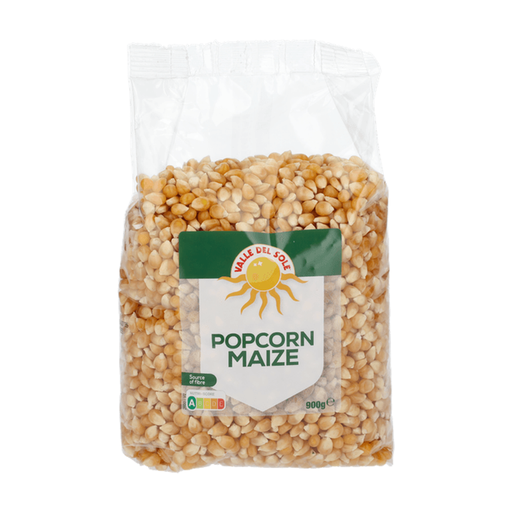
Valle Del Sole Popcorn Maize Butterfly, 900 g
The product description gives instructions for preparing it in a pan and suggests adding 2 tablespoons of vegetable oil; remember to include this in the nutritional values for the prepared recipe.
The product description lists, per 100 g: 5 g of fat, 0,8 g of saturated fat, 60 g of carbohydrates and 0 g of salt.
View at Joybuy
Frequently asked questions
Is low-sugar popcorn automatically a suitable snack if you have diabetes?
No. Check the total carbohydrates in the portion you eat, not just the sugar. If you need guidance on a personal serving size, discuss it with your healthcare professional or dietitian; a product label can’t determine whether a product is medically suitable for you as an individual.
When can popcorn be labelled ‘low fat’?
For solid foods, the European Commission sets a maximum of 3 g of fat per 100 g for a ‘low fat’ claim. A low number of grams in a small portion therefore doesn’t show that the product meets this threshold.
Does ‘reduced fat’ mean the same as ‘low fat’?
No. ‘Low fat’ is defined by a limit per 100 g; the Dutch Bakery Centre describes ‘reduced content’ as a comparative claim meaning at least 30% less than comparable products. Check the exact claim and the comparison given. This explanation doesn’t confirm a claim for any specific popcorn product.
How do I prepare microwave popcorn according to the packaging?
Follow the instructions for the exact variety and stay by the microwave. AH says its salted microwave popcorn is ready when there are 1–2 seconds between pops; open the hot bag carefully because of the steam. For the variety listed, Jumbo warns you not to restart preparation after an interruption.
Can popcorn be promoted as a way to treat or prevent diabetes?
No. The Netherlands Food and Consumer Product Safety Authority says that food products must not make medical claims about preventing, treating or curing a disease. Choose based on verifiable product information and your own needs, not on a promise of treatment.


