Who is this guide for?

Mindful portion choosers

You’re looking for popcorn to enjoy now and then after school, and want to know how much energy is in the amount you actually serve. A low calorie count doesn’t automatically make popcorn a nutritious snack; the Dutch Nutrition Centre also recommends snacks such as vegetables, fruit or wholemeal bread for children.

Those who want control when making their own

You want to choose how much oil and flavouring to add, and have the time and space to prepare popcorn. AH Biologisch Popcorn mais lists maize as its only ingredient.

Parents short on preparation time

You’re looking for something that’s ready to serve or easy to heat, while still wanting to check portions, labels and safety. For microwave popcorn, it’s important to follow the packet instructions and have an adult supervise.

What should you look for when choosing?

Popping it yourself

A good choice when: you want to decide how much oil, sugar and salt to use, and have time to make popcorn.

The trade-off: you’re responsible for preparing it and adding any extras; dried maize isn’t the same product as prepared popcorn on a nutrition label.

Microwave popcorn

A good choice when: you want hot popcorn without having to add ingredients to loose kernels yourself.

The trade-off: the ingredients have already been combined. Jumbo lists 391 kcal per 100 g for Jumbo Magnetron Popcorn Zout; AH lists 435 kcal per 100 g for AH Magnetron Popcorn Zout. These are label values for the products named, not a comparison of preparation methods.

Ready-to-eat popcorn

A good choice when: you want to serve popcorn straight away, without heating it.

The trade-off: the ingredients are fixed. Albert Heijn lists 543 kcal per 100 g for AH Zoute popcorn; the stated 25 g portion isn’t a personal recommendation for a child.

What to consider What should you look for? Who is this important for?
Energy per portion Compare kcal per 100 g on the same product basis, and weigh the portion you serve. If I want to know how much energy the portion actually eaten contains, I look at both the label and the portion weight. Around 36% of consumers prioritise energy per snack occasion.
Added ingredients Check the ingredients and compare sugar, salt and saturated fat per 100 g. If I want to decide how much oil, sugar or salt is added, I check the ingredients or choose a preparation method that lets me measure these myself. Around 29% of consumers focus mainly on ingredients.
Preparation and supervision Check whether the popcorn is ready to eat or needs preparing; follow the packet instructions for microwave popcorn. After school, I want to be able to serve something without unnecessary preparation, but an adult needs to supervise when heating it. Around 21% of consumers give preparation time the highest priority.
Portions and storage Check the net weight, number of portions and storage instructions after opening. If I want to divide a packet between several snack occasions, I need to be able to measure portions and store the rest properly. Around 14% of consumers prioritise this.

Common pitfalls

  • Looking only at calories

    The Dutch Nutrition Centre lists popcorn among the foods that require care because of the risk of choking. Calories don’t tell you whether a child can chew and swallow it safely.

    Make sure children eat it sitting calmly, stay nearby and, if you’re unsure about their ability to chew or swallow, choose a suitable alternative.

  • Mistaking a flavour name or organic origin for a nutrition claim

    ‘Salted’ and ‘organic’ don’t, on their own, tell you anything about the energy per 100 g. For a ‘low energy’ claim on solid foods, the European Commission sets a limit of no more than 40 kcal (170 kJ) per 100 g.

    Compare the nutrition information for the exact variety. Choosing a smaller portion is a portion-size decision, not proof that a product meets that claim.

  • Treating a packet or adult reference intake as a child’s portion

    A packet may contain several portions. An adult reference intake isn’t nutritional advice for a child.

    Serve a measured amount, and don’t judge the portion by the adult percentage shown on the label.

  • Comparing dried maize directly with prepared popcorn

    Dried popping maize and prepared popcorn are different product forms. The amount of dried maize in a packet isn’t the same as the same weight of ready-to-eat popcorn.

    Compare nutrition values on the same product basis, and remember to include any extras when popping it yourself.

Brands to consider

Albert Heijn

The range includes dried popping maize, microwave popcorn and ready-to-eat salted popcorn: different options for making your own, serving hot or eating straight away.

  • Albert Heijn lists 543 kcal per 100 g for AH Zoute popcorn and 435 kcal per 100 g for AH Magnetron Popcorn Zout. These figures apply to those specific products.
  • The values for these varieties aren’t a reflection of the whole brand. Always check the label on the exact packet.

Jumbo

Jumbo sells ready-to-eat salted popcorn and microwave popcorn under its own name.

  • For Jumbo Magnetron Popcorn Zout 3 x 90 g, Jumbo lists 391 kcal and 1.5 g of salt per 100 g, with microwave preparation instructions.
  • Ingredients vary between varieties. An adult reference intake on a packet isn’t advice for children.

Lidl

Lidl sells popcorn under the Snack Day brand, including sweet and salted varieties.

  • Lidl Netherlands’ product information lists Snack Day Popcorn zoet in a 200 g packet.
  • A flavour name doesn’t prove that a product is low in energy. Check the nutrition information on the exact packet.

ALDI

ALDI lists SUN SNACKS Zoute popcorn as a ready-to-eat option.

  • ALDI Netherlands’ product listing gives a packet size of 100 g.
  • The description ‘salted popcorn’ doesn’t tell you how much energy it contains; check the product’s nutrition information.

Popcorn products at Joybuy

These Joybuy products cover popping your own, microwave preparation and ready-to-eat popcorn.
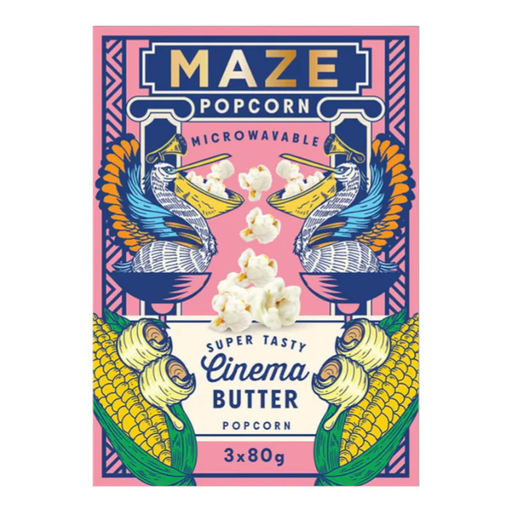
SNACK MAZE cinema butter-flavoured popcorn, 240 g

SNACK MAZE Cinema Butter popcorn, 240 g

For anyone looking for ready-to-eat popcorn with a cinema-style flavour. The product name lists a 240 g packet.

View at Joybuy
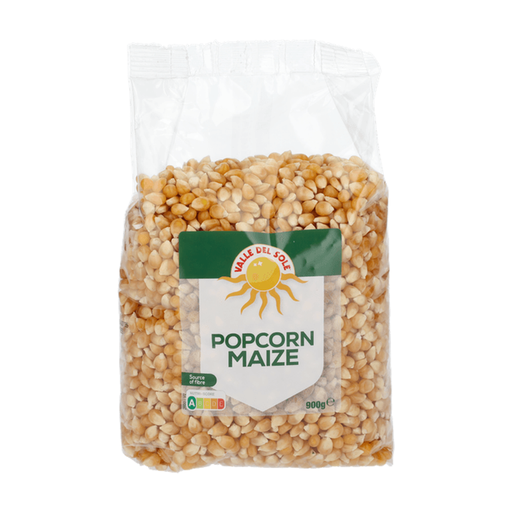
Valle Del Sole Popcorn Maize (Butterfly), 900 g

Valle Del Sole Popcorn Maize (Butterfly), 900 g

For anyone who wants to pop their own popcorn. The product name lists Popcorn Maize (Butterfly) in a 900 g packet.

Bear in mind that you’ll need to prepare it and decide whether to add anything.

View at Joybuy
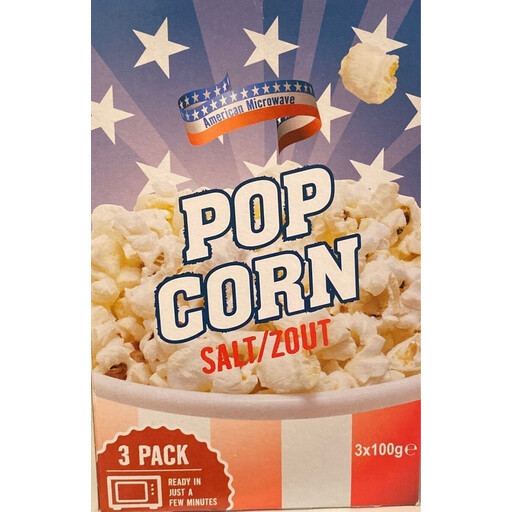
Pop Corn, 3 x 100 g

Pop Corn, 3 x 100 g

For anyone looking for microwave popcorn. The product name indicates three 100 g packets.

Check the instructions on the packet and take care around hot steam.

View at Joybuy
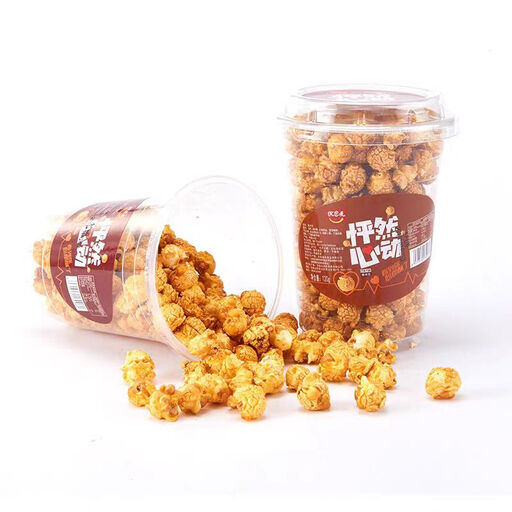
Yousmai Pengranxindong caramel-flavoured popcorn, 120 g

Yousmai Pengranxindong Popcorn (Caramel), 120 g

For anyone looking for ready-to-eat popcorn with a caramel flavour. The product name lists a 120 g packet.

Check the ingredients and allergen warnings on the exact packet.

View at Joybuy
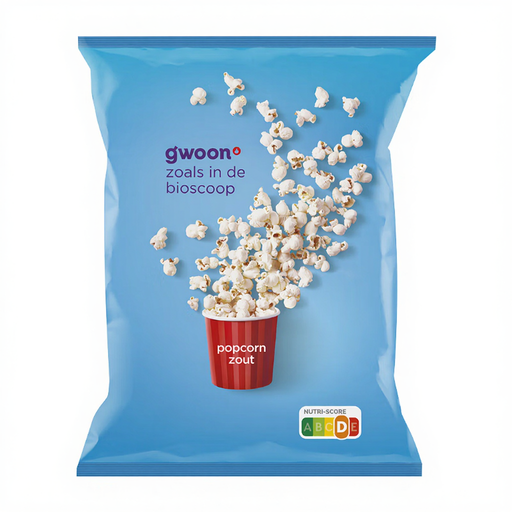
g'woon salted popcorn, 100 g

g'woon Salted Popcorn, 100 g

For anyone looking for ready-to-eat salted popcorn and wanting to measure out their own portion. The product name lists a 100 g packet.

Use the nutrition information on the exact packet to work out the energy per portion.

View at Joybuy

Frequently asked questions

When can popcorn be described as ‘low in energy’?

For solid foods, the European Commission sets a limit of no more than 40 kcal (170 kJ) per 100 g for a ‘low energy’ claim. A smaller portion doesn’t automatically make a product eligible for that nutrition claim.

Can popcorn be a regular after-school snack?

Look beyond calories alone. For children aged 4 to 12, the Dutch Nutrition Centre recommends snacks from the Wheel of Five, such as vegetables, fruit or wholemeal bread. Popcorn isn’t automatically a suitable replacement.

Is popcorn suitable for every young school-age child?

Not necessarily: the Dutch Nutrition Centre lists popcorn among foods that require care because of the risk of choking. Make sure a child eats it sitting calmly and stay nearby. If you’re unsure whether they can chew or swallow it safely, a suitable alternative is a better choice; this guidance doesn’t establish a universal safe age for eating popcorn.

Can my child make microwave popcorn themselves?

Don’t let a child prepare hot popcorn without adult supervision. Follow the instructions on the packet and take care around the hot bag and steam; Jumbo also warns against restarting a preparation cycle if it has been interrupted.

Is popcorn automatically suitable for someone with a milk allergy?

No. Jumbo Popcorn Zout states ‘May contain: Milk’. Always check the ingredients and allergen warnings on the exact packet; don’t rely on information for a different variety of popcorn.
