
Vandaag of morgen in huis

Kwaliteit gegarandeerd

Welkomstaanbiedingen ontgrendelen: GRATIS bezorging | Tot 80% korting | Gratis 30 dagen JoyPlus-proefperiode
Download de app
A polishing machine can save time when waxing a car, refreshing metal or finishing wood. However, not every machine is suitable for every job. A large model with a wide disc works differently from a mini polishing machine for badges and tight corners. Product descriptions also sometimes use polishing, sanding and waxing interchangeably.
As a Joybuy Product Recommendation Officer, I filter the most important product specifications so you can compare marketing claims more effectively. Pay particular attention to three common pitfalls: choosing the wrong drive type, using a battery that does not suit your working time and buying an accessory kit that is not suitable for your surface.
A rotary polishing machine spins the polishing disc around a single fixed centre point. This can be suitable for targeted work, but it requires controlled movement and an appropriate speed. An eccentric polishing machine, also known as a dual-action or DA machine, combines rotation with an eccentric movement. This is often practical for working evenly across larger painted surfaces.
A mini machine may also have several operating modes. So do not just check whether “DA” or “RO” appears in the title. Also check which drive system, eccentric orbit and disc sizes are actually included.
With a cordless polishing machine, voltage and amp-hours are two different specifications. Voltage mainly indicates the battery system, while the capacity in Ah gives an indication of the amount of stored energy. The stated operating time may also be based on no-load running. According to BATOCA’s product description, for example, the S5 battery lasts up to 30 minutes without load. That does not automatically mean it will run for the same amount of time while polishing a car.
Also check what is included in the box. Some models are sold as “bare units” without a battery or charger. With the Einhell TE-OS 18/230 Li Solo, you need to purchase the Power X-Change battery and charger separately.
A set containing lots of pads, discs and sandpaper may look appealing, but check:
A polishing machine for cars generally requires different pads from a random orbital sander for a wooden table. For narrow edges and corners, a delta sanding plate may be more convenient than a round polishing disc.
An adjustable speed helps you adapt the machine to the material and the job. Lower speeds are generally practical for wax or a finishing pad, while higher settings are often mentioned in product descriptions for correction or sanding work. Treat such application advice as information from the brand, not as a guarantee of a particular result.
A wide speed range is not automatically necessary. For occasional waxing, simpler controls may be sufficient. For a car polishing machine used with different types of pad, adjustable speed is more useful. Also check whether the machine has a soft start and whether the speed remains stable under load. This information should be verifiable in the product specifications or manual.
A disc of around 125 mm is a common size for car paintwork and medium-sized surfaces. A larger disc, such as the 254 mm disc on the Einhell CE-CB 18/254 Li Solo, can cover more surface with each movement. However, a machine like this is less suitable for small details.
For headlights, alloy wheels, window edges and badges, a detail polishing machine with small backing pads is more practical. The BATOCA S5 is supplied with 25, 50 and 75 mm plates. Always check that the chosen pad and product are suitable for the surface.
A cordless polishing machine gives you freedom of movement around a car, but you will need to charge and store the batteries. A model with two interchangeable batteries can be more convenient for longer jobs. A mains-powered machine avoids charging breaks, but the cable requires extra care around the workpiece.
Pay attention to the weight, handle, vibrations and position of the on/off switch. A heavy machine with a wide disc can be more tiring to use on vertical surfaces. Also check whether the charger, battery, storage case and pads are included.
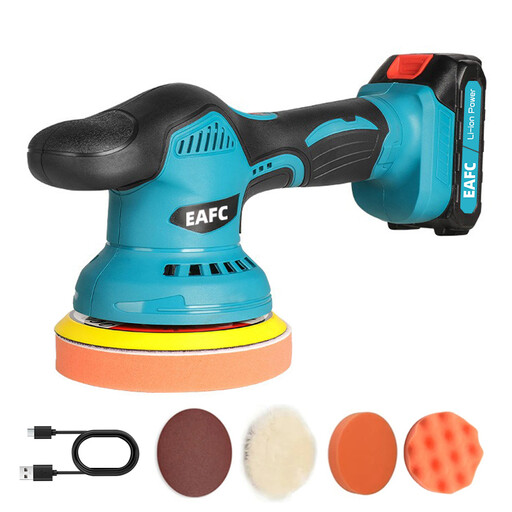
Why it suits this profile: This cordless machine has a 125 mm disc diameter, eight speed settings and comes with several pads and a Type-C charging cable. This makes it suitable for occasional car maintenance and small household jobs.
The speed can be adjusted from 2800 to 5500 rpm. Before buying, check the included battery capacity and the operating time stated in the current product information.
125 mm disc, eight settings and accessories for polishing, waxing and light sanding.
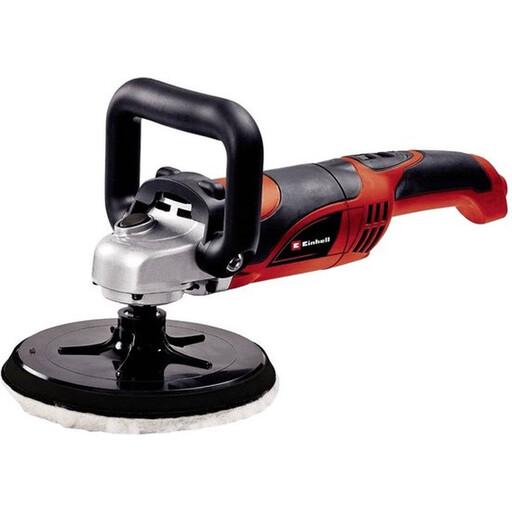
Why it suits this profile: This mains-powered machine is designed for versatile use in the garage or workshop. The 1100 W motor, LCD speed control and accessories for sanding and polishing make it suitable for users working with different materials.
The machine runs from the mains, so you are not dependent on battery life. The speed is electronically adjustable; always use the correct disc and protection for each material.
2-in-1 sanding and polishing, LCD control, spindle lock and included storage case.
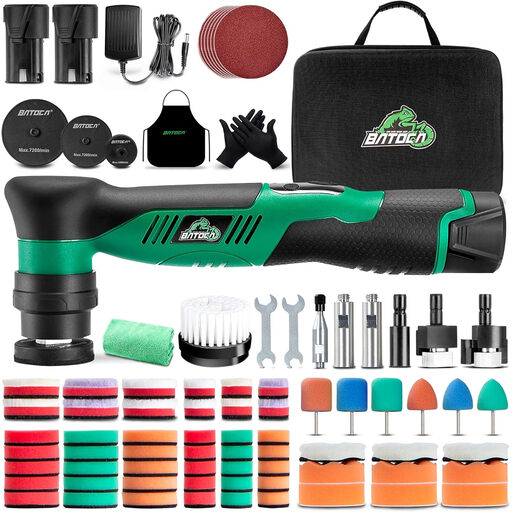
Why it suits this profile: The S5 switches between rotary, 3 mm eccentric and 12 mm eccentric drive modes. With 25, 50 and 75 mm plates, it is particularly suited to car detailing and hard-to-reach areas.
The different drive modes mean you do not need a different type of machine for every detail area. The set includes two interchangeable 12 V, 2.0 Ah batteries.
Three operating modes, six speeds from 2000 to 5500 rpm and several compact backing pads.
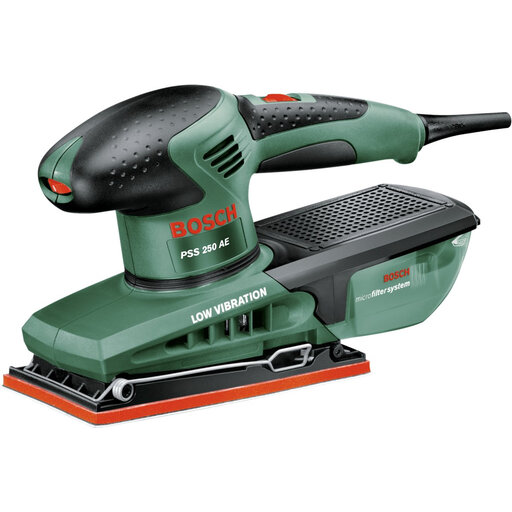
Why it suits this profile: This is primarily an orbital sander for medium-sized flat surfaces made from wood, metal, stone and plaster. It is suitable for anyone who mainly wants to sand and only needs limited finishing work.
The product description clearly states that it is intended for flat surfaces. This means you will not buy a round car polishing machine for a job better suited to a flat sanding base.
250 W, electronic speed control, Microfilter dust box and included P80, P120 and P180 sheets.
We have put together a complete, up-to-date list of products that fully meet these strict selection criteria and the applicable European safety regulations.
Wear at least safety goggles when sanding and polishing. Depending on the dust, noise and material, also use respiratory and hearing protection. Do not work on a wet surface if the manual does not permit it. Switch off the machine and disconnect the power supply or battery before replacing a pad, disc or accessory.
Clean ventilation openings and the dust collection system after use. Check pads, cables, batteries and fastenings for damage. A worn pad distributes pressure less evenly and can put unnecessary strain on the surface. Always follow the manufacturer’s instructions.
For large painted surfaces, an eccentric car polishing machine with a disc of around 125 mm is often practical. For badges, headlights and edges, a mini polishing machine with small plates is a better choice. Only choose a rotary model if it suits the application and your level of skill.
That depends on the model and its accessories. A sanding and polishing machine such as the Einhell CC-PO 1100/1E is designed for this purpose. An orbital sander, such as the Bosch PSS 250 AE, is mainly intended for flat sanding and is not a replacement for a detail polishing machine.
In addition to the purchase price, you need to factor in pads, sanding sheets, polishing compounds, batteries and electricity. With a cordless polishing machine, check whether the battery and charger are included. A mains-powered model does not need charging breaks, while a battery-powered polishing machine offers greater freedom of movement. Consider your working time, rather than just the price of the machine.
