Who is this buying guide for?

Photographing glossy stones

You photograph polished surfaces against a dark background and want to control highlights and the tone of the background. Your choice should start with lighting and set-up, not just the camera body. Shopify discusses reflections and lighting for jewellery photography, while Canon UK explains how dark scenes can affect automatic exposure metering.

Capturing fine details

You want to show fine textures or small stones at a larger scale. Check the magnification of the exact lens and consider how you’ll keep the whole three-dimensional stone in focus. Canon UK and Nikon UK publish lens magnification specifications.

Taking quick collection photos

You want consistent photos of whole stones without lots of separate kit. Compare a compact camera with a fixed lens against a mirrorless camera kit, including the lens actually supplied. OM SYSTEM UK describes what’s included with the TG-7 Micro Adventure Kit.

What should you look for when choosing?

Compact camera with a close-up mode

A good fit if: you want to photograph whole stones and small details without changing lenses, and the working distance suits your lighting set-up.

Keep in mind: OM SYSTEM UK states that the TG-7 Micro Adventure Kit can focus from 1 cm and includes an LG-1 Light Guide. That distance doesn’t tell you how much magnification you’ll get or how much room you’ll have to position your lighting.

Mirrorless camera with a standard kit lens

A good fit if: you mainly photograph whole stones or larger surface details and want the option to choose a different lens later.

Keep in mind: Canon specifies a maximum magnification of 0.26× at 45 mm with manual focus for the RF-S 18–45 mm. So a standard zoom isn’t automatically a 1:1 macro lens.

Mirrorless camera with a macro lens

A good fit if: your main aim is to fill the frame with small stones or fine textures.

Keep in mind: check that the camera body, lens mount and kit contents are compatible. Nikon specifies 1:1 magnification for the NIKKOR Z MC 50mm f/2.8. That lens specification doesn’t tell you how much of a whole curved stone will be in focus in a single shot.

What to consider What to check before buying Who is this most relevant to?
Reflections and dark contrast Check whether you can adjust the exposure or set it manually, and whether the working distance leaves enough room to position your lighting. If I want to control reflections on a polished stone and keep the background dark, I prioritise lighting control; around 33% of consumers put control over reflections first.
Magnifying small details Compare the maximum magnification of the exact lens and check the corresponding focal length and focus mode. If I want to fill the frame with a small stone or fine texture, I focus on lens magnification; around 27% of consumers prioritise magnification.
Keeping the whole stone in focus Check whether the camera body has focus bracketing or stacking, whether the lens is compatible and whether you can keep the camera steady. If I want to show a curved stone in focus from front to back, depth of field matters more than taking the picture quickly; around 20% of consumers make this their top priority.
A complete set-up Check what’s included with the exact kit and whether you’ll need a separate lens or additional lighting for your subject. If I want to get started without unexpected lens or kit choices, I check what’s actually included; around 20% of consumers prioritise having a complete, straightforward set-up.

What to watch out for when buying

  • Assuming a standard zoom is a 1:1 macro lens

    Maximum magnification depends on the lens and the stated focusing conditions. Canon specifies a maximum magnification of 0.26× at 45 mm with manual focus for the RF-S 18–45 mm; Nikon specifies 1:1 for the separate NIKKOR Z MC 50mm f/2.8.

    Compare the lens specifications for the exact kit with the smallest stone you want to fill the frame with.

  • Confusing a 1 cm focusing distance with a suitable lighting set-up

    OM SYSTEM UK states that the TG-7 Micro Adventure Kit can focus from 1 cm and includes an LG-1 Light Guide. The distance alone won’t tell you how your stone will be framed or how reflections will look.

    Try the stone you intend to photograph with your chosen background and lighting direction before relying on that close-up distance.

  • Trying to fix a dark photo by buying a different camera

    A polished surface reflects its surroundings, while automatic exposure metering may render a mostly dark scene differently from how you intended. Canon UK describes this effect in scenes with predominantly dark tones.

    First assess the position of the light, any diffusion and the exposure setting. Then decide what close-up capabilities you need.

Brands to consider

Canon

EOS R system cameras offer a route from a kit lens to a separate macro lens.

  • Canon specifies a maximum magnification of 0.26× at 45 mm with manual focus for the RF-S 18–45 mm. For the separate RF 85mm F2 Macro, Canon states 0.5× magnification and compatibility with the EOS R50.
  • These are Canon specifications, not an independent comparison. Check which lens is actually included in the kit you choose.

Nikon

The Z system offers the option of a separate Z macro lens for capturing small details.

  • Nikon specifies a 1:1 reproduction ratio for the NIKKOR Z MC 50mm f/2.8.
  • The lens is sold separately. The ratio alone doesn’t tell you how much of a three-dimensional stone will be in focus in a single shot.

OM SYSTEM

You could look at the fixed-lens TG-7 for close-ups, or an OM system camera with a separate macro lens.

  • The Dutch TG-7 Micro Adventure Kit listing states that it can focus from 1 cm and includes an LG-1 Light Guide. OM SYSTEM lists focus stacking for the OM-5 Mark II and 1:1 magnification for the M.Zuiko Digital ED 60mm F2.8 Macro.
  • These are specifications and kit details for individual products, not a guaranteed combination or an independent comparison. Check what’s included with the kit you choose.

Sony

An E-mount option to explore if you already have a compatible Sony mirrorless camera or are considering a separate macro lens.

  • Sony lists the FE 90 mm F2.8 Macro G OSS as a separate lens.
  • Before buying, check that the lens is compatible with your exact camera body and set-up. The model name alone doesn’t prove that it will perform better for this use.

Joybuy products

Below are Joybuy cameras whose product names mention photography or vlogging. For polished stones, check the focusing distance and magnification of the exact model in particular; the video and camera features listed don’t automatically tell you either.
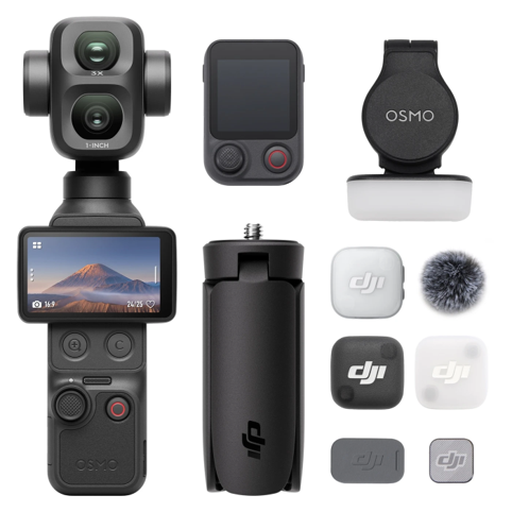
Osmo Pocket 4P Vlog Combo in black

Osmo Pocket 4P Vlog Combo - Black

The product name suggests a vlogging camera; check whether its close-up capabilities are suitable for still photographs of stones.

Version: Vlog Combo - Black.

Joybuy

DJI Osmo Pocket 4 Standard Combo

DJI Osmo Pocket 4 Standard Combo

The product title describes a pocket gimbal vlogging camera; check its close-up distance and magnification before choosing it for small stones.

The title lists a 1″ CMOS sensor, 4K/240fps video, 3-axis stabilisation, 2× lossless zoom, 107GB of built-in storage and a 2″ rotating screen.

Joybuy

DJI Osmo Pocket 3 vlogging camera

DJI Osmo Pocket 3

The product title mentions photography and video; check separately whether the focusing distance and magnification are suitable for your close-ups.

The title lists a 1″ CMOS sensor, 4K/120fps video, fast focusing, subject tracking and a 2″ rotating touchscreen.

Joybuy
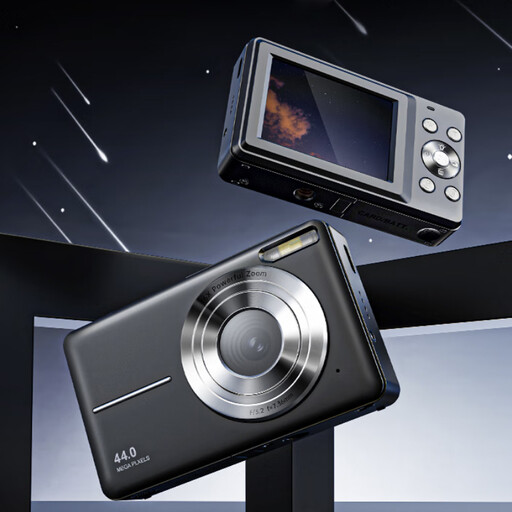
Songdian Pocket Camera in black

Songdian Pocket Camera 4K 44MP - Black

The product name mentions photography and video; check whether the camera can focus close enough and whether its magnification suits small stones.

The title lists 4K, 44MP and 16× zoom. The zoom specification alone doesn’t tell you how small a subject can be captured in focus.

Joybuy
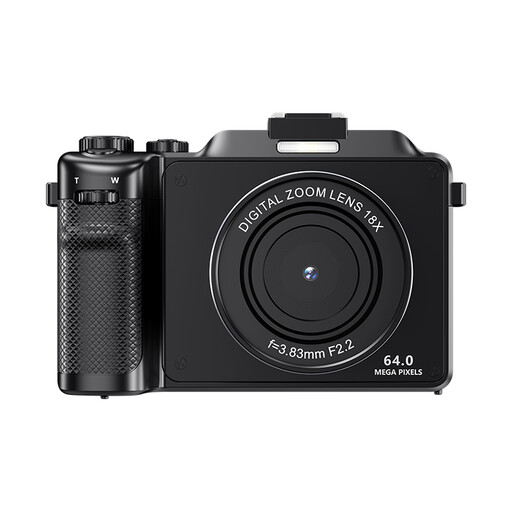
Komery X9 4K 64MP camera in black

Komery X9 4K 64MP Autofocus - Black

The product title mentions photography and autofocus; also check the close-up distance and magnification for still photographs of stones.

The title lists 18× digital zoom. The product description warns that digital zoom can reduce image quality, which matters when you want to capture fine details.

Joybuy

Frequently asked questions

Is the minimum focusing distance the same as magnification?

No. Focusing distance and maximum magnification are different specifications. OM SYSTEM states that the TG-7 Micro Adventure Kit can focus from 1 cm; Nikon specifies 1:1 magnification for the NIKKOR Z MC 50mm f/2.8. Use the measurement that answers your question, then check sample images to see how much of your stone fits in the frame.

How can I stop a dark background from looking too bright?

Check the preview and adjust the exposure compensation or switch to manual exposure if needed. Canon UK explains that automatic exposure metering may render scenes with predominantly dark tones differently from how you intended. Also check the direction of the light and the reflections on the stone.

How can I get more of a curved stone in focus?

Start with a stable set-up and check the depth of field in test shots. If a single shot isn’t enough, focus stacking can combine several focus positions; OM SYSTEM lists this feature for the OM-5 Mark II. Check the features and lens compatibility of the exact combination, and allow for extra shooting or editing time.

Can I return a camera bought online in the Netherlands?

When a consumer makes an online distance purchase, there is generally a statutory 14-day cooling-off period from delivery, with some exceptions. ACM ConsuWijzer explains this cooling-off period; check the terms and any return costs that apply to your specific purchase.

Does a two-year manufacturer’s warranty cover all my statutory rights?

No. A manufacturer’s or seller’s warranty is separate from your statutory rights. According to ACM ConsuWijzer, the statutory guarantee depends on what you could reasonably expect from the product with normal use. If a product is faulty, contact the seller.
