
Photographers with a single viewpoint
You can’t move closer or further away, and want to know in advance whether the sky, ditch and horizon will all fit in the frame, or whether you’d rather frame a distant subject more tightly.


Start by choosing a lens that gives you the framing you want from your fixed position: a wide-angle lens for more sky and foreground, or a longer focal length to frame a distant subject more tightly. Then compare RAW and exposure options, the complete lens setup and how practical the camera is to use on a tripod. More megapixels or image stabilisation alone won’t correct the wrong angle of view.
You can’t move closer or further away, and want to know in advance whether the sky, ditch and horizon will all fit in the frame, or whether you’d rather frame a distant subject more tightly.
You want to manage a bright sky and dark foreground deliberately, for example by taking several exposures and combining them if needed.
You want to find out whether a suitable lens, tripod or simple adjustment to your shooting technique will already meet your needs before choosing a new camera body.
First, decide what angle of view you need from your fixed position. Then consider the contrast in the scene and the complete setup you want to use.
| What to consider | What should you check? | Who is this most important to? |
|---|---|---|
| Angle of view from a fixed position | Check the combination of focal length and sensor size, and whether the lens is interchangeable. | From my usual spot, I want to know in advance whether the sky and foreground will both fit in the frame, or whether I can frame a distant windmill more tightly. Around 36% of consumers prioritise the angle of view from their chosen viewpoint. |
| Detail in the sky and foreground | Check whether the exact model supports RAW shooting and the exposure controls you want. | With a bright sky and dark polder, I want to see whether one exposure is enough or whether I’d like to combine several. Around 29% of consumers prioritise detail in bright skies and dark foregrounds. |
| A stable outdoor setup | Check the tripod mount, self-timer and operating limits of the camera and lens. | When taking photos early in the morning with a longer shutter speed, I want to be able to keep my camera steady. For around 21% of consumers, a stable, practical setup is the most important factor. |
| Complete camera kit | Check whether the offer includes just a body or also the lens you want, and whether your existing lenses are compatible. | I want to know in advance which parts I already have for the shot and what else I’ll need with the camera. Around 14% of consumers focus mainly on the cost and completeness of the equipment they need. |
Focal length and sensor size together determine the angle of view. A wide-angle lens shows more of the scene, while a longer focal length frames a distant subject more tightly. So compare the angle of view of the complete camera-and-lens combination, not just the camera body.
In high-contrast conditions, RAW files can give you more scope to adjust exposure afterwards. Taking multiple exposures may require extra shooting and editing time, and they can be harder to combine if anything moves between shots. Check which shooting features are available on each model.
From a single viewpoint, the combination of sensor size and lens helps determine whether the landscape you want will fit in the frame. More megapixels won’t change an unsuitable angle of view.
Decide on the framing you want first, then compare camera bodies with a compatible lens.
You may need a tripod or remote release for your chosen setup.
A mirrorless camera needs a compatible lens. Offers can vary in the lenses and accessories included.
Check exactly what’s included and compare the parts you need for your shot, including a suitable lens.
Also check whether you need a memory card or spare battery, and whether these are included in the offer.
Opening times and permitted paths can vary from one area to another. Staatsbosbeheer says that most areas it manages are open from sunrise to sunset; according to the Dutch Government, provinces decide what is and isn’t allowed in their area.
Check the rules for the specific location and any signs on site before planning an early-morning shoot.
The EOS R8 is a full-frame mirrorless camera, while the EOS R10 is an APS-C alternative. Compare their angles of view with a specific RF or RF-S lens.
The Z5II is a full-frame option in Nikon’s Z system. Assess the body together with a suitable Z lens.
The X-T50 is an APS-C camera with an X mount. You can choose a suitable lens to go with it.
The α6700 is an APS-C mirrorless camera with an E mount and sensor-shift stabilisation.
This selection includes compact cameras and Sony mirrorless cameras, including a body without a lens and kits with a zoom lens. Check each model to make sure the framing and included components suit your fixed viewpoint.
 Image unavailable
The product information mentions still photography and a rotating screen for landscape and portrait shooting.
Features: 1-inch CMOS sensor, 3-axis stabilisation and a rotating 2-inch touchscreen.
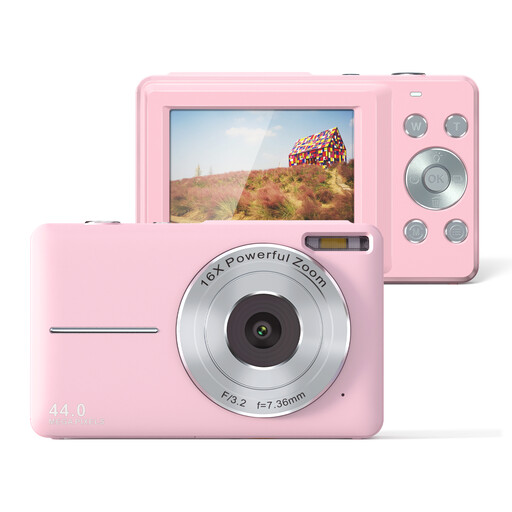 Image unavailable
The product information mentions autofocus and digital zoom for taking photos from a fixed position.
Features: 16× digital zoom, autofocus and video up to 1920×1080P. Digital zoom is not the same as changing the optical angle of view, so check that the framing suits your view.
 Image unavailable
This body could be a good fit if you already have a compatible Sony E lens and can achieve the angle of view you want with it.
Features: 24.3 MP APS-C sensor and Sony E mount. This offer includes the body only; you’ll need a compatible lens for a complete camera setup.
 Image unavailable
The included zoom lens offers a range of focal lengths, so you can change your framing from the same position.
Features: 24.2 MP APS-C sensor and 16–50mm lens. Check that the zoom range suits the crop you want from your viewpoint.
 Image unavailable
The kit includes a 16–50mm lens, letting you try different crops from the same position.
Features: APS-C sensor, electronic viewfinder and tilting screen. Check that the stated zoom range suits the framing you want.
Not for every shot, but a stable tripod helps reduce camera movement when using a slower shutter speed. A self-timer can reduce movement caused by pressing the shutter button. Check that you have the equipment you need for your setup.
Taking several shots at different exposures can help preserve detail in both bright and dark areas. Check whether the exact model has the RAW or HDR feature you want, and allow for extra processing and movement between shots.
Check whether the offer includes just a body or also the exact lens specified, and what other accessories you need. According to the Dutch Government, statutory legal guarantee applies to purchases made by consumers in the Netherlands, in addition to any manufacturer’s warranty. There is no fixed statutory warranty period; if a product is faulty, the retailer is your point of contact.
First check the rules for the specific area. Staatsbosbeheer says that most areas it manages are open from sunrise to sunset and that, generally, only roads and paths are accessible; signs on site may give different instructions. According to the Dutch Government, provinces decide what is and isn’t allowed in their area.