
Vandaag of morgen in huis

Kwaliteit gegarandeerd

Welkomstaanbiedingen ontgrendelen: GRATIS bezorging | Tot 80% korting | Gratis 30 dagen JoyPlus-proefperiode
Download de app
Polarised cycling glasses can reduce glare from wet tarmac, water and metal surfaces. That can make a real difference on a long road ride, a sunny leisure ride or an open mountain-bike trail. However, a striking mirror finish says little about how suitable the glasses are overall.
Many cyclists focus mainly on colour and appearance, only to find that the fit is unstable, the lenses scratch easily or visibility is poor in changeable weather. This buying guide compares the features that make the biggest difference in practice.
Cycling glasses with a polarising filter are designed to reduce distracting reflections. That does not automatically mean they offer enough protection against UV radiation or impact. So check separately whether the product description specifies UV400 protection, the lens type and a safety standard.
Also be aware of the difference between a polarised lens and an ordinary tinted lens. A dark lens with no clear UV specification may feel comfortable in bright light, but it offers no verifiable information about its level of protection.
Ultra-light cycling glasses are comfortable on long rides, but a low weight alone will not stop them slipping out of place. Non-slip temple tips and an adjustable nose piece are particularly important when sprinting, descending or mountain biking.
Check that the glasses suit your face shape. A frame that is too wide may let wind in at the sides. A frame that is too narrow may put pressure on your temples.
A Revo or mirror coating is mainly an optical and visual feature. Also check whether the product information mentions a scratch-resistant coating. No plastic lens is completely scratch-proof. Cleaning it with a dry sleeve or storing it without a case can damage any lens.
According to the product information, cycling glasses with UV400 protection are designed to block UV radiation up to 400 nanometres. Check that this is stated explicitly for the product, rather than appearing only in general promotional copy.
For long rides in the Netherlands, broad coverage is useful, as sunlight can also come in from the sides. A larger, curved lens can help keep out more wind and dust than a small lifestyle style.
TAC lenses are often used in polarised cycling glasses. Polycarbonate is commonly chosen for a single-piece lens because it combines low weight with impact resistance. However, the materials are not the whole story.
For intensive use, it is worth checking whether a standard is specified. The product pages for the Revoray Y1 models state that they have been tested to ANSI Z87.1. This US standard covers aspects such as the impact resistance of eye protection. Treat this as product information about a tested performance, not as a guarantee that the glasses can handle every possible situation.
A TR90 frame usually refers to a lightweight, flexible plastic frame in product descriptions. The Revoray Y1 is listed as weighing around 33 grams, while the X3 model weighs around 30 grams. That difference is small, but the fit, nose support and temple tips ultimately determine whether the glasses stay comfortable.
These features are particularly useful for cycling:
A visible light transmission of around 15,2%, as specified for the Revoray Y1, is best suited to bright conditions. For commuting in overcast weather, a lighter lens or a model with interchangeable lenses may be a better choice.
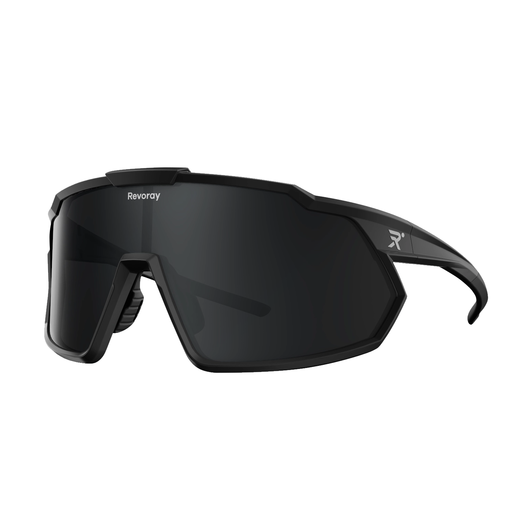
Why it suits this profile: This model combines a polarised TAC lens with a lightweight TR90 frame, making it a good choice for leisure cyclists looking for one pair of glasses for sunny road and cycle path rides.
As well as polarisation, the product page lists UV400, scratch-resistant layers and ANSI Z87.1 testing information, so you do not have to judge the lenses by their appearance alone.
Around 33 grams, adjustable silicone nose pads and, according to the product description, a water- and oil-repellent lens coating.
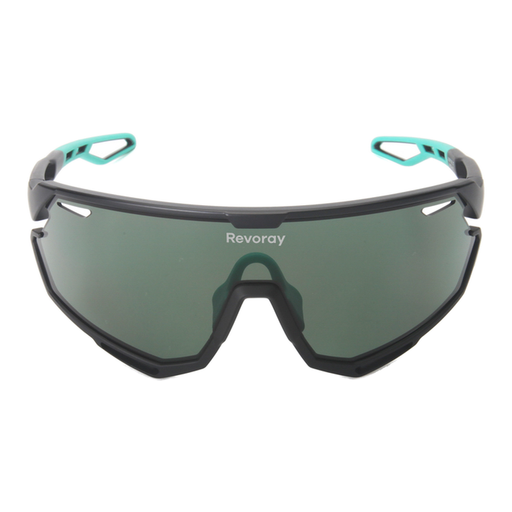
Why it suits this profile: A good choice for road cyclists who value a wide field of vision, a single-piece lens and a streamlined design.
The product description specifies a single-piece PC lens, UV400 and non-slip rubber. This makes the materials and fit clearer than they would be on a model that only makes claims about colour.
Around 30 grams, a TR90 frame, a single-piece PC lens and an aerodynamic shape, according to the product information.
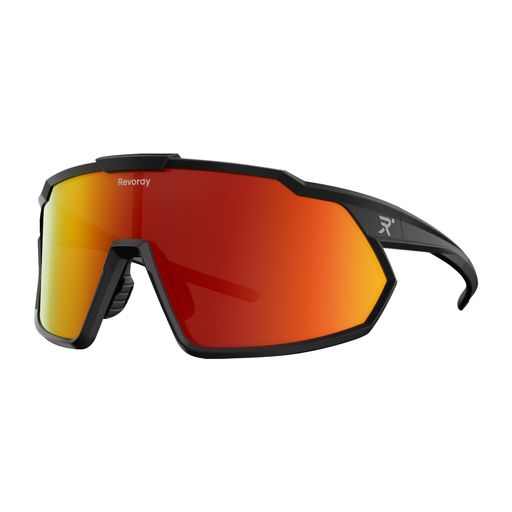
Why it suits this profile: A good choice for cyclists who want clear vision and a secure fit on longer rides, such as road cycling or mountain biking in open terrain.
The adjustable nose supports and non-slip temple tips are designed to help prevent the glasses shifting as you move. The stated coating is intended to improve resistance to water, oil and scratches.
TAC polarised lens, around 15,2% visible light transmission, approximately 33 grams and UV400, according to the product details.
We’ve put together a complete, up-to-date list of products that meet these strict selection criteria and the applicable European safety regulations.
Rinse off dust and grit with clean water before wiping the lenses. Then use a soft microfibre cloth. Avoid alcohol, harsh cleaners and paper tissues, as these can damage coatings or cause fine scratches.
Store the glasses in a protective case and do not leave them loose in a cycling bag with keys, a pump or a multitool. Their actual lifespan depends on use, drops, perspiration, cleaning and storage. Replace them if your vision is permanently obstructed or if the frame or lens is visibly damaged.
They can be, especially in bright sunlight and on wet trails with reflective surfaces. For mountain biking, a secure fit, impact information and good visibility in shaded sections are also important. A very dark lens is not always practical in dense woodland.
First rinse away loose dust with clean, lukewarm water. Dry the lens with a soft cloth and follow the manufacturer's care instructions. Do not use alcohol or strong cleaning products if the product information advises against them.
The price depends on the lens type, frame material, coating, fit and any safety information provided. So compare more than just the price: check UV400, polarisation, impact resistance, weight and warranty too. This helps you avoid having to replace a cheap pair of glasses too soon.
