Who is this choice relevant to?

Poetry readers who want to hear vocal nuances

If you’re recording changes in speaking volume, pauses and consonants, listen back carefully. As well as the headset, consider the microphone position and room acoustics. Shure explains how the distance and position of a microphone affect the balance between direct voice and room reflections.

Evening practice in a shared home

If you want to record where there may be background noise or echo, assess a test recording in your own practice space. A microphone can’t fix the acoustics of a room, so listen to what the recording actually picks up from your voice and your surroundings.

Beginners who want to record on a computer

If you want to record and listen back without complicated cabling, first check which ports your computer has. USB, TRRS, and separate XLR and headphone connections all require different inputs; the product specifications from Logitech, RØDE and Audio-Technica show how they differ.

What should you look for when buying?

Wired USB computer headset

A good fit if: you practise on a computer and want to record without a separate audio interface. Check that the USB-A or USB-C version you choose is compatible.

Keep in mind: the cable restricts your movement, and a headset designed for calls isn’t necessarily suited to the sound of an expressive poetry reading.

Wired headset with TRRS

A good fit if: you want to record through a compatible headset socket and listen back through closed-back headphones. Check that your recorder supports microphone input via TRRS.

Keep in mind: the RØDE NTH-100M requires the supplied TRRS cable. For an XLR microphone input, RØDE describes an additional connection and power requirements.

Broadcast headset with separate connections

A good fit if: you already have equipment with a compatible XLR microphone input and headphone output, and want to position the microphone boom precisely.

Keep in mind: the Audio-Technica BPHS1 has a 3-pin XLR connector for the microphone and a 6.3 mm plug for the headphones. It isn’t a direct USB headset.

Wireless Bluetooth headset

A good fit if: you want to move around while practising and your recording device can use the microphone on your chosen headset as an input.

Keep in mind: according to EPOS, the IMPACT 1000 is designed for work calls. That doesn’t prove it will preserve the nuances of a poetry reading. Check the recording input and make a test recording.

What to consider What to check before buying Who should consider this
Vocal nuance and clarity Check the position of the microphone boom and record both a quiet and a powerful passage. If I’m reading quiet lines and emphasising consonants, I want to listen back so I can properly assess the nuances in my voice. Around 36% of consumers prioritise vocal nuance.
Background noise and echo Try the headset in your practice space and listen for your voice, background noise and echo. If I practise in the evening in a room where noise or echo may be picked up, I want to know whether my voice will remain clear in the recording. Around 29% of consumers prioritise handling evening noise.
Connection to the recording device Compare the exact headset version with the USB, TRRS, XLR and headphone inputs available. If I want to get started with my current computer or recorder, I want to know whether the microphone will work as an input without unexpected connection issues. Around 21% of consumers choose connection type as their main consideration.
Freedom of movement and comfort Check the connection type and fit, and make sure the microphone input also works when used wirelessly. If I’m standing or moving while reading, I don’t want a cable to be my first restriction; at the same time, the headset needs to be comfortable. Around 14% of consumers prioritise freedom of movement.

Common pitfalls

  • Assuming noise cancellation guarantees a good poetry recording

    A claim about noise cancellation for calls doesn’t automatically tell you how quiet lines or an expressive reading will sound. A microphone can’t fix the acoustics of an echoey room.

    Make a test recording where you practise in the evening, and listen to both your voice and the background noise. Shure explains why the position of the microphone in relation to the speaker matters too.

  • Assuming every headset connects to every device

    USB, TRRS, and separate XLR and headphone connections aren’t automatically interchangeable. The exact headset version needs to match the inputs on your recording device.

    Before buying, check which connection the headset uses and whether your recorder can record from the microphone through that input.

    If the input isn’t compatible, you may need to buy a suitable adapter or additional recording equipment.

  • Choosing a wireless microphone system without checking the frequency

    For wireless microphones, permitted use depends on the frequency range in use; some frequency bands require a licence.

    If a system specifies a radio frequency, check the information from the Dutch Authority for Digital Infrastructure for that band and location. Don’t assume that every band is licence-free.

Brands to consider for this choice

Logitech

The H390 is a wired computer headset to consider if you’re looking for a compatible USB connection. Logitech Netherlands lists USB-A and USB-C versions.

  • Logitech lists an adjustable noise-cancelling microphone and in-line controls for the H390. These are manufacturer specifications for calls, not an independent assessment of poetry recordings.
  • Check which USB version is compatible with your computer; the cable limits how far you can move while practising.

RØDE

The NTH-100M combines closed-back headphones with a detachable microphone, making it an option if you want to record and listen back.

  • RØDE describes the microphone position as helping to reduce plosive sounds.
  • RØDE specifies that the supplied TRRS cable is required to use the microphone. For an XLR microphone input, RØDE describes an additional connection and power requirements.

Audio-Technica

The BPHS1 is a broadcast headset for anyone who already has compatible, separate microphone and headphone connections.

  • Audio-Technica specifies a dynamic cardioid microphone, an adjustable boom and closed-back earcups.
  • The microphone uses a 3-pin XLR plug and the headphones use a 6.3 mm plug, so check your recording equipment in advance.

EPOS

The IMPACT 1000 series is a range of wireless headsets for work calls. A wireless model may be worth considering if being able to move while practising matters to you.

  • EPOS lists Bluetooth and microphone noise cancellation for the series.
  • Models vary. EPOS claims about speech capture and word recognition relate to a work setting and aren’t measured results for poetry recordings.

Headsets at Joybuy

This selection includes wireless headsets, wired models with a 3.5 mm connection and USB headsets for computer use. For each model, check whether your recording device can use the microphone as an input through the connection you choose.
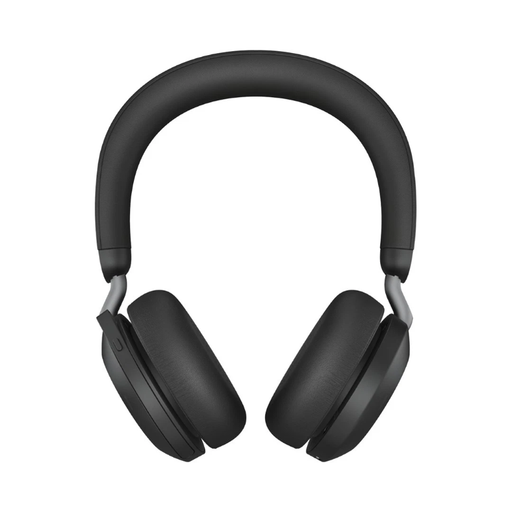
Jabra Evolve2 75 headset

Jabra Evolve2 75 headset

Worth considering if you’re looking for a communications headset with wireless or wired connection options. The listed microphone specification is for communication and isn’t an assessment of recording sound.

The product information lists Bluetooth 5.2 and a USB-C cable included in the box. Check that your recording device accepts the microphone as an input through the connection you choose.

Joybuy
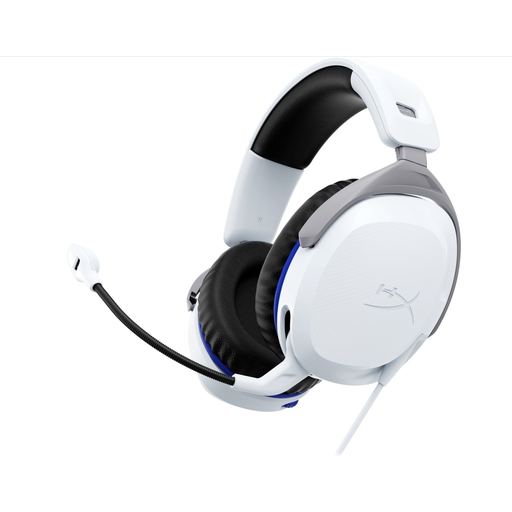
HyperX Cloud Stinger II wired gaming headset, white, PS5 and PS4

HyperX Cloud Stinger II wired gaming headset, white (PS5/PS4)

Worth considering if you’re looking for a wired headset with a positionable microphone. Check that your recorder supports microphone input through the connection.

The product information lists a closed-back over-ear design and a 3.5 mm 4-pole CTIA connection. The stated compatibility is with PlayStation 4 and PlayStation 5.

Joybuy
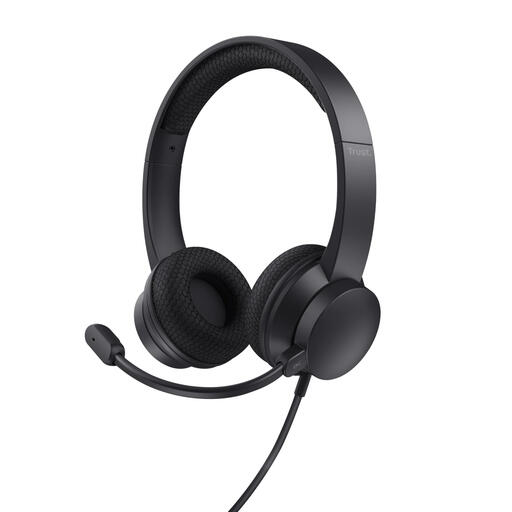
Trust Ayda wired headset, USB-A, black

Trust Ayda wired headset, USB-A, black

Worth considering if you’re looking for a wired computer headset. The product information mentions a microphone for calls, which in itself says nothing about the recording quality for poetry.

The connection is USB-A, and a USB-C adapter cable is mentioned. The product information also lists a flip-up mute microphone; check which connection your recording device supports.

Joybuy
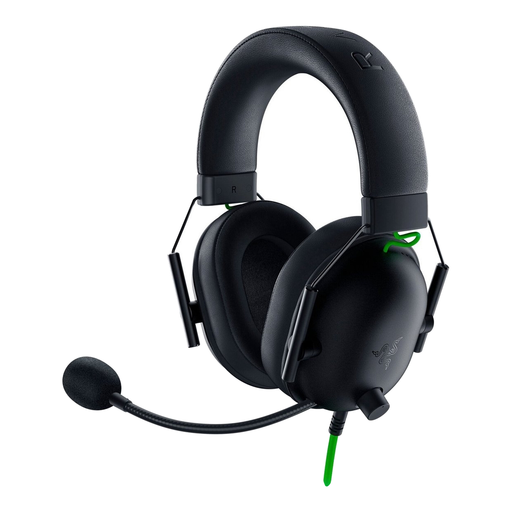
Razer Blackshark V2 X 7.1 wired gaming headset

Razer Blackshark V2 X 7.1 wired gaming headset

Worth considering if you’re looking for a wired headset with a directional microphone. Follow the guidance to position the microphone by your mouth and make a test recording.

The product information lists a cardioid microphone, passive noise isolation and a 3.5 mm connection. Check that your recording device has a compatible microphone input.

Joybuy
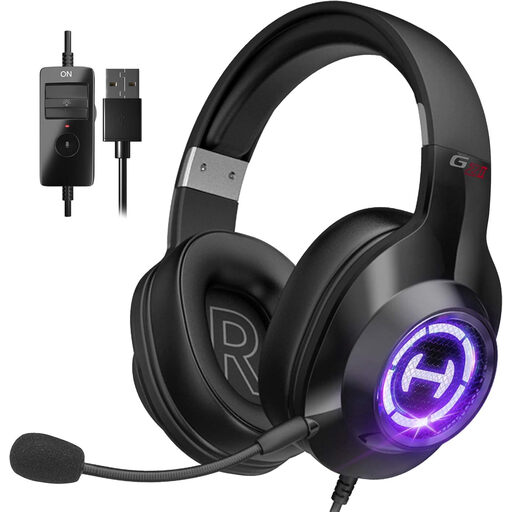
Edifier G2II USB gaming headset for PC

Edifier G2II USB gaming headset for PC

Worth considering if you’re looking for a USB headset for computer use with an adjustable microphone. Check that the USB connection is compatible with your recording device.

The product information lists use with PC, Mac and desktop computers. Microphone noise cancellation is described as a feature for communication and isn’t proof of the recording quality for a poetry reading.

Joybuy

Frequently asked questions

How do I make a test recording of a poem?

Select the headset microphone as your recording input, then record both a quiet line and an emphatic one in your usual practice space. Listen back for plosive sounds, background noise and echo, and adjust the microphone position if needed before recording a full reading.

Can the RØDE NTH-100M connect directly to any audio interface with XLR?

No, not without the right connection. RØDE specifies that the supplied TRRS cable is required to use the microphone. For an XLR microphone input, RØDE describes an additional connection that provides the required plug-in power.

Do I need a licence for a wireless headset microphone in the Netherlands?

Not always. According to the Dutch Authority for Digital Infrastructure, wireless microphones generally don’t require a licence, but you must use the right frequency range. Some frequency bands require a licence, so check the rules for the band used by your chosen system. Without a frequency specification, this doesn’t tell you anything about a particular product.

What are my rights if I’m unhappy with a headset bought online or it’s faulty?

For online consumer purchases, ACM ConsuWijzer says you generally have a cooling-off period of up to 14 days after delivery, subject to legal exceptions. If a product doesn’t meet what you can reasonably expect, the seller is responsible under the statutory guarantee; this is separate from any voluntary manufacturer’s warranty.
