
Organiser of an intimate reading
You’re filming one poet in a small, dimly lit room and want remote viewers to see their facial expressions and hear their soft voice clearly.


For one poet standing at a distance from the camera, distance and framing are key. If speakers are seated around a table, a 360° camera may be a better fit for the setup. You should also assess the camera under the planned room lighting and listen to a test recording: manufacturers’ claims about low-light performance or microphones won’t show you how your reading will look or sound in that particular room.
You’re filming one poet in a small, dimly lit room and want remote viewers to see their facial expressions and hear their soft voice clearly.
You want to show speakers taking turns around a table or in a circle without having to reframe the shot manually each time.
You want to show a group from the front and check whether a video bar gives you the framing you need.
| What to consider | What should you check? | Who should prioritise this? |
|---|---|---|
| Visibility in low light | Assess the camera in the planned position and under the room lighting. Consider the distance, field of view and type of zoom. | If I’m filming one poet, I want their face to remain recognisable without making the speaker look too small in the frame. Around 36% of consumers give visibility in low light their highest priority. |
| Clarity of soft voices | Consider the distance between the speaker and the microphone, and listen to a test recording through the video-conferencing platform you plan to use. | If online listeners need to follow every word, I want to assess the microphone setup at the speaking position. Around 29% of consumers prioritise clarity of speech. |
| Framing speakers | Mark out the camera position and speaking areas, then compare a front-facing field of view with a camera that films all around. | If poets speak from different positions, I want to know whether they’ll all remain properly in frame. Around 21% of consumers give framing one or more speakers their highest priority. |
| Connections and setup | Check the computer, connections, power, mounting and any separate audio equipment required. | If I want to connect the camera to existing equipment, I want to know in advance what the setup involves. Around 14% of consumers put connections and installation first. |
High resolution alone doesn’t tell you whether the poet’s face will be clearly visible under the planned lighting.
Assess the camera in the actual speaking position and consider the lighting, distance and framing too. Treat claims about low-light performance as information supplied by the manufacturer.
Owl Labs specifies an audio pick-up range of 5.5 m and a video pick-up range of 3 m for the Meeting Owl 3. These are different specifications.
Check each speaking position separately to make sure the speaker is easy to hear and properly in frame.
A USB camera such as Logitech MeetUp is designed to connect to a computer, so the camera, computer and audio equipment don’t automatically make up a standalone setup.
Before you start, work out which computer, power supply and audio equipment you already have, and which connections the camera you choose requires.
AVer describes the CAM520 Pro3 as a USB PTZ camera for medium to large rooms, designed for setups where the speaker is further away from the camera.
Logitech describes MeetUp as an all-in-one USB camera for small rooms.
HP describes the Studio R30 as a USB video bar for small rooms with three to five people.
According to Owl Labs, the Meeting Owl 3 combines a 360° camera with microphones and speakers for people seated around the device.
The PanaCast 50 is a video bar designed to provide wide, front-facing coverage of a group.
This selection focuses on a presenter standing in front of the camera, with PC webcams and a PTZ camera for precise framing.
 No image available
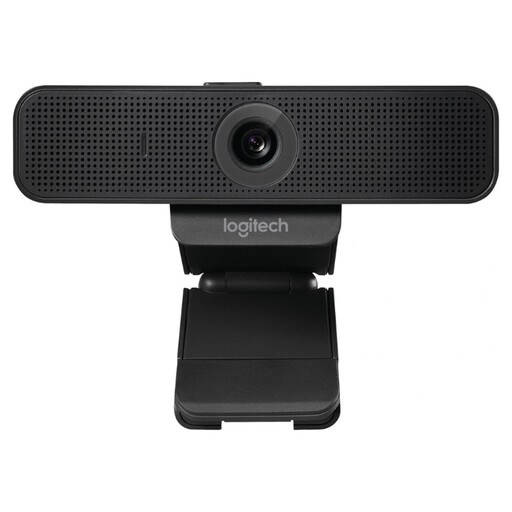
A PC webcam to consider if the presenter will be standing directly in front of the camera.
The product name lists PDAF autofocus, dual microphones, a lens cover, a 75° field of view, and USB-A and USB-C connections.
 No image available
A USB webcam to consider if you’re using a computer setup for a presenter standing in front of the camera.
The product name lists 30 fps and model number 960-001076.
 No image available
A webcam to compare if you’re using a computer setup with one speaker in front of the camera.
 No image available
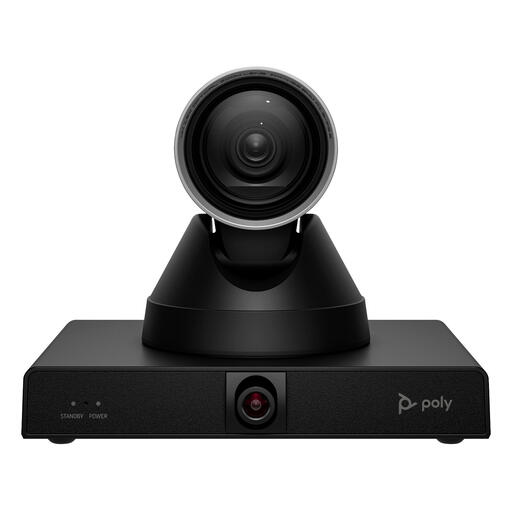
The listed zoom may be useful if the presenter is further from the camera and you want to assess the framing precisely.
The product name lists 4K and 12× optical zoom. On their own, these don’t tell you how the image will look in a dimly lit room.
 No image available
A desktop webcam to compare if the presenter will be speaking at a computer.
The product name lists an 8MP camera, autofocus, two built-in microphones and a privacy cover. The black version is model SPL6408BT/00.
No. Resolution alone doesn’t tell you how visible the poet will be under the planned lighting. Consider the distance and framing too, and, if possible, test the camera with the room lights on. Claims about light correction for Logitech MeetUp and a low-light sensor for AVer CAM520 Pro3 are manufacturer specifications.
Check the host computer, video connection, power and audio in your own setup. HP lists USB-C, an external power supply and a USB-C to USB-A cable included with the Studio R30, among other features. AVer lists USB 3.1 Type-B and HDMI for the CAM520 Pro3, among other connections.
Ask the poet to read softly and at a normal volume from the planned position, then listen to the stream remotely. Consider the distance to the microphone and its position. Owl Labs lists separate stated ranges for audio and video for the Meeting Owl 3.
If you’re filming an event as an organisation and people are identifiable in the footage, the Dutch Data Protection Authority says you need a valid legal basis. Consent is a common basis, but it isn’t the only possible one. Make sure you give the people involved appropriate information about what you’re doing.
Not necessarily. According to the Dutch government, there’s no fixed statutory warranty period in the Netherlands. An extra warranty is mainly useful if its terms add to the rights you already have. If a product is faulty, contact the seller.