If all the speakers are standing in the same place, a close-positioned cardioid speech microphone is a good choice for capturing clear words, provided you can send the signal to a recorder, interface or suitable PA system. A portable recorder is more practical for a one-off recording and captures more of the hall, too. For a speaker who moves around or for multiple sound sources, a transmitter worn by the speaker or a recorder with separate inputs may be a better fit. None of these setups will remove reverberation if the microphone is too far from the speaker.
Who is this choice relevant for?
Organiser with a fixed speaking position
Wants to record different poets using the same microphone and needs to manage the distance to the speaker and the connection to a recorder or PA system. Shure recommends placing a microphone as close as possible to the sound source you want to capture.
Volunteer without recording equipment
Wants to set down a device that can record on its own and play back the reading. Zoom and Tascam describe portable recorders with built-in microphones; positioning in relation to the speaker remains important.
Creator with a moving speaker or multiple sound sources
Wants to follow a speaker as they move around or record the voice and the atmosphere of the hall separately. RØDE describes a wireless system that records on its transmitters; Zoom offers a recorder with built-in microphones and two XLR/TRS inputs.
What should you consider when choosing?
In a reverberant hall, clear speech starts with the distance between the speaker and the microphone. Shure warns that a microphone cannot distinguish reflections from the voice you want when it is too far away.
| Buying consideration |
What to look for |
Who is this important for? |
| Clear speech |
Check whether the speaker can stand close to the microphone and whether its direction suits the speaking position. |
If clear words are my main priority and I want less emphasis on capturing the whole hall, I prioritise the microphone distance. Around 36% of consumers put speech clarity first. |
| Recording independently |
Check whether the device records on its own and how you can play back a test recording. |
Anyone without usable recording equipment will want a device that can record without a separate microphone or mixing desk. Around 29% of consumers give standalone recording top priority. |
| Moving speaker |
Check how the microphone is attached and where the recording is stored. |
If the speaker moves away from the fixed speaking position, a microphone worn by the speaker may be more practical than a fixed, wired setup. Around 21% of consumers put freedom of movement first. |
| Separate sound sources |
Check how many inputs you need and whether the signal level is suitable for the input. |
Anyone who wants to keep the voice and the atmosphere of the hall separate will benefit from a setup with separate inputs and more control. Around 14% of consumers give separate sound sources top priority. |
Common buying mistakes
-
Choosing a recorder at the back of the hall because it captures everything
At a greater distance, reflections and the atmosphere of the hall can outweigh the direct sound of the voice.
Make a short test recording from the speaker’s intended position and listen back before settling on your final setup.
-
Mistaking a standalone XLR microphone for a complete recorder
A microphone provides a signal, but it does not record the reading by itself. Some condenser models also require power through the XLR connection.
Check the entire signal chain, from the microphone and any power supply to the device that stores the file, and see which components are included with the exact model.
Depending on your setup, you may also need a suitable recorder or interface, stand and cable.
-
Assuming 32-bit float applies to every output and solves every audio problem
According to RØDE, this feature on the Wireless GO (Gen 3) applies to recordings made on the transmitters. With the NT1 5th Generation, 32-bit float works over USB only, not through the analogue XLR output. The file format will not fix reverberation caused by poor microphone placement.
Check which connection and device will be used to record the final file, and pay attention to the distance from the speaker, too.
Brands and product ranges
Shure
The SM58 is a wired dynamic cardioid microphone for vocals and speech at a fixed speaking position.
- According to the manual, the built-in filter helps reduce breath and plosive noise; the cardioid pattern focuses on sound in front of the microphone.
- The microphone needs to be positioned fairly close to the speaker and requires a suitable recording setup.
Sennheiser
The e 835 is a wired dynamic cardioid microphone for speech and vocals at a shared speaking position.
- Sennheiser specifies an XLR connection and positions this model for speech and vocals.
- You will also need a recorder or suitable mixing desk to make a recording.
Zoom
The H1essential is a compact recorder with built-in X/Y microphones; the H4essential adds two XLR/TRS inputs.
- Zoom specifies standalone recording; the H4essential’s inputs offer an option for a more extensive setup.
- Built-in microphones will not solve reverberation in the hall if the recorder is far from the speaker.
RØDE
The Wireless GO (Gen 3) is suited to a moving speaker; the NT1 5th Generation is a USB/XLR condenser microphone for a more controlled speaking position.
- RØDE specifies recording on the Wireless GO transmitters and USB and XLR connections for the NT1.
- 32-bit float applies to recordings on the Wireless GO transmitter and, for the NT1, via USB only—not through the analogue XLR output.
Tascam
The DR-05XP is a portable stereo recorder with built-in microphones.
- Tascam specifies built-in omnidirectional microphones and an external mini-jack input.
- The built-in microphones also capture the sound of the hall, so the distance from the speaker matters.
Audio-Technica
The AT2020 is a cardioid XLR condenser microphone for a fixed, preferably quiet speaking position.
- Audio-Technica specifies an XLR connection and distinguishes this model from a separate USB version.
- Check what power supply and recording equipment your chosen setup requires; the standard AT2020 is not a USB microphone you can connect directly.
Joybuy products
This selection includes wireless lavaliers for a moving speaker, a USB microphone for a fixed computer setup and portable voice recorders.
 No image available
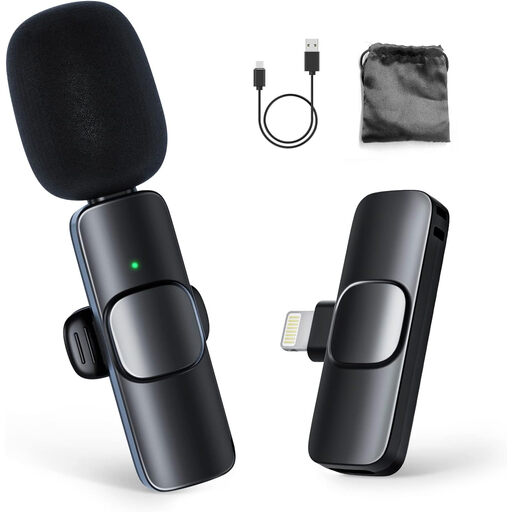
Moman CP1A Wireless Lavalier Microphone for iPhone (1TX&1RX)
A lavalier microphone with a transmitter and receiver for a speaker who moves around and records on an iPhone or iPad.
The description lists one transmitter, one receiver and an omnidirectional microphone; the microphone can be clipped to clothing.
View at Joybuy
 No image available
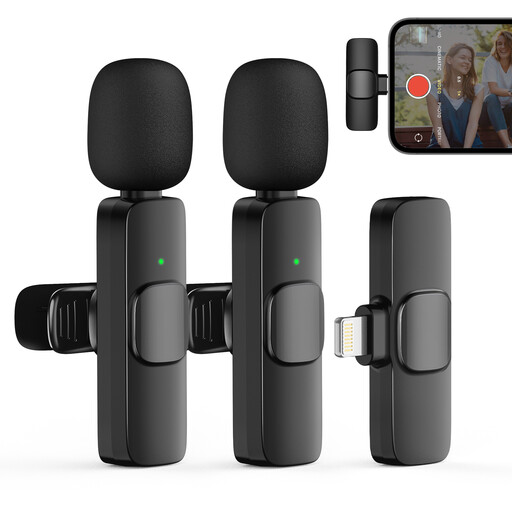
Moman CP1XA Wireless Lavalier Microphone for iPhone (2TX&1RX)
This set may be suitable when using two speakers or sound sources wirelessly with an iPhone or iOS setup.
The description lists two transmitters, one receiver and omnidirectional microphones; check that the receiver is compatible with your intended device.
View at Joybuy
 No image available
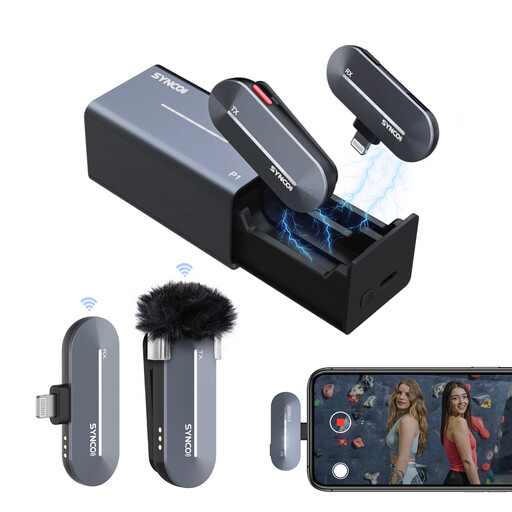
SYNCO P1SL Wireless Lavalier Mic for iPhone 14/13/12, 1TX+1RX Charging Case
A wireless lavalier option for a moving speaker, provided your intended phone is among the compatible models listed.
The title lists iPhone 14/13/12, one transmitter and one receiver with a charging case; the description mentions a USB-C receiver and audio monitoring. Check your device’s connection.
View at Joybuy
 No image available
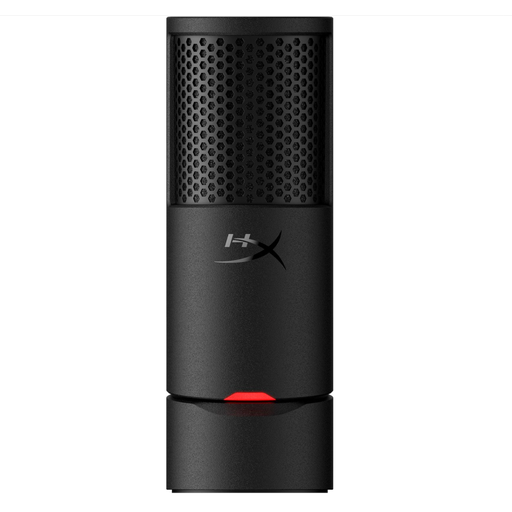
HyperX SoloCast 2 USB Gaming Microphone Cardioid Black
This USB microphone may suit a fixed speaking position with a connected computer or another suitable USB recording device.
The product information lists a cardioid pickup pattern, USB connection and desktop base; mounting on a stand or boom arm is also mentioned.
View at Joybuy
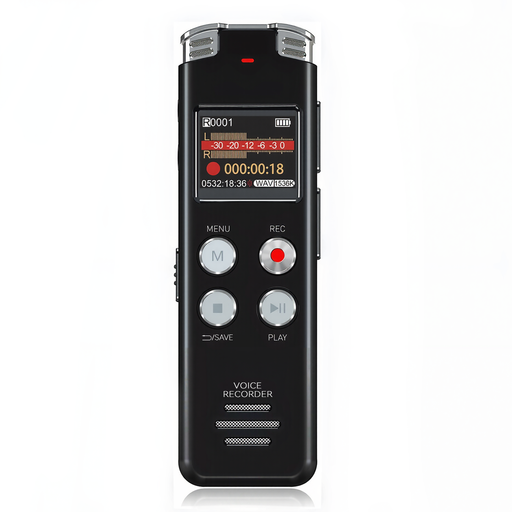 No image available
Rexsun 128GB Portable Digital Voice Recorder, L357
A portable voice recorder for anyone who wants to save readings as audio files and listen back later.
The product information lists 128 GB, USB-C, one-touch recording, MP3 and WAV files, and A-B repeat.
View at Joybuy
Frequently asked questions
Where should you place the microphone if the hall is reverberant?
Place a speech microphone as close as possible to the speaker and point it towards the speaking position. Make a short test recording there and listen back; Shure explains that a microphone cannot compensate for poor room acoustics when it is too far from the speaker.
Can you connect an output from the PA system to any microphone input?
No. First check whether the output provides line level or microphone level, and whether the recorder is set up for that signal. Shure explains that a line-level signal can be too strong for a microphone input and may distort.
Can you record a reading and publish it online?
This depends on the people who can be identified, the poems and how you intend to use the recording; recording and publishing require separate checks. The Dutch Data Protection Authority considers an identifiable audio recording to be personal data and states that consent is generally required to publish personal data online. For poems by others that are protected by copyright, you should also check which rights apply to making them available to the public; the Dutch government distinguishes between private use and distribution or public communication.
Which extra components and warranty rights should you check?
Check what recorder or interface, stand, cables, storage and power supply your setup requires. For consumer purchases in the Netherlands, statutory protection applies if a product does not meet the terms of the agreement; the retailer is your point of contact. The Dutch government states that there is no fixed statutory warranty period.


