Who is this suitable for?

Listeners doing noisy chores

If you want to follow spoken words while household appliances are making noise, look for a good seal without turning the volume up unnecessarily. The Consumentenbond and VeiligheidNL explain why fit and noise isolation matter.

Listeners who want to stay approachable at home

If you want to keep noticing housemates and other sounds around you while tidying up, consider an open design or an adjustable ambient mode. The Consumentenbond points out that open-ear designs leave the ear canal clear, but also let in surrounding noise.

Listeners who move around a lot

If you bend, walk or carry things while listening, a comfortable, secure fit and easily accessible controls can make a difference. The Consumentenbond emphasises the importance of positioning headphones correctly on or in your ears.

What should you look for when choosing?

Closed-back over-ear headphones

Choose these if: you don’t want to wear earbuds and good isolation from disruptive household noise matters to you.

Trade-off: covered ears may feel less comfortable during warm weather or active chores. Noise cancelling doesn’t guarantee that you’ll still hear warnings.

Sealed in-ear earbuds

Choose these if: you want a compact set and find a good seal comfortable while moving around.

Trade-off: the right ear tip size affects comfort and the seal. Total battery life including the case is not the same as listening time per charge.

Open-ear earbuds

Choose these if: you want to keep hearing housemates and sounds around you during quieter tasks.

Trade-off: disruptive noise can still get in and mask spoken words. Don’t turn up the volume to drown it out.

Lightweight on-ear headphones

Choose these if: a compact headband and quieter household chores suit the way you’ll use them.

Trade-off: according to VeiligheidNL, on-ear models let in more external noise than alternatives that create a good seal.

What to consider What to look for when buying Who is it most important for?
Hearing spoken words clearly Compare the fit and seal, and try spoken audio at a comfortable volume. Don’t assume noise cancelling reduces every type of sound equally well. If I want to follow a spoken-word performance while appliances are making noise, clear speech matters most to me. Around 36% of consumers give speech clarity their top priority.
Staying aware of your surroundings Compare open-ear designs with an adjustable ambient mode. Test in your own space to see whether you can hear both the performance and the sounds that matter. If you want to stay approachable at home, you may prefer more awareness of your surroundings over maximum isolation. Around 29% of consumers put awareness of their surroundings first.
Comfort while moving Check the ear tip size, the pressure from earcups or ear hooks, and how easy the controls are to use while moving. Check the exact device’s splash-resistance rating. If I’m bending down and carrying things, I want my listening equipment to stay comfortable and secure. Around 21% of consumers give fit while moving their top priority.
Listening time and controls For earbuds, compare listening time per charge with the total including the case. For headphones, check battery life with the same noise-cancelling setting. For longer listening sessions, I want to know whether I can keep listening and use the controls easily. Around 14% of consumers prioritise ease of use during longer sessions.

Avoiding common buying mistakes

  • Confusing total battery life with uninterrupted listening time

    With wireless earbuds, total battery life including the charging case can be very different from listening time per charge. The Consumentenbond points out that you can’t use the earbuds while they’re charging in the case.

    Compare listening time per charge, and check which setting is used for models with noise cancelling.

    Charging part-way through interrupts the performance while the earbuds are in the case.

  • Choosing open-ear earbuds, then turning up the volume to drown out noise

    An open design also lets disruptive household noise in. Listening loudly or for long periods can damage your hearing; open-ear earbuds are not hearing protection.

    For a noisy task, choose a well-sealed model instead, or pause the performance rather than continually turning up the volume. Thuisarts advises against listening loudly for long periods or too often.

  • Assuming the earbuds’ protection rating also applies to the case

    Shokz lists an IP55 rating for the OpenFit 2 earbuds, but no water-resistance rating for the charging case. JBL likewise limits the stated IP54 rating for the Tune Beam 2 to the earbuds.

    Check the protection rating for each component and keep the case away from splashes.

Brands to consider

Sony

The WH-CH720N is an over-ear example with noise cancelling and an ambient sound mode, for anyone who wants to switch between listening and staying aware of their surroundings.

  • Sony lists a weight of around 192 g and up to 35 hours with NC on or 50 hours with NC off.
  • These are manufacturer figures, not measurements of speech clarity amid household noise. Fit and the setting you use still matter.

Shokz

The OpenFit 2 is an open-ear example with ear hooks for anyone who wants to stay aware of their surroundings.

  • Shokz lists physical buttons, up to 11 hours per charge and 48 hours in total with the case.
  • According to Shokz, IP55 applies to the earbuds, not the charging case. The open design doesn’t block out household noise.

JBL

The Tune Beam 2 is an example of sealed wireless in-ear earbuds with noise cancelling and switchable ambient features.

  • JBL lists Ambient Aware and TalkThru for hearing surrounding noise or talking to people nearby.
  • The stated total playback time isn’t necessarily the same as listening time per charge. Comfort and the seal also depend on fit.

Sennheiser

The ACCENTUM Wireless is an over-ear example with hybrid noise cancelling, a transparency mode and a podcast mode listed by the manufacturer.

  • Sennheiser lists up to 50 hours of playback on a single charge, even with noise cancelling switched on.
  • A podcast mode doesn’t prove that poetry will be easier to hear over every type of household noise. Fit and awareness of your surroundings still matter.

Philips

The TAH4209 is an example of a lightweight on-ear option with a headband for quieter tasks.

  • Philips lists up to 55 hours of playback.
  • VeiligheidNL warns that this type of design can let more external noise pass around the ears. Battery life says nothing about how clearly you’ll hear speech.

Wireless options at Joybuy

These options are designed for listening to spoken audio while doing household tasks. They include sealed in-ear and over-ear models, as well as an open-ear design.
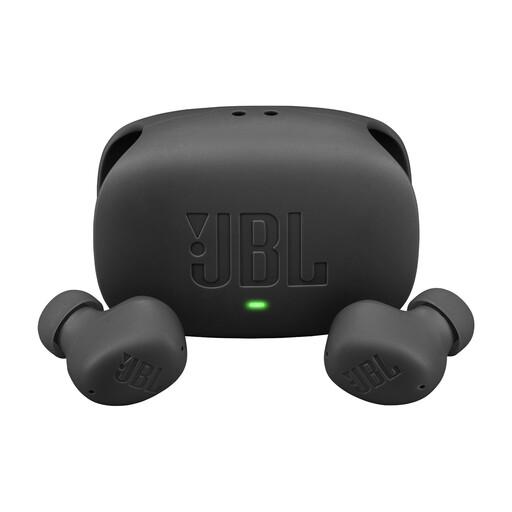
JBL Wave Buds 2 wireless earbuds, black

JBL Wave Buds 2, black

These in-ear earbuds feature ANC and Smart Ambient, so you can switch between isolation and surrounding noise. Check that they fit securely while you move.

Joybuy lists up to 10 hours per charge and 40 hours in total with the case, with ANC off.

View at Joybuy

Sennheiser MOMENTUM 4 Wireless over-ear headphones, white

Sennheiser MOMENTUM 4 Wireless, white

These over-ear headphones feature noise cancelling and a Transparency Mode, so you can hear surrounding noise while listening.

Joybuy lists up to 60 hours of playback per charge. Check which usage settings apply to that figure.

View at Joybuy

Sonos ACE over-ear Bluetooth headphones, black

Sonos ACE, black

These over-ear headphones feature ANC and an Aware mode, so you can switch between isolation and surrounding noise.

Joybuy lists up to 30 hours of listening with ANC on. A good fit is still important for comfort during longer sessions.

View at Joybuy

Sony WH-CH720N wireless over-ear headphones, blue

Sony WH-CH720N, blue

These over-ear headphones are designed for anyone who wants to combine noise cancelling with the option to hear surrounding noise. Check whether they remain comfortable while you do household chores.

Sony lists up to 35 hours with NC on and 50 hours with NC off.

View at Joybuy
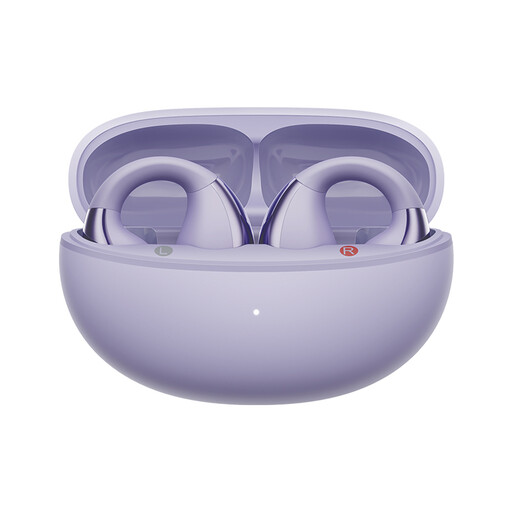
QCY Crossky C30 open-ear earbuds, purple

QCY Crossky C30, purple

The open-ear design and on-ear controls suit anyone who wants to stay aware of their surroundings during quieter tasks. In noisy settings, external sounds may mask the performance.

Check that the fit remains comfortable when bending and walking.

View at Joybuy

Frequently asked questions

Is noise cancelling essential for listening to a poetry performance?

No. Start by considering how noisy the task is and how well the headphones fit. A well-sealed model can reduce the noise that gets in. Noise cancelling may help, but you shouldn’t assume without testing that it will reduce a deep, continuous hum as effectively as it reduces noise from every household appliance.

How should you set up your headphones while cleaning?

First, adjust the fit and try spoken audio at a comfortable volume. Test the listening mode, pausing and resuming, too. Use a volume limiter if your device has one. Thuisarts advises against listening loudly for long periods or too often.

Can you clean earbuds and the charging case under the tap?

Don’t assume you can just because the earbuds have an IP rating. Shokz states that the OpenFit 2 charging case has no water-resistance rating. Follow the cleaning instructions for your exact model.

What returns and warranty rights apply to an online purchase in the Netherlands?

According to ACM ConsuWijzer, online purchases generally come with a cooling-off period of up to 14 days after delivery, although exceptions apply to certain products. You may also be entitled to a legal guarantee if a product doesn’t perform as you could reasonably expect under normal use. The seller must put this right in accordance with the applicable terms. Before opening the packaging, check whether an exception to the returns policy applies to your earbuds.

Which product rules apply to wireless listening equipment in the Netherlands?

The European Radio Equipment Directive sets the framework for radio equipment placed on the EU market. According to the European Commission, manufacturers are responsible for meeting the relevant EU requirements and applying the CE marking. A visible CE mark is not an absolute guarantee of safety. Check the documentation for the specific version you’re considering.
