What should you look for?
Compact recorder with built-in microphones
Choose this if: you want to record and listen back to short practice sessions on your own, in different places. Zoom lists features such as playback speed control and a headphone output for the H1essential.
Bear in mind: a built-in microphone can pick up fan and room noise too. Check the connection before choosing an external microphone.
USB microphone with a computer or mobile device
Choose this if: you record in one place using software and can position the microphone close to your mouth. RØDE recommends a distance of around 5–10 cm for the PodMic USB.
Bear in mind: a USB microphone doesn’t record files on its own; you’ll also need a compatible recording device and software. Shure describes the MV7+ as having a switchable denoiser for persistent sounds such as fans, but its directional pattern alone won’t remove digital noise.
Recorder with inputs for external microphones
Choose this if: you want to give each of two speakers their own microphone. According to Zoom, the H4essential has two XLR/TRS inputs as well as built-in stereo microphones.
Bear in mind: microphones and compatible cables add equipment and setup time; the inputs alone won’t remove fan noise.
If you’re practising a bilingual podcast intro with audible fan noise, these points can help you decide which setup best suits the way you record.
| What to consider |
What should you check? |
Who is this important for? |
| Clarity with fan noise |
Check the microphone type and positioning. Make a test recording with the fan on, then listen back through headphones. |
If I want to assess my pronunciation in both languages while the fan is running, clarity comes first. Around 40% of consumers put fan noise at the top of their list of concerns. |
| Listening back to pronunciation and pace |
Check whether you can listen back to recordings and adjust the playback speed. Look for a headphone output too. |
If I want to review my language switches and delivery, playback features matter to me. Around 30% of consumers prioritise pronunciation and pace in two languages. |
| Recording without a fixed computer |
Check whether the recorder can record on its own, and what power, storage and connections your chosen model needs. |
If I want to practise in different places without a fixed computer setup, recording independently is more important to me. Around 20% of consumers prioritise portable, standalone recording. |
| Connecting two voices separately |
Check the number of microphone inputs and which microphones and cables will work with your setup. |
If I’m practising with a co-host and want to connect both voices separately, I look at the number of inputs. Around 10% of consumers prioritise two separately connected voices. |
Products at Joybuy
These product choices at Joybuy are suited to recording and practising spoken audio, with both portable recorders and microphones for use with a connected recording device.
 No image available
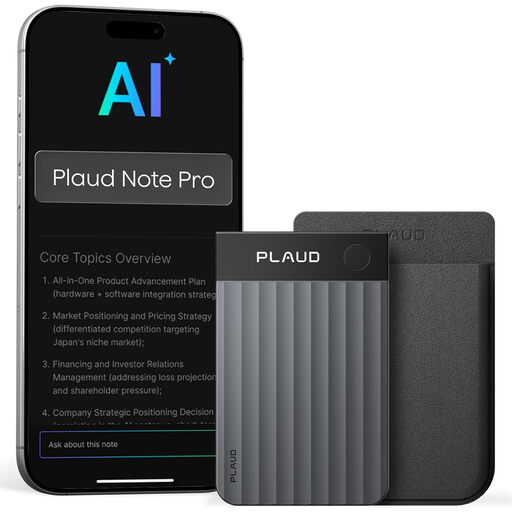
Plaud Note Pro AI Voice Recorder (Black)
Could suit you if you want to record speech for notes and summaries; check that the playback options work for practising an intro.
The product name describes an AI voice recorder in Black.
View at Joybuy
 No image available
RØDE Wireless Micro Kit, Two Microphones, USB-C (Black)
Could suit you if you want to use a microphone kit with a compatible recording device; check beforehand which receiver will work with your device.
The product name lists two microphones, a camera receiver, a smartphone receiver, a charging case and USB-C. It’s a microphone kit, not a standalone recorder.
View at Joybuy
 No image available
HyperX SoloCast 2 USB Microphone (Black)
Could suit a fixed USB setup; make a test recording with the fan on to hear how the microphone sounds in your room.
The product name describes a USB microphone with a cardioid directional pattern and a plug-and-play connection.
View at Joybuy
 No image available
Rexsun L357 128GB Portable Digital Voice Recorder
Could suit you if you’re looking for a portable recorder for spoken audio; check that the controls and playback features fit your practice routine.
The product name lists 128GB of storage and an LCD screen. The stated noise reduction feature doesn’t prove that fan noise will disappear.
View at Joybuy
 No image available
Razer Seiren V3 Mini Quartz USB Microphone
Could suit a compact USB setup; check that your recording device has the right USB connection, then listen back to a test recording.
The product name describes a USB microphone with a tap-to-mute function.
View at Joybuy
Frequently asked questions
Will 32-bit float get rid of my fan noise?
No. 32-bit float doesn’t remove fan noise by itself. Zoom and Tascam describe it as a recording format or a tool for managing recording levels. If possible, speak close to a suitable microphone and assess a test recording with the fan on.
Where should I position a microphone for a test intro?
Position the microphone as instructed for your chosen model, then listen back to check that your voice is clear. RØDE recommends a distance of around 5–10 cm for the PodMic USB; Shure advises speaking close to the microphone and pointing it away from unwanted noise.
What should I prepare for repeat recordings?
Before you practise, check the power supply, storage and headphone monitoring in your recorder’s manual. Save any recordings you want to keep before formatting storage; power and storage requirements vary by model.
Should I buy extra cover for a recorder in the Netherlands?
An offer of extra cover isn’t the same as your statutory rights. ACM ConsuWijzer explains that, where the conditions are met, a seller must put right a product that breaks too soon under normal use, free of charge. Check the terms of any additional cover before you buy.
Can I publish a practice recording featuring someone else’s voice as a podcast?
Don’t assume you can publish a voice recording publicly without permission. The Dutch Data Protection Authority says that, in most cases, you need permission to publish other people’s personal data publicly, and describes a limited exception for use that is solely personal or domestic. A private practice recording is different from a publication. Before publishing, consider who can be recognised and how the recording will be used.


