For podcast intros in a rehearsal room, where you record is at least as important as the microphone itself: record close to the speaker, point the microphone away from distracting sounds and make a test recording. Shure explains that a microphone cannot distinguish wanted speech from unwanted sounds on its own. So no connection type or polar pattern will automatically make a noisy room quiet. USB suits a simple solo set-up, XLR works with a suitable interface or mixer you already have, and USB/XLR gives you both connection options. To record separate voices, you’ll also need the right inputs and recording settings.
Who is this buying guide for?
Solo recording in a noisy room
You’re recording the intro yourself and want your voice to remain clear despite echo or rehearsal noise. Recording close to the microphone and making a test recording matter more than relying on automatic noise reduction.
Creator looking for a quick connection
You record short intros straight to a computer and want to know in advance whether the cables, stand and monitoring options are right for the model you choose.
Pair recording on separate tracks
You record intros together and want to be able to record and edit your voices separately if needed. So check the microphones, inputs and recording settings as a complete set-up.
What should you look for when choosing?
Dynamic, cardioid, USB or USB/XLR
A good fit if: you speak close to the microphone on your own and want to record directly to a computer.
Bear in mind: other voices and sudden rehearsal noises may still be audible; XLR requires a suitable input.
Dynamic, cardioid, XLR
A good fit if: you already have a suitable mixer or audio interface, or want to record several speakers through separate inputs.
Bear in mind: check the number of suitable inputs, the cables and the settings for separate tracks.
USB condenser
A good fit if: you want to record directly to a computer and can choose a quiet or acoustically treated space.
Bear in mind: a cardioid pattern doesn’t guarantee that echo or nearby rehearsal noise will disappear.
XLR condenser
A good fit if: you have a quiet recording space and a suitable interface already.
Bear in mind: according to Audio-Technica, the Audio-Technica AT2020 requires full 48 V phantom power from a suitable interface; the XLR cable is sold separately.
| What matters |
What should you look for? |
Who is this important to? |
| Clear speech despite room noise |
Check the recording pattern, whether you can speak close to the microphone and how the sound comes across in a test recording. |
When I record my intro in an echoey room, I want my voice to be clear without relying on automatic noise suppression. Around 36% of consumers put speech clarity in a noisy room first. |
| Easy to connect |
Compare USB and XLR connections, computer compatibility, included cables and whether each model has a headphone output. |
For a short solo intro, I want to record on my computer without needing extra recording equipment. Around 29% of consumers prioritise a quick, easy connection. |
| Recording voices separately |
Count the suitable inputs and check that your recorder or software can save separate tracks. |
When we record together, I want to be able to adjust and edit our voices separately if needed. Around 21% of consumers make recording separate voices their top priority. |
| Detail in a quiet room |
Make a test recording at the intended distance and, for XLR, check the power, cable and interface required. |
When I also want to capture detail in a quiet set-up, I’m happy to give the equipment choice extra consideration. Around 14% of consumers prioritise recording detail in a quiet setting. |
Common buying pitfalls
-
Assuming noise reduction will completely block out a band playing
A microphone can’t automatically separate other voices or sudden sounds from the speech you want to record. Shure also makes clear that its own noise processing won’t make these sounds disappear.
If possible, record your intro outside rehearsal time. Otherwise, test your chosen microphone in the actual room and listen back to the recording.
You may need extra recording time or have to find a quieter spot.
-
Counting only the microphone when setting up XLR
An XLR microphone doesn’t work directly as a USB microphone with a laptop. The Audio-Technica AT2020 also requires full 48 V phantom power; recording two separate voices requires suitable inputs.
Before buying, check which inputs, power supply, cables and recording channels you already have.
Depending on your set-up, you may also need a suitable interface or mixer, a cable or a second microphone.
-
Mistaking a different model version or bundle for the same product
An AM8T set and an AM8 are not the same version. The HyperX SoloCast 2 is also a different model from the SoloCast.
Check the full model name and what’s included in the box, not just the brand name or product photo.
Relevant brands to consider
RØDE
RØDE offers both the dynamic PodMic USB, with USB and XLR connections, and the NT-USB+, a USB condenser microphone.
- According to RØDE, the PodMic USB has a headphone output and features to reduce plosives and vibration. For the NT-USB+, RØDE lists USB-C, a headphone output and an included desktop tripod.
- These specifications don’t prove that echo or rehearsal noise will disappear.
Shure
The MV7+ offers USB-C and XLR for a solo set-up; the MV7i is a different option for anyone who also wants to use a second microphone and separate channels.
- Shure describes the MV7i as having a connection for an additional microphone and two separate mono channels.
- Shure explains that the MV7+ noise processing won’t remove other voices or sudden sounds. If you’re considering an MV7i set-up, check the second microphone and the software required too.
FIFINE
The AM8T is a USB/XLR set with a boom arm; the K688 is a separate dynamic USB/XLR model available in different packaging options.
- FIFINE lists a boom arm as part of the AM8T set.
- FIFINE warns that a cardioid pattern may not be enough in a loud room. For the K688, check which version and accessories are included with the product you choose.
Samson
The Q2U is a dynamic USB/XLR option for a solo set-up.
- According to Samson, the Q2U package described includes a desktop stand, windscreen and USB and XLR cables.
- You’ll still need to test and listen to the desktop set-up in the intended spot in your rehearsal room.
Audio-Technica
The AT2020 is an XLR condenser microphone for use with suitable recording equipment.
- Audio-Technica specifies that the AT2020 requires full 48 V phantom power from a suitable interface.
- According to Audio-Technica, the XLR cable is sold separately. Make sure you mean the AT2020 with an XLR output, not another model in the product family.
Microphones for podcast speech
The product options below include USB microphones and wireless systems for solo and duo recordings. Check that the connections and recording settings suit your device; none of these microphones will automatically make rehearsal noise inaudible.
 Image unavailable
DJI Mic Mini 2S (2 TX + 1 RX + Charging Case)
The set with two transmitters and one receiver suits a duo set-up; the product name also mentions a charging case.
The stated noise reduction doesn’t guarantee that voices or rehearsal noise will disappear. Make a test recording and assess the room, as Shure recommends.
View at Joybuy
 Image unavailable
Lark M2 Wireless Lavalier Microphone System
The description mentions clip or magnetic attachment, making it suitable for recording speech on the move.
The product name lists 48 kHz/24-bit audio and a 9 g transmitter. A cardioid pattern or noise reduction doesn’t guarantee that rehearsal noise will disappear; test the recording in the intended location.
View at Joybuy
 Image unavailable
USB condenser microphone with cardioid pattern
The USB connection and boom arm suit a computer set-up where you want to position the microphone close to the speaker.
The description lists a headphone socket, gain control, mute function, boom arm, pop filter and windscreen. A cardioid pattern doesn’t guarantee that rehearsal noise or other voices will disappear.
View at Joybuy
 Image unavailable
DJI Mic 3 (2 TX + 1 RX + Charging Case)
The product name lists two transmitters and one receiver, a configuration for a duo set-up.
Make a test recording in the intended location: a wireless set doesn’t guarantee that voices or rehearsal noise will disappear.
View at Joybuy
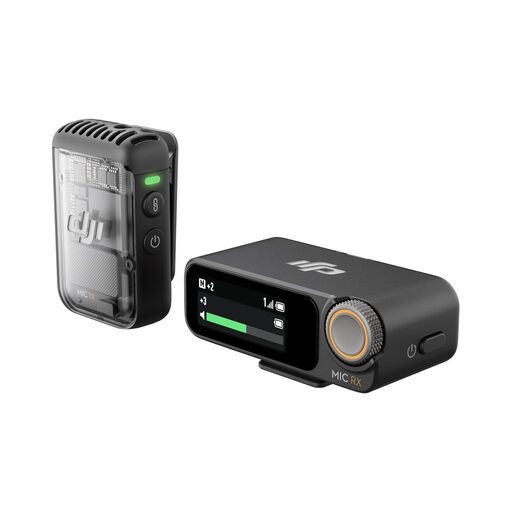 Image unavailable
DJI Mic 2 (1 TX + 1 RX)
The set with one transmitter and one receiver suits a solo set-up.
The product name lists 32-bit float internal recording. The description mentions adapters and compatibility with computers and cameras; check which connection suits your device. The stated noise reduction won’t automatically make rehearsal noise inaudible.
View at Joybuy
Frequently asked questions
Can a microphone automatically remove rehearsal noise or echo?
Don’t count on a microphone to remove rehearsal noise or echo on its own. Shure explains that its denoiser won’t remove other voices or sudden sounds. Speak close to the microphone, position it carefully and listen back to a test recording; if necessary, improve the recording space first.
What do you need when two people record an intro together?
Check that your set-up can connect two suitable microphones and that your recorder or software can save separate tracks. Shure describes a mode for the MV7i with an additional microphone that provides two separate mono channels; this is a model-specific feature, not something all microphones offer.
Does an XLR condenser microphone always need phantom power?
Check the requirements of the exact model. For the Audio-Technica AT2020, the manufacturer specifies full 48 V phantom power from a suitable interface. Don’t assume this model’s specification applies to every condenser microphone.
What extra equipment and warranty terms should you check?
For XLR, check that you have the required interface, inputs and cables, and see what’s included with each model. For consumer purchases in the Netherlands, ACM ConsuWijzer states that statutory warranty applies alongside any seller’s or manufacturer’s warranty when a product used normally doesn’t meet what you could reasonably expect from it.
Can I publish music or recognisable contributions from others in my podcast intro?
According to the Dutch government, you need permission from the creator to use someone else’s copyright-protected music. If you process other people’s personal data, the Dutch Data Protection Authority says you need a lawful basis under the GDPR; consent is one possible basis. Check the rights involved and the people featured before publishing, as your choice of microphone won’t take care of this.


