
Solo creator in a noisy home
You want your voice to come through more clearly than traffic, housemates or echo. Shure emphasises that microphone distance and placement matter; the recording format alone won’t change the acoustics.


When there’s background noise or echo, microphone placement matters more than the recording format alone: Shure recommends placing a microphone close to the speaker, and a recorder won’t make the room itself quieter. A handheld recorder with built-in microphones may suit short solo intros; choose a model with XLR/TRS inputs if you want to connect a suitable separate microphone or record guests using individual microphones. According to their manufacturers, the Zoom H4essential and Tascam DR-40XP have XLR/TRS inputs and four tracks; also check microphone compatibility, storage and the accessories you’ll need.
You want your voice to come through more clearly than traffic, housemates or echo. Shure emphasises that microphone distance and placement matter; the recording format alone won’t change the acoustics.
You want to record and listen back on your own, with little preparation. Built-in microphones or internal memory may suit the way you work; just check how you can position the microphone close to you.
You want the option of using separate microphones and recording tracks. Zoom and Tascam list XLR/TRS inputs on specific models; check that each recorder’s connections suit your microphone set-up.
Suitable when: you want to record short solo intros on your own and can position the recorder close to your mouth.
Bear in mind: a microphone placed further away may pick up more room sound; also check what type of external input the model has.
Suitable when: you want to position a suitable separate microphone close to the speaker, or leave room for a guest to use their own microphone.
Bear in mind: a separate microphone, cable and stand require extra set-up; the connections alone won’t remove background noise or echo.
For an intro recorded in a noisy home, start with your microphone set-up. Then choose features that suit how you record and listen back.
| What to consider | What should you check? | Who is this most important for? |
|---|---|---|
| Clear speech | Whether you can position the microphone securely close to your mouth and whether the recorder supports the microphone you want to use. | If I want my voice to stand out over room and background noise, I focus on distance and placement. Around 36% of consumers say clear speech is their top priority. |
| Quick, independent recording | Whether the controls, storage and playback options suit short recordings. | I want to record and listen back to a short intro without a complicated set-up involving connections or a computer. Around 29% of consumers prioritise recording independently and easily. |
| Adding a guest | How many microphone inputs can be used at the same time, what type of connections they have and whether the microphone needs power. | If I want to record a guest using their own microphone later, I check whether suitable inputs are available. Around 21% of consumers prioritise the option to add guests. |
| Set-up and essentials | What storage, power and accessories the version you choose requires, and what’s included in the box. | I want to know in advance what I’ll need to start recording straight away, without choosing features I won’t use. Around 14% of consumers prioritise simplicity and knowing what’s needed. |
32-bit float is a recording format; microphone placement and room acoustics are separate factors. The format won’t make a noisy room quiet.
First, find a practical position for the microphone and listen back to a test recording from the spot where you plan to record.
Inputs vary between models. The Zoom H4essential and Tascam DR-40XP list XLR/TRS inputs; don’t assume another handheld model has the same connection.
Check your microphone’s connection type and any power requirements against the recorder’s specifications.
The Zoom H1essential uses microSD; according to the manufacturer, the OM SYSTEM LS-P5 has internal memory. Storage therefore varies between models.
Before choosing a version, check what type of storage it uses and which accessories are actually included.
The H1essential is a handheld option for straightforward recording; the H4essential has inputs for external microphones and four tracks.
The DR-05XP has built-in stereo microphones; the DR-40XP also offers XLR/TRS inputs for a compatible external microphone.
The LS-P5 is a compact recorder with built-in memory, for anyone who wants to record independently without relying solely on a separate memory card.
This selection includes compact voice recorders with storage features. For podcast intros, check that the microphone set-up, connections and controls suit your recording space and the way you work.
 No image available
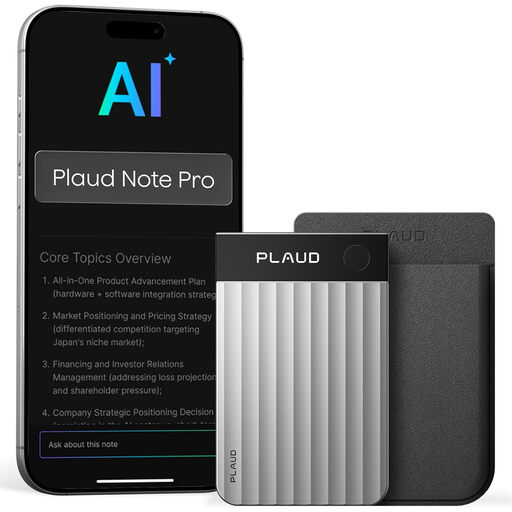
The product description mentions one-touch recording and 32 GB of built-in storage. Check that the microphone set-up suits your recording space.
 No image available
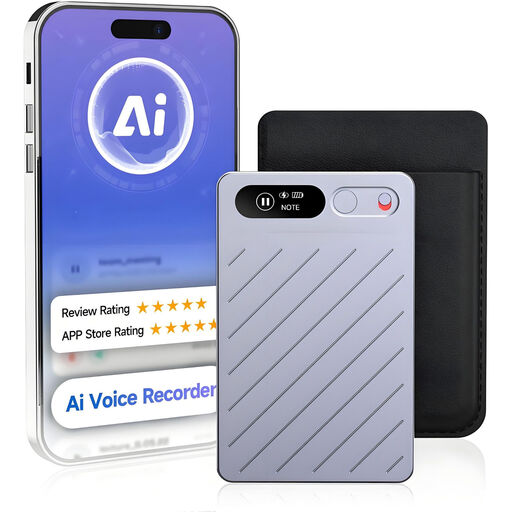
The product description mentions 64 GB of storage, audio recording and speech-to-text conversion. Check that the controls and microphone set-up suit the way you plan to record your podcast.
 No image available
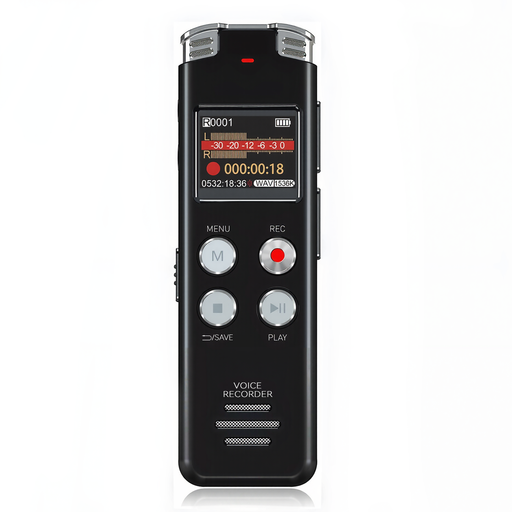
The product description lists WAV and MP3 recording, AVR and A-B repeat playback. Check the microphone set-up and how you want to listen back to your recordings.
 No image available
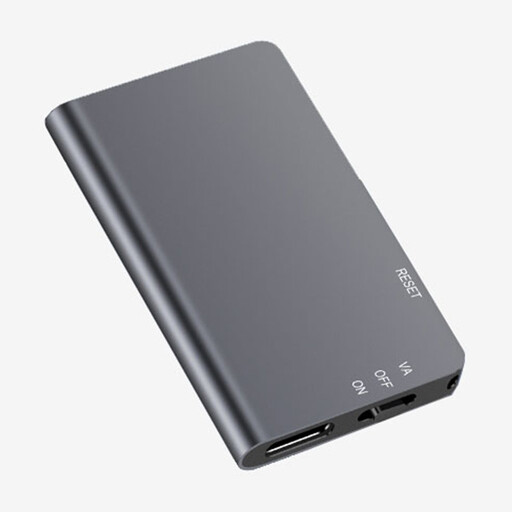
The product description mentions 64 GB of built-in storage, WAV recording and playback through the supplied headphones. Check that the recording controls and microphone set-up suit your podcasting needs.
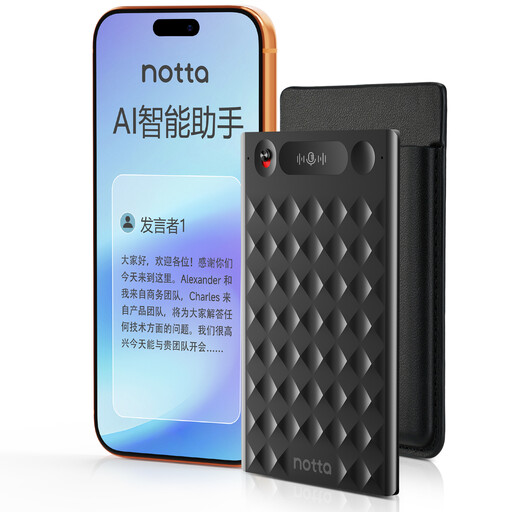 No image available
The product description mentions a four-microphone array, 32 GB of storage, transcription and summary features. Before buying, check that the microphone set-up suits the room you’ll be recording in.
No. 32-bit float is a recording format; microphone placement and room acoustics remain separate factors. Position a suitable microphone close to your mouth and listen back to a test recording in your usual recording space.
Check the storage and power beforehand, then make a short test recording and listen back to it. The Zoom H1essential uses microSD; the OM SYSTEM LS-P5 has internal memory. Also check what’s included in the box with the version you choose.
According to the Dutch government, a product must be fit for purpose; if it’s faulty, you may be entitled to a free repair, replacement or refund. There is no fixed statutory guarantee period that applies to every product. For online purchases from a business, you’re also generally entitled to a 14-day cooling-off period.
Don’t publish information about someone else without checking the applicable privacy rules. The Dutch Data Protection Authority says that, in principle, you may only publish other people’s personal data online with their consent; a valid legal basis is needed to collect and use personal data when the GDPR applies. Which legal basis is sufficient in a particular podcasting situation depends on the circumstances.