Who is this headset guide for?

Soft-spoken speaker practising their enunciation

Wants to hear whether softly spoken words remain clear in both languages. A well-positioned microphone and a test recording at a controlled level can help you assess this for yourself, as Shure recommends for recording tests.

Creator comparing voice monitoring options

Wants to assess their own voice while practising and decide whether a call headset will do or a content creation headset would be a better fit. Jabra describes sidetone as feedback of your voice through the headset.

Creator with an existing audio interface

Wants to use a headset as part of their current recording setup and needs to match the cables and connections to their equipment. Shure specifies that the BRH50M has a detachable cable with XLR and headphone connectors.

What should you look for in a headset microphone?

USB call headset

A good fit if: you mainly want to practise directly on a computer and listen back to test recordings.

Bear in mind: a noise-cancelling feature for calls does not prove how your soft-spoken voice will sound in a recording.

Content creation headset

A good fit if: recording your voice and assessing your enunciation matter more than call features alone.

Bear in mind: Audio-Technica makes separate USB and analogue/XLR versions of the ATH-M50xSTS. Choose the one that connects to your computer or interface.

Broadcast headset with an audio setup

A good fit if: you already use a compatible mixer or audio interface and want an adjustable microphone on your headset.

Bear in mind: check that both the microphone and headphone connectors work with your equipment. This is not the same direct connection as USB.

What to consider What should you check? Who is this important for?
Clarity when speaking softly Check that you can position the microphone close to your mouth and adjust the input level in your recording app. If I speak softly, I want to be able to hear the words clearly in both languages when I listen back. Around 40% of consumers prioritise clarity.
Assessing your own voice Check whether the exact version has sidetone or another suitable monitoring option; also listen back to a saved test file. If I want to assess my pronunciation while practising, live feedback alone is not enough. Around 23% of consumers prioritise voice monitoring.
Connectivity and ease of recording Compare the connector on the exact version with your computer or interface, and check whether your recording app can select the headset as a microphone. If I want to practise on my computer without extra recording equipment, the headset needs to work with my ports and app. Around 23% of consumers prioritise easy connectivity.
Comfort during repeated practice Look at the adjustability and type of ear cushions; try the headset on if you can to judge the fit for yourself. When recording several takes, I want a headset that stays comfortable. Around 14% of consumers prioritise wearing comfort.

Which buying mistakes can you avoid?

  • Assuming noise cancellation guarantees a good recording

    A manufacturer may describe a microphone feature for calls, but that does not tell you how your voice, languages and room will sound together.

    Record a short intro on your computer, in the room where you plan to practise. Listen back to the saved file and check for clarity and background noise.

  • Overlooking the connection type or the audio setup you need

    USB, jack and XLR versions have different connection requirements. An analogue or XLR setup may need a compatible interface or cable; what you need will depend on your existing equipment.

    Before you buy, note down the exact model version, your computer’s ports and the connections for both the microphone and headphones.

  • Confusing sidetone with the final recording

    Sidetone feeds your voice back through the headset while you speak. You need to check the recording app and saved file separately.

    After changing your settings, listen back to a test file that you have actually saved.

Which brands are worth considering?

Audio-Technica

Audio-Technica says the ATH-M50xSTS range is designed for content creation and is available in separate USB and analogue/XLR versions.

  • Audio-Technica specifies a cardioid condenser microphone and two types of ear cushion for the range.
  • Check the exact version and connection; features of one version do not automatically apply to the other.

Logitech

The H390 is a wired USB headset for computer use and straightforward practice.

  • Logitech lists an adjustable microphone boom, in-line controls and a noise-cancelling microphone for the H390.
  • These call features are not an independent assessment of podcast recording quality. Also check the connector on the version you choose.

Jabra

The Evolve2 40 SE is a wired work headset for anyone considering microphone position and voice feedback.

  • Jabra describes a microphone positioned close to the mouth and sidetone for a specified version.
  • Jabra says that not all USB-C devices or apps support audio with the Evolve2 40 SE; check your device and app.

Shure

The BRH50M is a broadcast headset for use with compatible audio cables and connections.

  • Shure specifies an adjustable dynamic supercardioid microphone, closed earcups and a detachable cable with XLR and headphone connectors.
  • Check that your computer or interface has the connections you need; this is not a direct USB setup.

EPOS

The H6PRO Closed is an analogue wired gaming headset that could be an alternative for practice if the connection is compatible.

  • EPOS lists a detachable, adjustable microphone boom and an analogue wired connection.
  • The product information focuses on gaming and does not show how faithfully it records soft-spoken podcast speech.

Headsets for practice and voice recording

These Joybuy picks are wired headsets with microphones for practising and listening back to speech. Check that each model’s connection works with your computer or audio interface.

JBL Quantum 300 wired gaming headset, black

JBL Quantum 300, black

The adjustable boom microphone makes this an option for practising speech with a wired headset.

The product description lists a flip-up voice-focus boom microphone, a 3.5mm connection and a USB audio adapter. Check which connection works with your device.

Joybuy
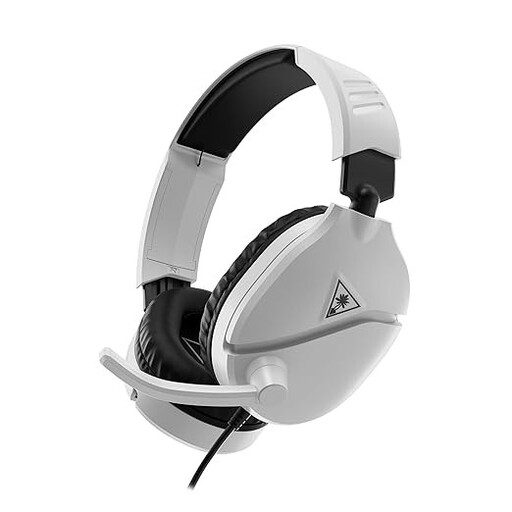
Turtle Beach Recon 70 PlayStation headset, white

Turtle Beach Recon 70 PlayStation, white

According to the product description, the wired headset has a microphone boom that can be positioned towards your mouth.

The title lists a 3.5mm connection and a flip-to-mute microphone. Check that the connection works with your recording device.

Joybuy

Turtle Beach Airlite Fit headset, blue and red

Turtle Beach Airlite Fit, blue/red

The product description says the microphone can be positioned towards your mouth, which is worth checking when practising soft-spoken speech.

The title lists a 3.5mm connection and a flip-to-mute microphone. The description mentions mesh ear cushions; check your device’s connection.

Joybuy

Razer BlackShark V2 X 7.1 wired headset, black

Razer BlackShark V2 X 7.1, black

The product description lists a microphone boom and guidance on positioning it for voice recording.

According to the description, the headset has a cardioid microphone and an analogue 3.5mm connection. The recommended distance from your mouth is around 1–2 inches.

Joybuy
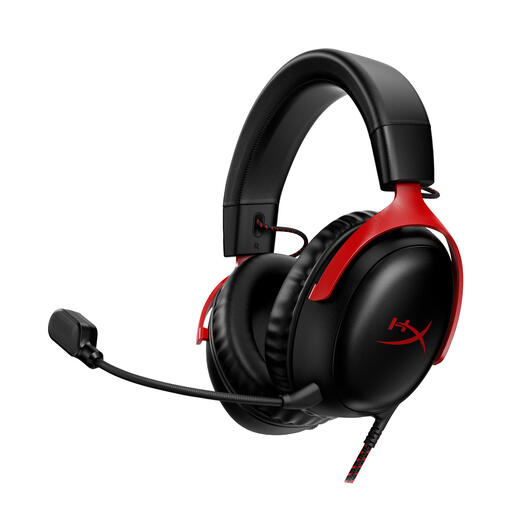
HyperX Cloud III headset, black and red

HyperX Cloud III, black/red

The detachable boom microphone makes this an option if you want a headset microphone that you can remove when needed.

The product description lists 3.5mm, USB-A and USB-C connections. Check which connection and audio link your device supports.

Joybuy

Frequently asked questions

How can I test whether a soft-spoken intro is clear in both languages?

Record a short passage in both languages in the room you usually use, then listen back to the saved file. Check quiet words and louder syllables, keep the microphone at a consistent distance from your mouth, and adjust the input level so louder passages do not clip.

Can I use the Jabra Evolve2 40 SE with any USB-C phone?

No, not necessarily. Jabra says that not all USB-C devices or apps support an audio connection with the Evolve2 40 SE, so check your specific device and recording app.

What is the difference between sidetone and listening back to a recording?

Sidetone feeds your microphone audio back through your headphones as you speak. You should also listen back to the saved test file, as sidetone does not show what the recording app has actually captured.

What are my rights if a headset I bought online is unsuitable or breaks too soon?

For online consumer purchases in the Netherlands, you generally have a 14-day cooling-off period from delivery, subject to legal exceptions, according to ACM ConsuWijzer. This is separate from your rights if a product does not meet what you could reasonably expect under normal use; ACM ConsuWijzer says the seller is your point of contact for the legal guarantee. Check the applicable returns policy before trying out the headset.

Can I publish an intro featuring someone’s recognisable voice or someone else’s music?

It depends on what you publish and which rights apply. The Dutch Data Protection Authority discusses consent as one possible legal basis for publishing personal data online, subject to exceptions. For someone else’s copyright-protected music or text, the Dutch Government says you need permission from the creator. This does not mean that every voice recording always requires permission.
