
Podcasters with a growing archive
You want to keep episodes and project files stored locally. How much space you need depends on which files you want to keep.


For an archive that mostly stays in one place, a portable HDD is an obvious choice if its capacity and connection are right for you. An SSD is worth considering if you take the drive with you often or regularly transfer large files. In a 2022 buying guide, the Consumers' Association described HDDs as more susceptible to knocks than SSDs. Whichever you choose, a single drive containing the only copy is not a recoverable backup plan.
You want to keep episodes and project files stored locally. How much space you need depends on which files you want to keep.
You regularly take your drive between recording locations, so you’ll want to consider how easy it is to handle, its connection and how susceptible the drive is to knocks.
You may store recordings containing information that could identify people. If the GDPR applies to how you process this information, consider appropriate security and how long you keep it.
Best for: an archive that mostly stays in one place, if you’re mainly looking for space for episodes and project files.
Bear in mind: mechanical HDDs are more susceptible to knocks. Check the capacity, cable and file system of the exact model, too.
Best for: regular travel or frequent transfers of large recording projects, if your computer and connection can make use of the speed.
Bear in mind: compare the capacity you need, and don’t treat protection against knocks or water as a substitute for keeping a separate copy.
| What to consider | What to look for | Who should consider this? |
|---|---|---|
| Recoverable archive | Allow space for the copies you want to keep, store them separately and test whether you can restore your files. | If I want to be able to restore my recordings without using the cloud, I don’t want to rely on a single drive. Around 28% of consumers say recoverability is their top priority. |
| Room to grow | Measure the size of your current archive, decide which project files you’ll keep and compare the exact capacity option. | If I keep my project files alongside the finished episodes, I want to choose a capacity that suits my own folders. Around 22% of consumers prioritise archive space. |
| Guest recordings and access | Consider whether your recordings contain personal data and what security measures your entire storage and backup setup needs. | If my archive contains identifiable recordings of guests, I want to manage access and retention periods carefully. Around 22% of consumers prioritise protecting these recordings. |
| Using more than one computer | Check the ports, cables and operating systems on your computers. Make another copy before formatting a drive; formatting erases files. | If I want to access the same files on my recording and editing computers, I check the connection and file system first. Around 17% of consumers put use across multiple computers at the top of their list. |
| Taking it between locations | Consider how often you’ll take the drive with you, how much space you need and whether its connection is compatible with your computer. | If I regularly take my archive to a recording location, I consider how easy the drive is to handle and how susceptible it is to knocks. Around 11% of consumers say portability is their top priority. |
If your only drive fails or goes missing, there’s no second copy to restore your recordings from.
Keep a separate local copy and periodically check that you can actually restore your files.
Keeping a second local copy requires extra storage space and management.
The Toshiba Canvio Basics model reviewed is formatted as NTFS; Toshiba says it needs to be reformatted for use with a Mac. Formatting erases the files on the drive.
Check the file system of the exact model. Before reformatting, make a separate copy first.
Allow time for formatting and for safely copying your files beforehand.
Stated maximum speeds apply to the model specified and don’t automatically reflect the speed your computer or connection will achieve in your setup.
Check your computer’s USB connection, and first choose a capacity and setup that suit your needs.
Expansion Portable is a range of portable HDDs for extra local storage.
Canvio Basics is a straightforward range of portable HDDs; HDTB520EK3AA is the 2TB model mentioned.
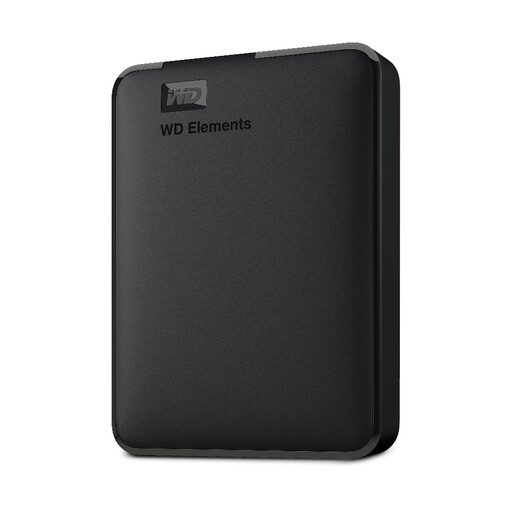
WD Elements Portable includes portable HDD models for local storage.
T7 Shield is a range of portable SSDs; the blue 1TB model mentioned is MU-PE1T0R/EU.
This selection includes portable HDDs and SSDs for a local podcast archive. Compare the capacity, connection and suitability for your needs of each model.
 No image available
A portable SSD for storing files locally, if 1 TB is enough for the size of your archive.
The product description lists read speeds of up to 800 MB/s and drop protection from heights of up to two metres.
 No image available
A portable HDD for Mac users who need 2 TB and want to check the Mac features listed.
The product description mentions use with Time Machine, password protection, USB 3.0 and a USB-C adapter. The macOS versions listed are Mojave, High Sierra and Sierra.
 No image available
A portable HDD for an archive that needs 4 TB and a computer with a USB-C connection.
The product description mentions exFAT, USB-powered operation, use with Windows and Mac, and 256-bit AES hardware encryption with password protection. As a mechanical HDD, it isn’t an SSD option for anyone who often exposes their drive to knocks; the Consumers' Association described HDDs as more susceptible to knocks than SSDs.
 No image available
A portable HDD for keeping episodes and project files locally, if the 2 TB capacity listed suits your archive.
The product name lists USB 3.0 and formatting for PC and Mac. Check that the connection and file system suit the computers you use.
 No image available
A portable SSD for an archive that fits within 1 TB, or for anyone who regularly transfers large files.
The product description lists USB 3.2 Gen 2 and stated speeds of up to 1.050 MB/s read and 1.000 MB/s write. It also mentions compatibility with Windows and macOS, plus USB-C to USB-C and USB-C to USB-A cables. The stated maximum speeds aren’t guaranteed on every computer.
Not if that drive contains the only copy of irreplaceable recordings. Keep a separate local copy and periodically check that you can restore your files; you don’t need cloud storage to do this. This is backup advice, not a legal requirement for every podcaster.
First, check the ports, cable and current file system. Apple describes ExFAT as a formatting option for a drive larger than 32 GB that you want to use with both systems. Formatting erases existing files, so make a copy elsewhere first.
For consumer purchases, statutory rights apply alongside any manufacturer's or seller's guarantee. ACM ConsuWijzer explains that the seller is responsible for offering an appropriate solution if a product breaks during normal use sooner than you could reasonably expect; there isn’t one fixed statutory guarantee period for every drive.
Not automatically. If you process personal data as an organisation, you must protect it appropriately and decide on a suitable retention period; the Dutch Data Protection Authority notes that the GDPR doesn’t specify one general fixed period. Whether it applies depends, among other things, on the processing and whether the use is exclusively personal or household.
Making a copy for your own use is different from sharing or making it available to the public. The Dutch government explains the private-copying exception for personal use; permission from the creator may be needed for other uses of copyright-protected work. Check the rights for the specific recording and the use you have in mind: an external drive doesn’t change those rights.