
Podcast archive manager
Do you keep your finished episodes, original recordings and related files? If so, archive capacity and separate copies are important factors in your choice.


An external HDD is a good fit for a community podcast archive that will mainly be stored, while a portable SSD is better suited to projects you open, move or edit frequently, including when you’re out and about. First, work out how much space your existing files and new recordings will need, then check the connection and drive format. Never keep irreplaceable recordings as the only copy on a single drive.
Do you keep your finished episodes, original recordings and related files? If so, archive capacity and separate copies are important factors in your choice.
If you move active sessions between recording locations and computers, consider portability, connectivity and how quickly files transfer to your equipment.
If you exchange project and audio files between different operating systems, check that the drive format supports writing files and works with your backup software.
First, decide whether you’ll mainly be storing files, editing regularly or doing both. Then choose the capacity you need and check that the drive works with the computers and backup software you use.
| What to consider | What to look for | Who will value this? |
|---|---|---|
| Separate archive copies | Allow space for multiple copies on different storage media and in different locations. Check important files after transferring them. | If I keep interviews and original recordings, I don’t want a single drive failure to affect my only copy. Around 33% of consumers put archive preservation at the top of their buying priorities. |
| Capacity and future growth | Add up your existing audio and project files, and allow for recordings you may want to keep in future. | I want enough space for both my current files and new recordings. Around 27% of consumers prioritise having enough archive storage. |
| Sharing files between Mac and Windows | Check the drive’s supplied format and whether it works with your backup software. Make a copy before reformatting, as formatting can erase data. | When creators use both Mac and Windows, I want to be able to exchange and save files. Around 20% of consumers name this compatibility as their top priority. |
| Taking active files with you | Check your computer’s USB port and cable. Consider whether protection during transport matters for the way you use the drive. | If I take sessions to recording locations, I look for portability and easy transfers to my own computer. Around 20% of consumers prioritise editing on the go. |
A fault or incident could make the only copy on that drive inaccessible. The Library of Congress recommends keeping copies on different storage media and in separate physical locations.
Keep additional copies on other media and in other locations, and check important files after transferring them.
Keeping a separate copy requires extra storage media and management.
Apple says a Mac may be able to read an NTFS drive, but can’t write to it by default. exFAT may also have limitations with built-in backup features.
Check the drive format and your backup software before transferring files. Make a copy first if you plan to reformat the drive, as this can erase the data already on it.
A safe migration or reformatting takes time and requires a temporary copy of your files.
A quoted maximum isn’t necessarily the speed you’ll get: your computer, connection and cable all play a part.
Check which USB port and cable you’re using. Don’t choose a drive based solely on a speed claim if you’ll mainly use it for archiving.
A warranty on the drive won’t automatically bring back lost interviews or other data. Keeping a backup is a separate precaution.
Check the warranty terms and make separate copies of irreplaceable recordings too.
The Canvio Basics is a range of portable HDDs. Toshiba lists a 4 TB version for those mainly looking for archive storage.
The 2 TB T7 Shield reviewed is a portable SSD for people who regularly carry active files with them.
The 2 TB X9 Pro reviewed is a portable SSD for file sharing and working on the go.
The Basic Portable Drive range includes portable HDDs; Seagate lists model STJL4000400 as a 4 TB version.
This selection includes portable SSDs for active projects and travel, as well as external HDDs for archive storage.
 Image unavailable
Ideal for taking active files with you and transferring them.
The description lists read speeds of up to 800 MB/s, drop protection up to 2 metres and an integrated loop for attaching it to a bag or belt. This drive alone isn’t a separate archive copy; the Library of Congress recommends keeping copies on different media and in different locations.
 Image unavailable
Its capacity makes this HDD a useful option if you want to store files for an archive.
The product information lists USB 3.0, 256-bit AES hardware encryption with password protection, and software that lets you schedule backups. This drive alone isn’t a separate archive copy; the Library of Congress recommends keeping copies on different media and in different locations.
 Image unavailable
Ideal for taking active files and creative projects with you and transferring them.
The product information lists USB-C, USB 3.2 Gen 2, read speeds of up to 1.000 MB/s and drop protection up to 2 metres. Actual transfer speeds also depend on the computer, port and cable you use. This drive alone isn’t a separate archive copy; the Library of Congress recommends keeping copies on different media and in different locations.
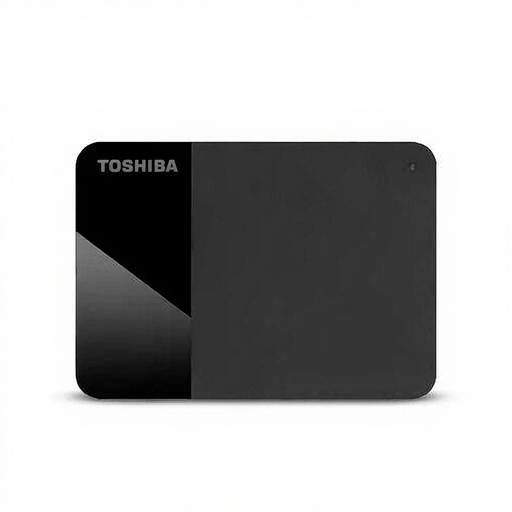 Image unavailable
A good fit for storing files on a portable external HDD.
The product information lists a 2.5-inch drive, USB 3.2 Gen 1 and USB power. Before buying, check that the drive format works with your computers and backup software. This drive alone isn’t a separate archive copy; the Library of Congress recommends keeping copies on different media and in different locations.
 Image unavailable
The 4 TB version is a good fit if you need more space for archive files.
The product information lists a 2.5-inch drive, Micro-USB B, USB 2.0 and USB 3.2 Gen 1, plug-and-play functionality and USB power. Before buying, check that the drive format works with your computers and backup software. This drive alone isn’t a separate archive copy; the Library of Congress recommends keeping copies on different media and in different locations.
It depends on the drive format. Apple says a Mac may be able to read an NTFS volume, but can’t write to it by default; exFAT is compatible with Windows. Seagate warns that exFAT isn’t suitable or recommended for some built-in backup features. Check the format and your backup software, and save existing files elsewhere before reformatting.
No, choosing an external drive doesn’t mean you have to convert your audio files. In its own guidance on digital audio, the Library of Congress prefers formats such as WAVE with embedded metadata over versions without it. Keep your originals and don’t change the audio format just because you’re buying a drive.
No, one drive isn’t the same as keeping a separate backup. The Library of Congress recommends keeping copies on different storage media and in separate physical locations. Check important files after transferring them.
First, check that the files have transferred, then safely eject the external drive in Windows before unplugging the cable. Microsoft cites data loss as a reason to safely remove hardware. For long-term access, also keep a separate copy in another location.
Buying an external drive doesn’t give you permission to make personal data public. The Dutch Data Protection Authority says that processing requires a legal basis under the GDPR, and that consent is generally the legal basis for publishing information online publicly, with exceptions such as journalistic use. The legal basis for your recordings and publication depends on the circumstances; you should also put appropriate access controls and security in place.