Who is this guide for?

Photographers who want to capture an entire façade

You’re taking photos from a limited distance and want to fit the façade and roofline into the frame. So, focus on the lens’s field of view with your chosen sensor; Canon Netherlands and Nikon Netherlands give examples of ultra-wide lenses for their mirrorless cameras.

City photographers who like to explore on foot

You want to take photos quickly while you’re out and about, with minimal extra equipment, and may be happy with a more limited fixed field of view. The Consumers’ Association lists size and ease of use among the factors to consider when choosing a camera; Ricoh Imaging Europe describes the GR IV as a compact camera with a fixed lens.

Photographers focused on façade detail and exposure

You want to capture the detail in the bricks and a bright, overcast sky carefully, and manage exposure and editing yourself. Nikon Netherlands specifies in-body stabilisation for the Z5II; Sony Netherlands lists RAW shooting for the α7C II.

What should you look for?

Mirrorless camera with an APS-C ultra-wide zoom lens

A good choice if: you want to frame an entire façade from a narrow quay and are happy to carry a separate lens. Canon gives the RF-S 10-18mm a 16–29 mm full-frame equivalent on APS-C.

Consider: the body and lens are separate items; check the lens mount and field of view with your chosen sensor.

Full-frame mirrorless camera with an ultra-wide zoom lens

A good choice if: you want an interchangeable lens and the option to expand your kit later. Nikon lists in-body stabilisation for the Z5II and also offers the separate full-frame NIKKOR Z 14-30mm f/4 S.

Consider: assess the complete body-and-lens combination, not just the body; an ultra-wide lens isn’t automatically included when you buy the body.

Compact camera with a fixed lens

A good choice if: you want to carry as little extra equipment as possible on a city walk. Ricoh Imaging Europe lists the GR IV as having a fixed field of view of approximately 28 mm in full-frame equivalent terms.

Consider: you can’t zoom out to a wider setting if the façade won’t fit in the frame from where you’re standing.

What to consider What to check before buying Who is this important for?
Fitting an entire façade into the frame from a tight spot Check the full-frame equivalent field of view with your chosen sensor, and whether the lens fits the body. If I want to capture the whole façade from the quay, the field of view needs to give me enough room without including too much sky or foreground. Around 33% of consumers say that framing the entire façade from a limited distance is their top priority.
Exposing the brickwork and bright, overcast sky Check the RAW and exposure options on the exact camera body; assess stabilisation alongside shutter speed and movement in the frame. If I want to retain both the detail in the brickwork and a bright sky, I want to be able to assess and adjust the exposure myself. Around 25% of consumers rank façade detail and exposure above other buying concerns.
Carrying a camera on a city walk Compare the complete body-and-lens combination with a compact camera, and check whether the field of view is fixed or variable. When I’m walking around the city, I want to take a camera without carrying lots of extra equipment. Around 25% of consumers say portability is their top priority, even if it means less freedom when framing a shot.
Composition and the complete kit Look at sample framing from your usual viewpoint and compare the body and lens you’ll need as a complete combination. If straight façade lines and a well-framed shot matter to me, I want to know which lens I’ll need before choosing a body. Around 17% of consumers say composition and the complete kit are their top priorities.

Common buying pitfalls

  • Comparing camera bodies alone

    The body alone won’t determine whether you can fit an entire façade into the frame from where you’re standing. The lens’s field of view and its compatibility with the sensor and mount matter too.

    Compare the body with the specific lens you want to use, and check that the lens is compatible with your chosen camera system.

  • Assuming a fixed compact lens is equivalent to an ultra-wide zoom

    According to Ricoh Imaging Europe, the Ricoh GR IV’s fixed lens has a full-frame equivalent of approximately 28 mm. Canon lists the RF-S 10-18mm as equivalent to 16–29 mm on APS-C; this is a zoom lens with a variable field of view.

    Before prioritising portability over lens flexibility, check that the fixed field of view will capture enough of the façade from your usual viewpoint.

  • Assuming stabilisation will make every shot sharp

    Image stabilisation can help reduce camera shake, but it won’t freeze passers-by. An overcast sky also doesn’t guarantee that both the sky and the brickwork will be correctly exposed.

    Check the sharpness of the façade and the exposure of the sky and brickwork in your shot; also bear in mind any movement in the frame.

Camera brands to consider

Canon

EOS R cameras with APS-C sensors, including the EOS R50, can be paired with separate RF-S ultra-wide lenses.

  • Canon gives the RF-S 10-18mm a 16–29 mm full-frame equivalent on APS-C.
  • Canon states that the RF-S 10-18mm isn’t dust- or moisture-resistant; this doesn’t apply to other Canon lenses.

Nikon

The full-frame Z system includes the Z5II and the separately available NIKKOR Z 14-30mm f/4 S ultra-wide zoom lens.

  • Nikon lists in-body image stabilisation for the Z5II and a variable field of view for the 14-30mm lens.
  • The lens isn’t included as a standard part of the body purchase; assess the combination you actually plan to use.

Ricoh

The GR IV is a compact camera with a fixed lens for anyone who wants to carry less extra equipment.

  • Ricoh Imaging Europe lists a field of view of approximately 28 mm in full-frame equivalent terms, as well as built-in stabilisation.
  • From a tight spot, a fixed field of view gives you less freedom to frame your shot than an ultra-wide zoom.

Sony

The full-frame E-mount α7C II is a mirrorless camera for which you choose the lens separately.

  • Sony lists a 33-megapixel full-frame photo mode and RAW for the α7C II.
  • The body specifications don’t tell you what field of view a lens you choose later will offer from the quay.

Joybuy products

The products below are portable cameras for photography and travel, suited to anyone who wants to carry less equipment on a city walk. Before buying, check that the field of view is suitable for framing an entire façade from where you’ll be standing.

KOMERY G7-A 4K digital camera, pink

KOMERY G7-A 4K, 80MP UHD, 18X zoom, pink

The product name describes this model as a portable camera for travel and photography; check that its field of view is suitable for photographing an entire façade from the quay.

The product name lists 4K, 80MP UHD and 18X zoom.

View at Joybuy
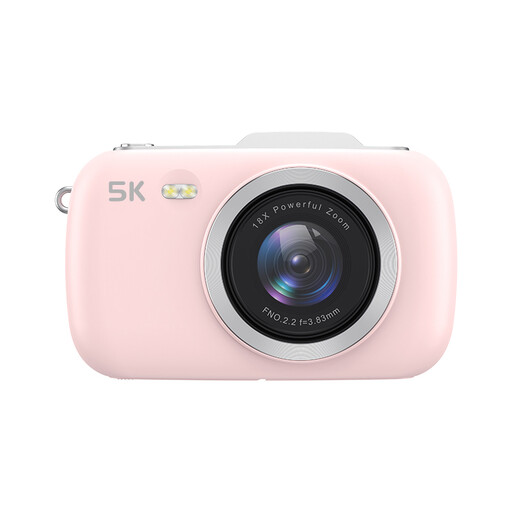
KOMERY G7 5K digital camera without SD card, pink

KOMERY G7 5K, 80MP UHD, 18X zoom, without SD card, pink

The product name describes this model as a portable camera for travel and photography; check that its field of view is suitable for photographing an entire façade from the quay.

The product name lists 5K, 80MP UHD and 18X zoom. No SD card is included.

View at Joybuy

Frequently asked questions

Which lens should I check if the façade won’t fit in the frame?

Check the field of view with your chosen sensor, the lens mount and what’s included with the camera. Canon gives its separate RF-S 10-18mm lens a 16–29 mm full-frame equivalent on APS-C.

Does image stabilisation help when taking photos under an overcast sky?

When photographing a stationary façade, stabilisation can help reduce camera shake at slower shutter speeds. It won’t freeze moving passers-by; also check the exposure of both the sky and the façade.

Can I use the Canon RF-S 10-18mm without protection in light rain?

Don’t assume that you can: Canon states that the RF-S 10-18mm isn’t dust- or moisture-resistant. Check the specifications for both the exact lens and the body, and protect your equipment when conditions call for it.

What if my camera develops a fault sooner than expected during normal use?

If you buy as a consumer in the Netherlands, you have statutory consumer rights in addition to any commercial warranty. According to ACM ConsuWijzer, if a product breaks sooner than can reasonably be expected during normal use, the seller must put it right free of charge, for example by repairing or replacing it; there isn’t one fixed statutory warranty period for every camera.

Can I publish a photo of canal houses that includes identifiable passers-by?

First consider the privacy implications: the Dutch Data Protection Authority states that identifiable people in photographs are personal data, and privacy rules may apply when taking and publishing these images. Whether a particular photo can be published depends on the circumstances; a photo showing only façades doesn’t answer that question for images in which people are identifiable.
