
Local traffic updates listener
You want to check first that your station is available on the right reception band where you plan to listen. The ANWB provides information about stations and broadcast times; check this for your journey.


Choose a pocket radio with a built-in speaker and a reception band that carries your preferred travel updates station where you plan to listen, such as by a wall. FM is enough if that station is available there on FM; FM plus DAB+ gives you another reception option, but does not guarantee reception, clear sound or up-to-date updates for your journey.
You want to check first that your station is available on the right reception band where you plan to listen. The ANWB provides information about stations and broadcast times; check this for your journey.
You want to hear spoken updates through the radio itself, in a fixed spot by a wall. Look for a built-in speaker and try the reception where you plan to listen.
You take your radio with you and choose between replaceable batteries and a rechargeable battery. Check the power source for the exact model.
First check whether your preferred station broadcasts on FM or DAB+ where you plan to listen. Then compare the radio’s speaker, power source and controls.
The ANWB publishes information about stations and broadcast times. The Dutch Authority for Digital Infrastructure describes local DAB+ coverage areas. Check the station and band for your area, then try the radio where you plan to listen.
| What to consider | What should you check? | Which consumers is this for? |
|---|---|---|
| The right local station | Check the station, broadcast times and FM or DAB+ availability in your area. | I want to listen to a particular local station while travelling, so I check the band, area and broadcast time first. Around 36% of consumers prioritise reception of the right local station. |
| Listening by a wall | Check whether the exact model has a built-in speaker; try the radio and aerial in the spot where you plan to use it. | If the radio will stay by a wall, I want to hear updates through its built-in speaker and test reception there. Around 29% of consumers prioritise clear sound by a wall. |
| Power for travelling | Check the battery type, charging connection and which accessories are included. | For use at home and on the go, I want to know whether I need to replace batteries or recharge a battery; that determines how I prepare. Around 21% of consumers prioritise power for travelling. |
| Switching between stations | Compare the controls and check whether the exact model has station presets. | I switch between update stations and want to find them easily without having to search from scratch each time. Around 14% of consumers prioritise quick switching. |
Local digital radio is available in specific areas; having a DAB+ receiver does not, by itself, tell you whether your preferred station is available where you plan to listen.
Check the station, area and broadcast times before choosing between FM and FM/DAB+.
A headphone socket does not mean the device also has a built-in speaker.
Check the specifications for the exact model to confirm it has a built-in speaker, and try it out by the wall.
Philips lists the TAR1509/00 as ‘Discontinued’, so its specifications do not mean it is currently available to buy.
Use older model specifications for comparison, not as confirmation that the product is currently available.
The brands mentioned illustrate the differences between specific models; the features below do not automatically apply to every product from each brand.
The Sony ICF-P27 is a compact AM/FM radio with a built-in speaker, suited to anyone who can receive their preferred updates on FM.
According to Sangean, the pocket-sized DPR-35BT combines FM and DAB+ with a built-in speaker.
The TAR1509/00 is an example of a pocket-sized portable Philips FM/AM radio.
This selection includes portable FM radios and MP3 players. Check whether each model’s built-in speaker and aerial set-up suit the place where you plan to listen; FM reception alone does not guarantee that your preferred station will be available there.
 No image available
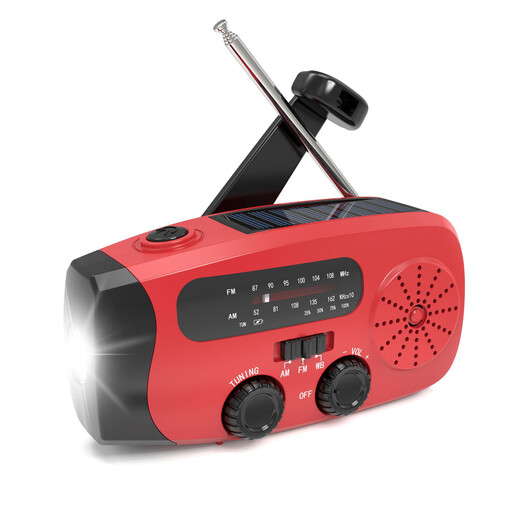
This radio may suit you if you want the listed emergency features as well as FM reception; check that the model has a built-in speaker if you want to listen without earphones.
AM/FM/WB reception, 2000mAh battery, hand crank, solar charging, LED light, power bank function and IPX-3.
 No image available
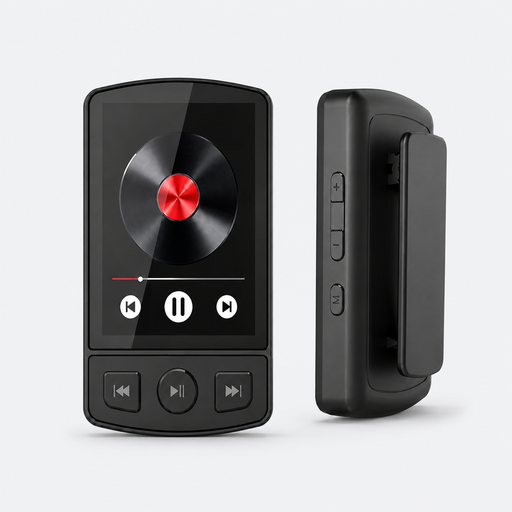
The listed FM radio and built-in speaker make this a good match for listening without earphones, as long as your station is available on FM where you plan to use it.
64 GB, Bluetooth 5.2, clip, pedometer and voice recording.
 No image available
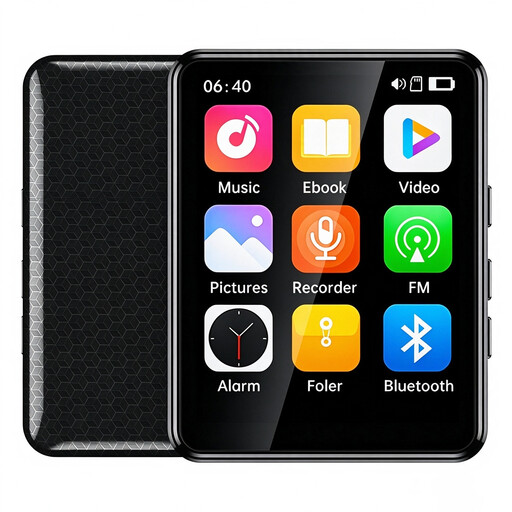
The product name mentions FM radio and a speaker; check reception by the wall before relying on this model for a specific station.
2.4-inch colour touchscreen, 64 GB, Bluetooth, voice recording and a stated battery life of up to 10 hours.
 No image available
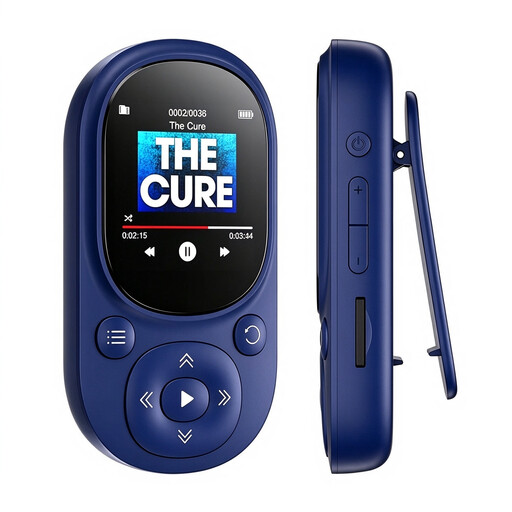
This model lists FM radio; check that the listening options suit you if you want to hear updates through a built-in speaker.
Bluetooth 5.3, 1.44-inch colour screen, voice recording, pedometer and microSD card slot supporting up to 128 GB.
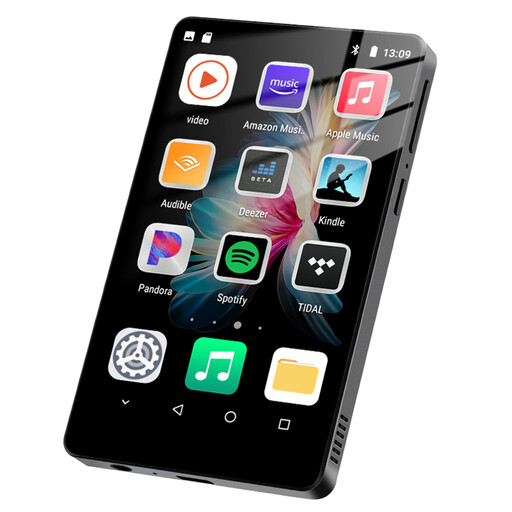 No image available
The product name mentions a speaker, but the product description says you need to connect headphones to use the FM aerial; bear this in mind if you want to listen without earphones.
4-inch touchscreen, Android 11, 2 GB RAM, 16 GB storage and expandable memory up to 256 GB. The product name lists Wi-Fi, Bluetooth 5.0 and FM radio.
No, not if your preferred station broadcasts on FM and you can receive it where you are. Local DAB+ broadcasts vary by area, so check the station, area and reception band first.
Try moving the radio and adjusting the aerial. With DAB+, you can run an automatic station scan again; these steps do not guarantee that your preferred station will be available.
Not if you need updates about a specific journey. NS describes alerts in the NS app for things such as delays, cancellations and departures from a different platform.
When you buy from a business online, you will often have a 14-day cooling-off period. The Dutch government also states that there is no fixed statutory guarantee period in the Netherlands; if a product is faulty, contact the seller.
Check that the device being offered has the required CE marking and follow the instructions for use. The Dutch Authority for Digital Infrastructure lists CE marking as one of the requirements for equipment.