
Listening privately in the lounge
You want to follow a live programme without filling the shared space with sound from a speaker. Check whether the model has a headphone socket or explicitly supports transmitting audio via Bluetooth.


First, choose according to how the programme is available. If it’s broadcast live on a local FM or DAB+ station you can receive, a radio with a headphone socket could be suitable. For a podcast or a programme you’ve missed, you’ll need a listening service. NPO lists science content on Radio 1 as well as the separate podcast Focus op Wetenschap. Then check reception where you plan to sit, and whether the exact model supports private listening through a wired connection or Bluetooth TX (audio transmission to headphones).
You want to follow a live programme without filling the shared space with sound from a speaker. Check whether the model has a headphone socket or explicitly supports transmitting audio via Bluetooth.
You know which science programme you’re looking for and want to find out whether it’s broadcast live on FM or DAB+, or is only available as a podcast.
You move your pocket radio between seats and need to consider indoor reception, portability and how the device is powered.
Suitable if: the programme is broadcast live on an FM station you can receive in the lounge and you want to listen using a wired connection.
Trade-off: you won’t receive stations that broadcast on DAB+ only.
Suitable if: you want to be able to choose from available DAB+ stations and listen privately using earphones.
Trade-off: Roberts says the earphones supplied with the SportsDAB 55 also act as an aerial, so check whether you’re happy to use them.
Suitable if: wireless listening is important; Sangean lists Bluetooth TX for the DPR-35BT.
Trade-off: features vary by model, and reception where you sit still matters.
Suitable if: your science programme is a podcast or you want to listen to a broadcast later; NPO describes both options through NPO Luister.
Trade-off: an ordinary FM/DAB+ radio isn’t a podcast player on its own.
First choose how you’ll listen to the programme, then weigh up private listening, reception and power options.
| Consideration | What should you check? | Who is this important to? |
|---|---|---|
| Private listening | Check for a headphone socket or explicit Bluetooth TX support; Bluetooth alone doesn’t mean the radio can transmit audio to earphones. | I want to listen through earphones in a shared lounge without disturbing anyone; around 36% of consumers put private listening first. |
| Access to the programme | Find out whether the programme is broadcast live on FM or DAB+, or is available as a podcast or catch-up episode. | If I’m looking for one specific science programme, I want to know how I can listen to it first; around 29% of consumers give access to that programme top priority. |
| Reception where you sit | Try the station you want to listen to in the lounge. Digital Radio NL points out that indoor DAB+ reception is partly affected by local buildings. | I want to receive my chosen station where I usually sit; around 21% of consumers prioritise reception in their location. |
| Power and controls | Compare the power options for the exact model, check whether batteries are included and see how quickly you can find your presets. | I want to move the radio easily and choose power and controls that suit how I use it; around 14% of consumers put this first. |
NPO lists both science content on the radio and separate podcasts. So an FM/DAB+ receiver won’t automatically play podcasts as well.
Check the programme name and station, and decide whether you want to listen live or catch up with an episode.
The direction of the connection matters when you want to use wireless headphones. Sangean specifically lists Bluetooth TX for the DPR-35BT.
Check whether Bluetooth TX is listed for the exact model, or use a wired headphone output that’s confirmed to be available.
According to Digital Radio NL, indoor reception is partly affected by the buildings and construction at your location.
Try the station you want where you usually sit. If reception is poor, scanning for stations again may help.
Roberts says the SportsDAB 55 requires two AA batteries, which are not included.
Check the power type used by your chosen model and what’s included in the box.
You’ll need to buy the AA batteries required for the SportsDAB 55 separately.
The ICF-P27 is an analogue FM/AM radio for anyone who wants to listen privately using a wired connection to a station they can receive live.
The DPR-39 and DPR-35BT offer different DAB+/FM listening options; features vary by model.
The SportsDAB 55 is a personal DAB+/FM radio with a headphone socket and presets.
The TAR2509/10 is a portable FM/AM radio with clear buttons and a headphone socket, for anyone happy with a larger device than a pocket radio.
The PDR-020WH is a portable DAB+/FM radio with a speaker and headphone output, if a larger model suits your lounge.
This selection features portable MP3 players with FM radio listed in their product names. They may suit a live programme broadcast on FM; check whether the exact model supports wired headphones or Bluetooth TX for private listening.
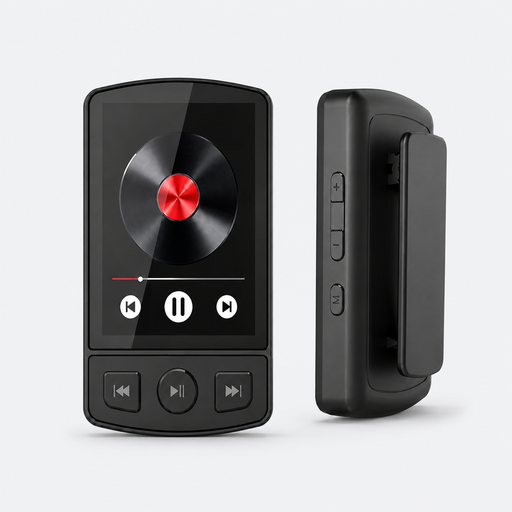 Image unavailable
Could be suitable if the live programme you want is broadcast on FM; check separately how to connect headphones.
The product name lists 64 GB, Bluetooth 5.2, a clip and a speaker.
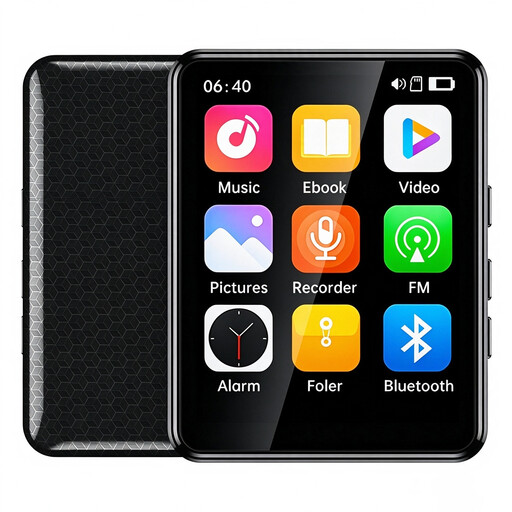 Image unavailable
Could be suitable if your science programme is broadcast live on FM; check whether the exact model works with your preferred way of listening privately.
The product name lists Bluetooth, a speaker and battery life of up to 10 hours.
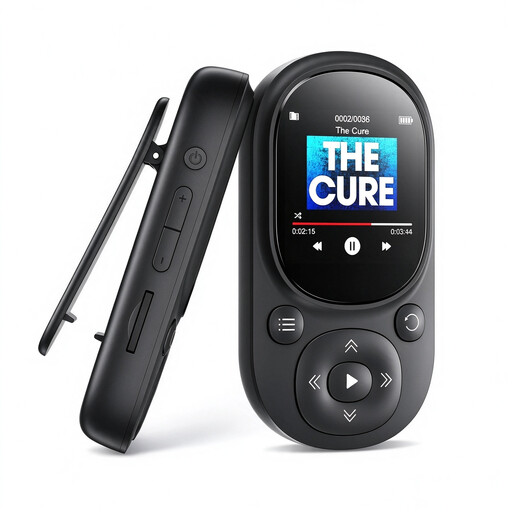 Image unavailable
Could be suitable for a live programme on FM; don’t assume it can transmit audio to wireless headphones without checking that the exact model supports this feature.
The product name lists a 1.44-inch colour screen, a microSD card slot supporting up to 128 GB and a voice recorder.
Not just because it has FM or DAB+. NPO describes podcasts and catch-up listening through NPO Luister, so first decide whether you want to hear a live broadcast or listen to an episode later.
Move the receiver or aerial and try scanning for stations again. Digital Radio NL recommends a new scan as the first tip for DAB+ problems and points out that indoor reception depends on local buildings.
The Dutch government says that a 14-day cooling-off period applies to many distance purchases, but not necessarily to every purchase. The right to change your mind and your statutory rights if a product is faulty are different: if there’s a fault, contact the seller, and there’s no fixed statutory warranty period in the Netherlands.