
Listening at home at a low volume
If you want to follow a live reading through a small speaker, check whether speech remains clear at your preferred volume where you’ll be listening. Having a built-in speaker alone doesn’t guarantee this.


An FM or DAB+ pocket radio is suitable for a reading broadcast live on a radio station you can receive; it won’t play a podcast or audiobook from your phone by itself. Choose the right option for where you’ll be listening: a speaker for listening in the room, or earphones to disturb others less. Check reception where you plan to listen and make sure the controls suit you.
If you want to follow a live reading through a small speaker, check whether speech remains clear at your preferred volume where you’ll be listening. Having a built-in speaker alone doesn’t guarantee this.
If you don’t want to disturb others, check for an earphone socket or suitable wireless output, as well as the power supply and reception of the exact model.
If you want to choose your own book or podcast, check whether the device can receive audio from your phone. A radio receiver or Bluetooth transmission to headphones won’t automatically do this.
First, work out whether the reading is broadcast live or comes from a phone. Then choose the reception and audio output that suit where you’ll be listening.
| Consideration | What to look for | Who is this important for? |
|---|---|---|
| Clear speech at a low volume | Check whether the exact model has a speaker and, if possible, try spoken audio at your intended listening spot. | If I want to listen quietly through a speaker, the voice needs to be clear where I sit. Around 31% of consumers put clear speech at a low volume first. |
| Access to the reading you want | Find out where it comes from. For live radio, check the reception band; for audio from a phone, specifically check whether the device can receive audio. | I want to choose my own book or programme, so I need to know whether it can play from my phone. Around 25% of consumers give access to the content they want top priority. |
| Private listening | Check for a headphone socket or suitable wireless output, and whether earphones are included. | If I’m listening while others are in the room, I want to disturb them as little as possible. Around 19% of consumers put private listening first. |
| Power | Check the battery type or charging options for the exact version. | For longer listening sessions, I want to know whether I need to bring batteries or charge the device. Around 13% of consumers put power first. |
| Controls | Compare the tuning, presets and any button lock on the exact model. | I want to return to my broadcast without having to search for it, so I pay attention to the controls. Around 12% of consumers consider ease of use the most important factor. |
An FM or DAB+ tuner receives live broadcasts. Bluetooth TX, as found on the Sangean DPR-35BT, sends radio audio to headphones or a speaker instead; it’s not the same as receiving audio from a phone.
First, find out where the reading comes from. Then check which tuner or audio input you need.
The Sangean DPR-39 is described as having earphone output; Sangean lists both a speaker and earphones for the DPR-35BT.
If you want to listen without earphones, check the output on the exact model.
Buildings and the position of the radio or aerial can affect indoor reception.
Check your preferred station where you plan to listen. NPO Radio 5 advises moving the radio or aerial and searching for stations again if you have reception problems.
The ICF-P27 is a compact AM/FM radio for listening to live radio through its speaker or earphones.
The TAR1510/00 is an FM/AM pocket radio with analogue controls and a headphone socket.
The DPR-39 and DPR-35BT offer different features in compact DAB+/FM radios.
The PDR-065BK is a more portable alternative if you also want to play audio from your phone and don’t need a pocket-sized device.
This selection focuses on portable MP3 players with FM radio and a speaker; some models also list storage or connections for other audio. Check how each device receives audio: Bluetooth output to headphones isn’t the same as receiving audio from a phone.
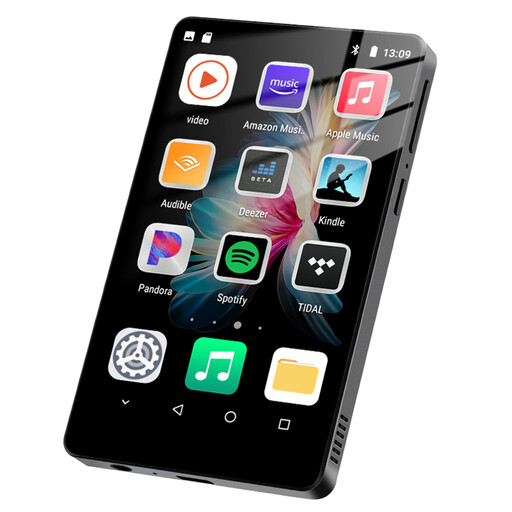 No image available
An option if you want to use apps on the device as well as listen to FM radio: the description lists Wi-Fi, access to apps and streaming services, and two-way Bluetooth.
Android 11, 2 GB RAM, 16 GB storage, expandable up to 256 GB, and a speaker. According to the description, you need headphones for the FM aerial.
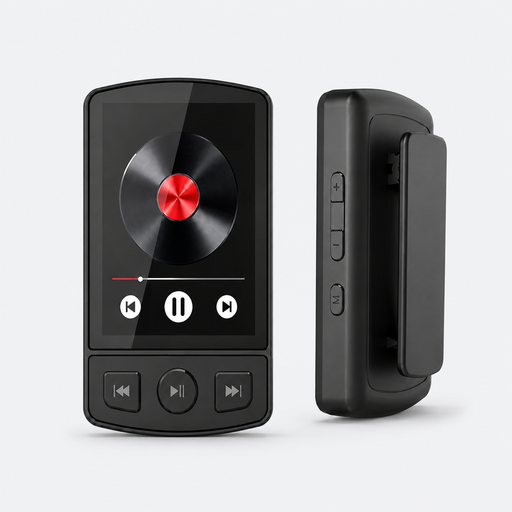 No image available
A portable option if you want to listen to FM radio and stored audio through a speaker.
The description lists 64 GB of storage, expandable TF/microSD storage and support for TXT e-books. It doesn’t specify whether the Bluetooth function is for receiving or sending audio.
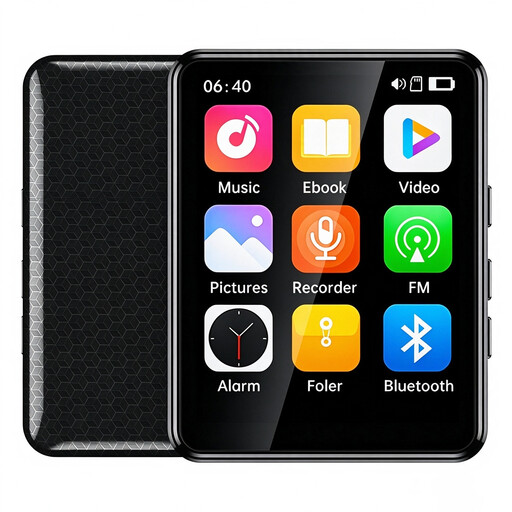 No image available
An option if you want to play FM radio and stored audio through a speaker.
The title mentions an e-book function; the description lists support for MP3 and other audio formats, as well as Bluetooth audio output. Bluetooth output doesn’t confirm that it can receive audio from a phone.
No image available
An option if you want to listen to FM radio through the built-in speaker or with headphones.
The title lists a 3,5mm headphone socket, a clip and support for a TF card up to 128 GB. The direction of Bluetooth transmission isn’t specified.
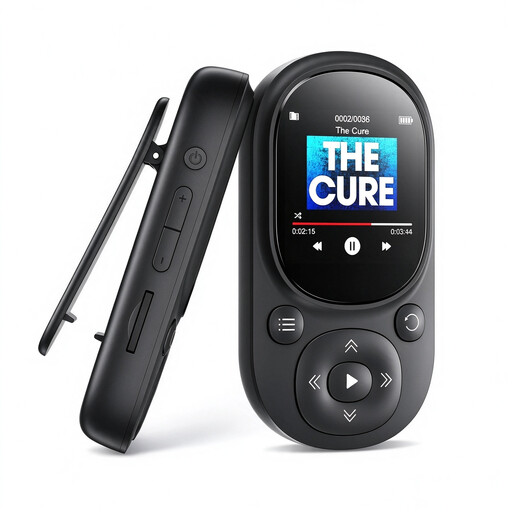 No image available
A portable option for FM radio and stored audio, with Bluetooth output to headphones or a speaker according to the description.
64 GB of storage and a microSD card slot for cards up to 128 GB. Bluetooth output isn’t the same as receiving audio from a phone.
No. An FM or DAB+ tuner receives live broadcasts. To play a podcast or audiobook from your phone, you need a suitable way to play audio from your phone. The Sangean DPR-35BT’s Bluetooth TX function sends radio audio to headphones instead.
NPO Radio 5 advises moving the radio or aerial and searching for stations again. Indoor reception also depends on buildings and structures, so nationwide coverage doesn’t guarantee that a station will come through everywhere you listen.
Keep the volume low and take breaks. The World Health Organization points out that sound level, listening time and how often you’re exposed to sound are all linked to the risk to your hearing. A volume setting on its own doesn’t measure the actual sound level.
According to the Dutch government, the seller must offer a solution if a product is faulty; the Netherlands doesn’t have a fixed statutory warranty period of two years. For a distance purchase from a business, you also have 14 days to change your mind in many cases, subject to applicable exceptions.