
People listening together
If you want to follow the discussion with others without headphones, check whether the model has a built-in speaker and try it out from where you’ll be sitting. Sony and Pure list a speaker on the models discussed here.


A pocket radio will only work for this panel discussion if it is also broadcast on a radio station; a radio cannot pick up sound directly from the speakers in the room. Then choose a model with a built-in speaker for listening together, or a headphone socket for private listening. Tune in to the broadcast on FM or DAB+, and test reception where you’ll be sitting beside the wall.
If you want to follow the discussion with others without headphones, check whether the model has a built-in speaker and try it out from where you’ll be sitting. Sony and Pure list a speaker on the models discussed here.
First check whether the panel discussion is being broadcast on a radio station and which band it uses. The Dutch government explains that broadcasters use FM and/or DAB+ frequencies.
If you’ll be sitting by a wall or further from a window, try the station from that exact spot. Research into DAB reception in London offices describes differences caused by factors including building penetration loss and location; those findings cannot predict reception in a room in the Netherlands. Source: EBU Technical Review, research by NTL Broadcast.
First find out whether the panel discussion is being broadcast and on which band. Then choose how you want to listen and test reception in the spot where you’ll be using the radio.
| What to consider | What should you check? | Who is this important for? |
|---|---|---|
| Listening together | Check whether there’s a built-in speaker and try the volume from where you’ll be sitting. | If I’m listening with others, I want to follow the panel discussion without headphones and hear the speech clearly from where we’re sitting. Around 31% of consumers put listening together at the top of their list. |
| The right broadcast | Ask the organiser or broadcaster about the programme, station and FM or DAB+ broadcast. | If I want to hear this particular panel discussion, I need to know whether it’s being broadcast and on which band. Around 31% of consumers prioritise finding the right broadcast and band. |
| Reception by the wall | Try the station where you’ll be listening, and follow the model’s instructions for positioning the aerial. | If I’m sitting in a fixed spot by the wall, I want a usable signal there, not just somewhere else in the room. Around 25% of consumers prioritise reception where they’ll be listening. |
| Headphones and power | Check for a headphone socket and whether the exact model runs on batteries or has a rechargeable battery. | If I want to listen privately, I need to know whether I can connect headphones and how the radio is powered. Around 13% of consumers prioritise this combination of needs. |
An FM or DAB+ tuner receives radio broadcasts; it won’t automatically pick up sound from speakers in the room.
Check with the organiser or broadcaster whether you can listen to the panel discussion on a radio station, and which band it uses.
Indoor reception can vary depending on the location and the building. A signal elsewhere in the room doesn’t guarantee good reception where you’ll be sitting.
Try the station you want from your actual listening spot, and compare another position if necessary.
A headphone socket isn’t the same as a built-in speaker. Sangean lists headphone output for the DPR-39; check the specifications of the exact model.
If you’ll be listening with others, choose a model for which the manufacturer lists a built-in speaker.
Sony describes the ICF-P27 as a compact AM/FM radio with a speaker and headphone socket.
According to Sangean, the DPR-39 and DPR-35BT combine DAB+ and FM, but differ in their listening options and power supply.
According to Pure, the Elan Move combines FM and DAB+ with a built-in speaker, headphone socket and rechargeable battery.
The TAR1509/00 is an example of an analogue FM/AM pocket radio with a headphone socket.
This selection includes portable music players and a Bluetooth speaker whose product names mention FM radio. They’re only relevant if the panel discussion is being broadcast on FM.
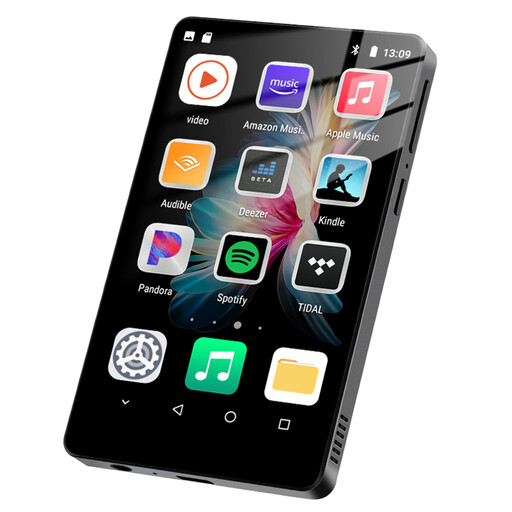 No image available
An option to compare if you want to listen to an FM broadcast through a speaker.
The product name lists Android 11, 2 GB RAM and 16 GB storage, expandable to 256 GB.
According to the product information, a pair of headphones must be connected to act as the aerial for FM reception.
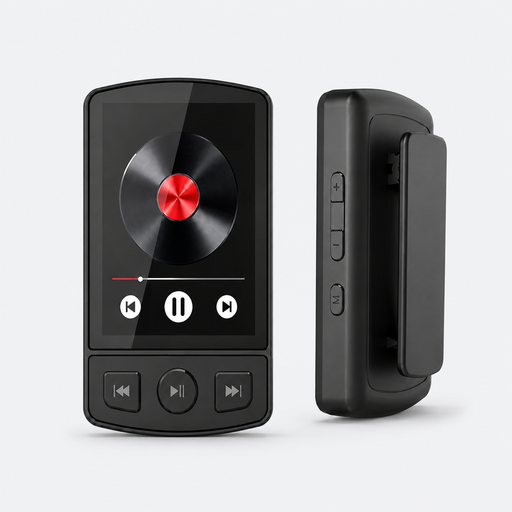 No image available
This player could suit listening to an FM broadcast without headphones, provided the speaker is clear enough where you’ll be sitting.
The product name lists FM radio, Bluetooth 5.2 and a clip.
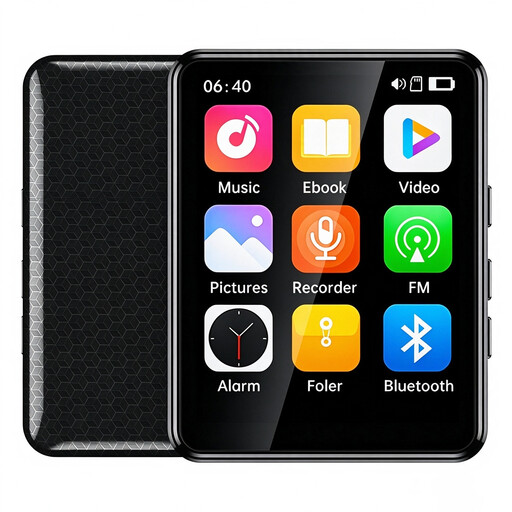 No image available
An option to compare if you want to listen to an FM broadcast without headphones; test how clearly you can hear it in the spot where you plan to use it.
The product name lists FM radio, a speaker and battery life of up to 10 hours.
No image available
This player could suit private or shared listening to an FM broadcast; check which listening connections the exact model has.
The product name lists a speaker and support for a TF card up to 128 GB.
 No image available
A speaker option to compare if the panel discussion is being broadcast on FM and you want to listen together.
The product name lists an aerial, LCD screen, AUX input, USB connection and TF card support.
No, not simply because those speakers are nearby. Ask the organiser or broadcaster whether the panel discussion is also being broadcast on a radio station and, if so, which band it’s on.
Check that you’ve selected the right station, position the aerial as directed in the model’s instructions, and try another spot in the room. Indoor reception varies between buildings and locations; reception elsewhere doesn’t prove the signal will be good by the wall.
Tune in to the right station in advance and check the power supply. For the Elan Move, Pure recommends fully extending the aerial and charging the battery before first use; Pure also describes an initial DAB scan. These instructions apply to that model.
For qualifying online consumer purchases in the Netherlands, you have a 14-day cooling-off period, with some exceptions. Products must meet legal requirements, but there is no single fixed statutory warranty period; if a product develops a fault, contact the seller. Source: Dutch government.
Radio equipment placed on the market in the Netherlands must meet the applicable European requirements and carry the mandatory CE marking; check the specific version. Licensing information from the Dutch Authority for Digital Infrastructure concerns broadcasters using frequency space, not people simply listening with a receiver.