For a live science programme, an FM pocket radio will work if the station is available on FM where you are. A DAB+/FM model gives you both broadcast options, but doesn’t guarantee reception indoors. To play a podcast or catch up on a broadcast, you’ll need a separate playback option, such as NPO Luister. Check whether the exact model has a built-in speaker or only plays audio through headphones, and test reception in your hobby room.
Who is a pocket radio suitable for?
Listening live at your workbench
You want to be able to tune straight into a science programme. So check which station and type of reception are available where you work. NPO Radio 1 publishes frequency information and recommends a full scan or automatic tuning for DAB+.
Listening without headphones
You want to hear the programme through the radio itself while you work on your hobby. Check whether the specific model has a built-in speaker: for example, Sangean lists one for the SR-35, while the DPR-39 specifications mention headphone output.
Private listening
You don’t want others to hear what you’re listening to, so you’re looking for a model with a headphone socket. Sangean and Sony list a socket for the models mentioned; also check that reception works where you plan to listen.
What should you look for when choosing one?
Start with the broadcast type and reception where you’ll be listening. Then choose your preferred audio output, power source and controls.
| What to consider |
What should you check? |
Who is this important for? |
| Reception for the programme |
Make a note of the station and broadcast type, then check FM or DAB+ reception where you’ll be listening. |
If I want to follow a live programme while I’m working on a project, the chosen station needs to be available on the right band there. Around 36% of consumers put reception of the programme they want first. |
| Speaker or headphones |
Check the exact model separately for a built-in speaker and a headphone socket. |
I want to hear speech through the radio itself, or listen privately through headphones without disturbing anyone. Around 29% of consumers put the right listening output first. |
| Power |
Check which type of battery or charging method is required, and what’s included with that version. |
If I move the radio between my workbench and another spot, I want to know whether I need to bring batteries or charge the battery. Around 21% of consumers prioritise the power source. |
| Tuning and finding stations again |
See how the model tunes in, whether you can save stations and whether the controls are practical for you. |
I want to return to the same station quickly while working on my hobby, so I pay attention to tuning and presets. This is the top concern for around 14% of consumers. |
Common mistakes when choosing
-
Mistaking an old programme page for a current broadcast schedule
The NPO page for Focus lists episodes from December 2021 as recent broadcasts. This doesn’t confirm a current live broadcast time.
Check the current programme guide and whether the specific programme is broadcast live or available as a podcast.
-
Assuming DAB+ works everywhere indoors
NPO Radio 1 describes DAB+ reception across a significant part of the Netherlands, but that doesn’t tell you whether the signal will reach your workplace.
Test reception where you’ll actually be listening, and keep FM in mind as a possible alternative broadcast option.
-
Confusing a headphone socket with a built-in speaker
The Sangean DPR-39 specifications list headphone output, while Sangean says the SR-35 does have a built-in speaker.
Check the audio output of the exact model rather than relying on the term ‘pocket radio’ alone.
-
Taking an older model page as proof of current availability
Philips lists the TAR1509/00 on its Dutch product page as ‘No longer available’.
Use older models as examples of specifications, and check the version and current range before making your choice.
Brands and models to consider
Sangean
The SR-35 is an FM/AM pocket radio with a speaker; the DPR-39 is a DAB+/FM model with headphone output.
- Sangean says both models use two AA batteries.
- The DPR-39 specifications don’t list a built-in speaker, so don’t assume that all the brand’s pocket radios have one.
Sony
Sony describes the XDR-P1DBP as a DAB+/FM pocket radio with a mono speaker and headphone socket.
- Sony says this model has a rechargeable battery and station presets.
- These features don’t tell you whether the radio will receive a signal at a particular indoor location.
Roberts
The SportsDAB 65 is an example of a pocket model combining DAB+/FM, a speaker and headphones.
- Roberts lists these features for the model on its UK product page.
- This doesn’t confirm that a Dutch version is available or can be purchased. Roberts says the stated battery life depends on volume and use.
Philips
The TAR1509/00 is an example of an FM/AM pocket radio with a headphone socket.
- Philips’ Dutch product page describes the features of this version.
- Philips marks the TAR1509/00 as ‘No longer available’, so this model doesn’t confirm current availability.
Products at Joybuy
This selection comprises portable music players with FM radio and a speaker. Check FM reception, antenna requirements and controls for each model before choosing one for a live programme.
 No image available
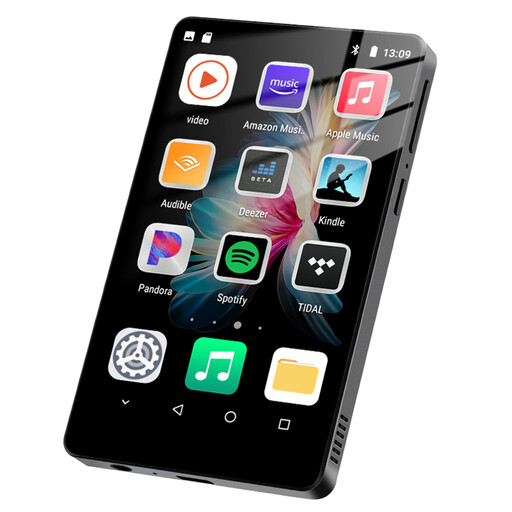
MP3 player with FM radio and speaker, 4-inch touchscreen
The listed FM radio and speaker may suit you if you want to listen to a live FM programme through the device itself; first check reception in your hobby room.
The title lists Wi-Fi, Bluetooth 5.0, Android 11, 2 GB RAM, 16 GB storage and expandable storage up to 256 GB.
According to the product description, headphones are needed for the FM antenna. It also mentions a 1500 mAh rechargeable battery.
Joybuy
 No image available
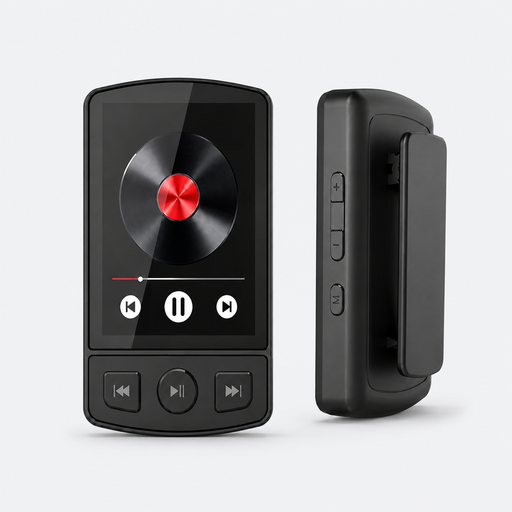
MP3 player with FM radio and clip, 64 GB
The FM radio and speaker make this model worth considering if you want to hear a live FM programme through the device; check reception where you’ll be listening.
The product name lists Bluetooth 5.2 and 64 GB storage. The product description mentions a clip, a weight of around 34 g and support for a TF card up to 128 GB.
Joybuy
 No image available
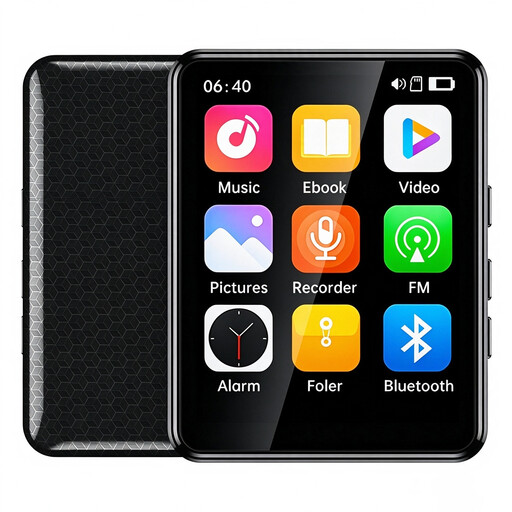
VIELLAN MP3 player with FM radio and speaker, 64 GB
The listed FM radio and speaker suit listening to a live programme through the device, provided reception works where you work.
The product name lists a colour screen, touchscreen, 64 GB memory and battery life of up to 10 hours.
Joybuy
No image available
MP3 player with FM radio and clip
The product name lists FM radio and a speaker, which is useful if you want to hear a live programme through the device. Check reception where you work.
The title lists Bluetooth 5.2 and a clip. The product description mentions a weight of 34 g, a 1.77-inch colour screen and support for a TF card up to 128 GB.
Joybuy
 No image available
Mlove BV800 portable Bluetooth speaker with FM radio
This is a portable speaker with FM radio. Consider it only if this format suits where you’ll be listening and the radio can receive a signal there.
The product description mentions an LCD screen, physical tuning buttons, a built-in battery and an external antenna.
Joybuy
Frequently asked questions
Can I use a regular pocket radio to play a missed programme or podcast?
Not with an FM or DAB+ tuner alone. For podcasts and on-demand broadcasts, NPO describes NPO Luister as a playback option. Choose this if you want to start an episode yourself.
How do I find NPO Radio 1 on a DAB+ pocket radio?
NPO Radio 1 recommends running a full scan or using automatic tuning, then selecting the station from the list of results. Next, check that reception works in the specific spot in your hobby room.
What should I check about power and the guarantee?
Check whether your chosen model needs batteries or charging, and what’s included with that version. According to ACM ConsuWijzer, when you buy as a consumer online in the Netherlands, you generally have a statutory cooling-off period of 14 days after delivery. ACM ConsuWijzer also explains the statutory guarantee that applies when a product doesn’t do what you could reasonably expect of it.
As a listener, do I need a licence to use a pocket radio?
The Netherlands Authority for Digital Infrastructure’s licensing information about local DAB+ radio concerns broadcasters. It doesn’t address licences for listeners. If in doubt, consult official guidance specifically about receiving radio broadcasts.


