What should you look for when choosing?
First, check the programme you want and how you can receive it. For listening in a small living room, a built-in speaker and a suitable power supply are also important.
| What to consider |
What to look for |
Who is this important to? |
| Receiving the programme you want |
Look up the current station and programme, then check whether the radio supports FM or DAB+. Also check reception in the place where you plan to listen. |
I want to make sure the radio can receive the station broadcasting my gardening programme. Around 36% of consumers give station coverage the highest priority. |
| Hearing spoken advice without earphones |
Check whether the radio has a built-in speaker. A headphone socket alone won’t let you listen through the radio in the room. |
I want to hear the advice through the radio itself in the living room, without earphones. Around 29% of consumers focus most on listening without earphones. |
| Power and portability |
Compare the battery type, charging port and power supply for the exact model, and check which accessories are included. |
I want to take the radio easily between the living room and other places where I listen. Around 21% of consumers focus most on power and portability. |
| Easy tuning |
Compare how you tune in, such as with a tuning dial or preset stations, and check that it suits the way you find the station you want. |
I want to be able to tune back to my station without complicated controls. Around 14% of consumers prioritise easy tuning. |
Joybuy product selection
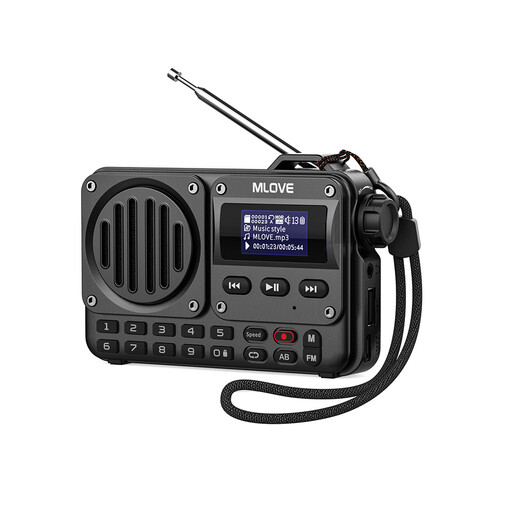
This selection features a portable speaker with FM radio, intended for listening to a programme broadcast on an FM station you can receive where you are.
 No image available
Mlove BV800 Bluetooth speaker with FM radio
The listing mentions FM radio, making this model relevant if the gardening advice you want is broadcast on an FM station you can receive where you are.
Before buying, check that the specific item carries the required CE marking. The Dutch Authority for Digital Infrastructure states that applicable equipment must carry the CE marking.
View at Joybuy
Frequently asked questions
Can I receive NPO Radio 5 over the air with an FM pocket radio?
No. NPO Radio 5 isn’t broadcast over the air on FM; NPO lists DAB+ as the way to receive this station. Check that DAB+ reception is good indoors where you plan to listen.
How do I set up a new DAB+ pocket radio in the living room?
Follow the instructions for your chosen model to scan for and save stations. Check reception where you plan to listen; a claim that national DAB+ stations are available doesn’t guarantee reception in every living room.
What should I check about the power supply for a rechargeable radio?
Use the power supply as directed in the instructions for your specific model. Sangean warns that using an unsuitable adapter with the DPR-35BT can affect its operation, including radio reception. Also follow the safety instructions for the built-in battery.
What are my rights if a radio I bought online isn’t suitable or breaks down too soon?
Online purchases in the Netherlands generally come with a statutory 14-day cooling-off period from delivery, subject to legal exceptions. This is separate from your statutory rights if a radio, when used normally, doesn’t meet what you could reasonably expect from it. ACM ConsuWijzer states that there’s no fixed two-year period for this.
What should I check about the CE marking on a radio in the Netherlands?
Check that the specific item being offered carries the required CE marking. The Dutch Authority for Digital Infrastructure states that applicable equipment must carry the marking; a brand name or product page alone doesn’t confirm this for an individual listing.


