
Listening together at the table
You want to listen to the programme in the kitchen-diner without earphones. So check whether the exact model has a built-in speaker and whether reception works where you plan to listen.


First, choose a radio that supports the type of reception used by the station broadcasting your folk music programme, then check reception where you plan to listen in the kitchen-diner. For listening together, a built-in speaker is important. If you’ll mainly listen on your own or want to take the radio with you, a small model with earphones may suit you better, provided the programme comes through clearly.
You want to listen to the programme in the kitchen-diner without earphones. So check whether the exact model has a built-in speaker and whether reception works where you plan to listen.
You’re buying the radio for one particular programme. The station and the reception available where you listen will determine whether FM, DAB+ or both are relevant to you.
You take the radio with you or listen with earphones. In that case, look at its size, power supply and headphone socket; sound that fills the whole kitchen-diner may be less important.
Start with the station and reception where you’ll listen. Then decide between listening together through a speaker and listening on your own with earphones.
| Buying concern | What should you look for? | Who is this important for? |
|---|---|---|
| Reception of the programme | Find out how the station broadcasts the programme, and check reception where you want to listen. | I mainly want to be sure I can receive the programme I have in mind at home; around 36% of consumers say programme reception is their main buying concern. |
| Being able to listen together | Check whether the exact model has a built-in speaker and whether the sound is good enough from your usual seat. | When I listen with others at the table, I want to hear the programme without earphones; around 29% of consumers prioritise listening together. |
| Size and power supply | Check the size, battery type or charging method, and what comes with the exact model. | I want to carry the radio between rooms and know how to power it; around 21% of consumers focus mainly on portability and power. |
| Easy tuning | Compare analogue tuning with the available presets. Bluetooth isn’t needed to receive a standard FM or DAB+ broadcast. | If I mainly want to find one regular programme, simple controls matter more to me than extra features; around 14% of consumers name ease of use as their main buying concern. |
A product specification can’t guarantee that the station broadcasting your programme is available via DAB+ where you plan to listen.
Look up the station and the reception options available, then check reception in your kitchen-diner. Keep FM in mind if the station broadcasts on it.
A headphone socket doesn’t necessarily mean that the radio also has a built-in speaker. For example, the Sangean DPR-39 specifications list a headphone socket but don’t confirm that it has a built-in speaker.
Before ordering, check that the exact model is listed as having a built-in speaker.
Roberts states that the SportsDAB 65 offers up to 30 hours of listening, depending on volume and use. Your own usage can affect how often it needs charging.
Use the manufacturer’s figure as a guide and check that the charging method suits the way you’ll use it.
With heavier use, you may need to charge it more often than expected.
The models listed offer different listening and power options; check the features of the specific model you’re considering.
Philips offers, among other models, an analogue FM/AM pocket radio and a larger DAB+/FM radio for use in one place.
According to Roberts, the SportsDAB 65 is a DAB+/FM pocket radio with a built-in speaker and earphones.
According to Pure, the Elan Move combines a pocket-sized design with DAB+/FM, Bluetooth and a built-in mono speaker.
The DPR-39 is a personal DAB+/FM pocket radio with a headphone socket.
These products have an FM function. Check whether the station broadcasting your programme uses FM and whether reception works where you plan to listen.
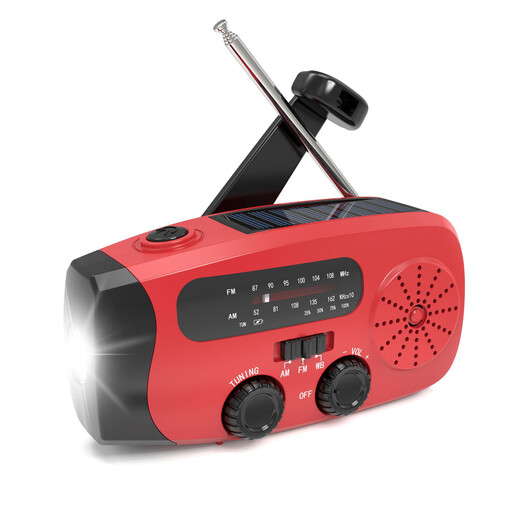 Image unavailable
An option to consider if you’re looking for the listed emergency features as well as FM radio.
AM/FM/WB reception; hand crank and solar charging; 2000mAh battery; LED torch; power bank function; IPX-3.
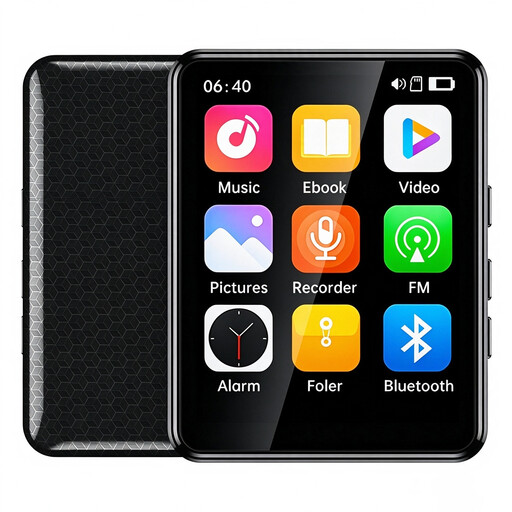 Image unavailable
An option for listening to FM without earphones, if the built-in speaker suits the way you’ll use it.
2.4-inch colour touchscreen; 64 GB memory; Bluetooth; voice recording; e-book function; battery life of up to 10 hours.
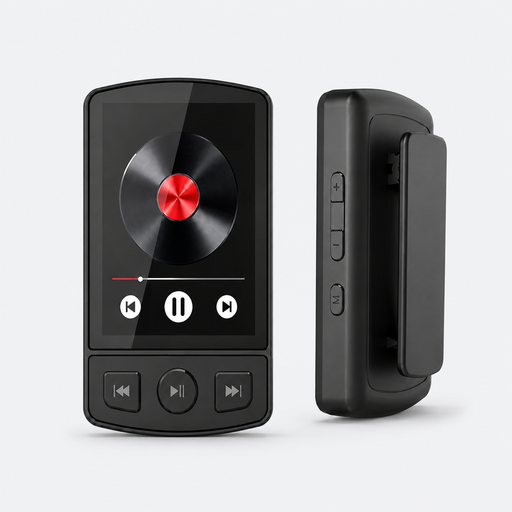 Image unavailable
An option to consider if you want an FM function and a built-in speaker in one device.
FM radio; built-in speaker; clip; pedometer; voice recording; supports a TF card up to 128 GB.
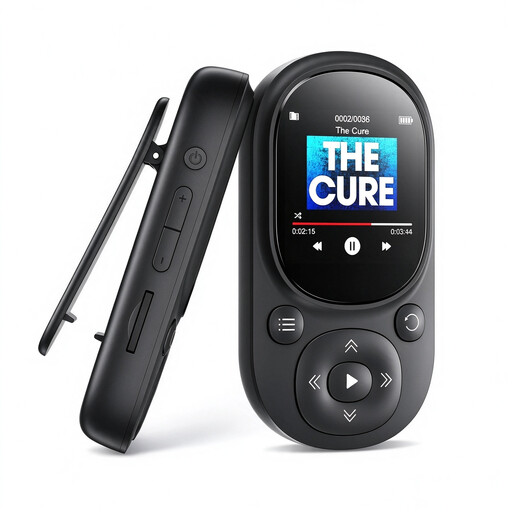 Image unavailable
An option if you want to use music player features as well as listen to FM radio.
Bluetooth 5.3; 1.44-inch colour screen; voice recording; pedometer; microSD card slot up to 128 GB.
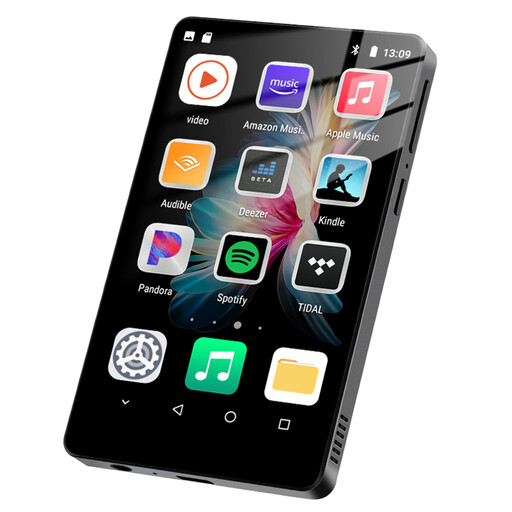 Image unavailable
An option if you want to combine FM radio with the listed music player features.
4-inch touchscreen; Android 11; 2 GB RAM; 16 GB storage, expandable up to 256 GB; FM radio and speaker.
According to the product description, a connected pair of headphones is needed as an aerial for FM reception.
No. A product specification can’t guarantee reception at your address or where you keep the radio. First check how the station you want broadcasts, then try FM and DAB+ in that spot if possible.
Tune the Philips TAR1510/00 manually using its rotary control. According to Roberts, the SportsDAB 65 has presets for DAB and FM; save the station only after confirming that the programme is broadcast on it.
Check the power supply for the exact model: the Philips TAR1510/00 uses two AAA batteries, the Sangean DPR-39 uses two AA batteries, and the Roberts SportsDAB 65 has a built-in rechargeable battery. Take a discarded device with a battery to a suitable collection point.
The Dutch government says that distance purchases generally come with a 14-day cooling-off period; check which terms and exceptions apply to your purchase. Your statutory rights if a product is faulty are separate; in the Netherlands, there is no fixed statutory warranty period.