For a small portion of pitted plums, a compact corded blender is a sensible choice if there’s a plug socket available. If there isn’t, a rechargeable model could work, but check the guidance on ingredients and liquids, the cup capacity and the battery specifications. These details alone don’t prove that the appliance can make thick, undiluted purée. Before buying, also check the applicable CE marking on the exact model. The Netherlands Food and Consumer Product Safety Authority describes the general requirement, but this doesn’t confirm the marking on an individual appliance.
Who is this buying guide for?
If you want to make thick plum purée
You’ll want a suitable texture for dishes such as sauces or desserts, so check that the ingredients and desired consistency are suitable for the appliance. Always remove the stones before blending; the Netherlands Nutrition Centre advises against crushing fruit stones.
If you have limited kitchen space
You’ll want to make small portions in a cup that’s easy to store and simple to clean after use.
If there’s no plug socket where you’ll be preparing food
You’re mainly looking for a rechargeable option, and should check that the cup capacity, battery specifications and ingredient guidance suit the purée you plan to make.
What should you look for when buying?
Compact corded blender
Choose this option: if there’s a suitable plug socket in the holiday cottage and you want to make small portions.
Bear in mind: you’ll need mains power, and the stated wattage doesn’t prove how smooth thick plum purée will be.
Rechargeable blender
Choose this option: if there’s no usable plug socket while you’re preparing food and the instructions allow you to make a small portion.
Bear in mind: the cup capacity and available battery charge limit how you can use it. Tefal’s Lightmix instructions call for a little water or milk.
More versatile compact corded blender
Choose this option: if you want to make other recipes as well as purée, or expect to prepare different portion sizes.
Bear in mind: extra features and parts aren’t necessarily useful for making one small portion and could mean more cleaning.
| What to consider |
What should you look for? |
Who is this important for? |
| Texture and ingredients |
Check the manual to see whether your chosen consistency and ingredients are allowed, and whether you need to add liquid. Don’t judge the result on wattage alone. |
If I mainly want purée with a particular consistency, I check the instructions first. Around 36% of consumers say their desired texture is their main concern when buying. |
| Portion size and storage space |
Compare the usable cup capacity and any cups supplied with the portion you want to make and the cupboard space available. |
If you’re short on space and want to take or make small portions, a compact design is particularly important. Around 29% of consumers prioritise this need. |
| Cleaning |
Check which parts can be removed and are dishwasher-safe, and how to clean them by hand. |
If I’m washing up in a holiday cottage without a dishwasher, I want to know whether the cup and blade parts are easy to clean thoroughly. Easy cleaning is the main buying concern for around 21% of consumers. |
| Power supply |
Check whether there’s a plug socket where you’ll be preparing food. If not, check the charging method, battery specifications and instructions for the exact model. |
If there’s no plug socket where you’ll be preparing food, you’ll want an option that works there without mains power. Around 14% of consumers prioritise this need. |
Common buying mistakes
-
Putting plums with their stones in the blender
The Netherlands Nutrition Centre advises against crushing fruit stones. Plums are stone fruit, so it’s best to keep the stones out of your preparation.
Remove the stone from every plum before putting it in the blender. Don’t choose an appliance expecting it to crush stones.
-
Assuming wattage guarantees smooth, thick purée
A stated motor power isn’t a comparative test of plum purée. On its own, it doesn’t tell you whether the blender can handle a particular consistency without added liquid.
Check the permitted ingredients and the instructions on liquids and filling in the manual for the exact model.
-
Assuming a rechargeable blender is equivalent to a larger corded model
A small cup and a limited number of cycles per charge could mean blending in several batches or stopping to recharge.
Compare the amount you want to make with the cup capacity, and check where and how you can charge the appliance.
Brands to consider
Severin
The SM 3735 is a blender with drinking cups, designed for small portions and mains-powered use.
- Severin says the SM 3735 comes with two removable 0.6 l cups, a pulse function and a power rating of 300 W.
- The manufacturer lists one regular speed setting. These specifications aren’t a test of plum purée.
Philips
The HR2670/01 Blend & Go is a compact blender with a cup and two speed settings.
- Philips lists 350 W, two speed settings and dishwasher-safe parts.
- The brand’s claims about smooth blending don’t show how this model handles thick plum purée.
Tefal
The Blend Up BL19H4F0 and Lightmix BL1C0430 offer different sizes and ways of blending.
- According to Tefal, the Blend Up comes with 400 and 700 ml bottles, removable blades and a cleaning brush. Tefal lists a 300 ml cup and 11 cycles per full charge for the Lightmix.
- The models differ: Tefal’s Lightmix instructions say to use a little water or milk. This guidance doesn’t confirm that it can make undiluted plum purée.
Nutribullet
The Original 600 NB603DG is a cup blender for small portions and mains-powered use.
- Nutribullet lists a 600 W motor base and a 700 ml cup for this model.
- The brand’s claims about smooth results or nutrients aren’t an independent test using plum purée.
Blenders at Joybuy
This selection focuses on compact corded and rechargeable blenders for small portions. For the exact model, check that the manual allows the ingredients and consistency you want.
 No image available
Philips 3000 Series Mini Blender HR2510/90
A good fit if you’re looking for a compact corded blender for small portions. Check the manual for your intended use and ingredients.
Capacity: 0.6 l. Power: 350 W. Two speed settings. The removable parts are described as dishwasher-safe; the stated cord length is 85 cm.
Joybuy
 No image available
Aigostar Marden BL-250
Worth considering if you’re looking for a compact corded blender with a travel cup. Check that the manual suits the preparation you have in mind.
Power: 250 W. Capacity: 500 ml. The product name specifies a glass jug.
Joybuy
 No image available
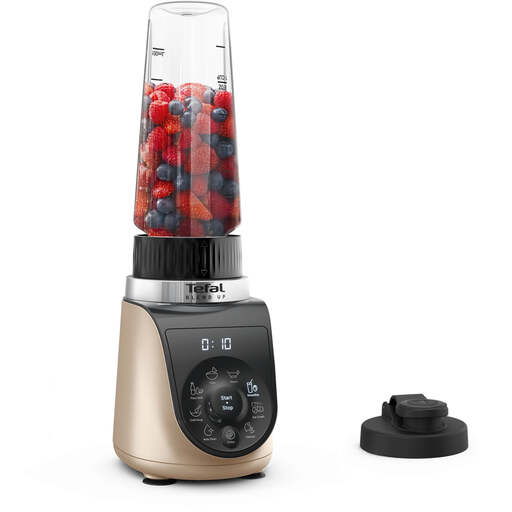
Tefal BL190A Blend Up Personal Smoothie Blender
The product name describes this as a personal blender. Before buying, check the cup capacity and the guidance on ingredients and liquids.
Joybuy
 No image available
Nutribullet Portable Personal Blender, white and beige
A good fit if you’re looking for a rechargeable personal blender for making small portions away from a plug socket. Check whether the instructions are suitable for plum purée.
Capacity: 475 ml. Rechargeable battery with a USB-C connection. The product name states a run time of 20 minutes.
Joybuy
 No image available
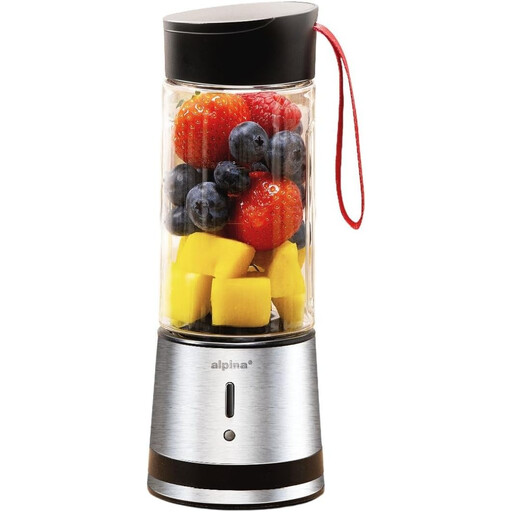
Alpina Smoothie Maker
A rechargeable option for a small portion. Check the manual to see whether your chosen ingredients and purée consistency are allowed.
Power: 125 W. Cup capacity: 300 ml. Rechargeable battery.
Joybuy
Frequently asked questions
Should you remove plum stones before puréeing the fruit?
Yes, remove the stones before putting the plums in the blender. The Netherlands Nutrition Centre advises against crushing fruit stones.
What should you do with leftover plum purée in a holiday cottage?
Store the purée in a clean, tightly covered container and put it in the fridge within 2 hours. The Netherlands Nutrition Centre recommends keeping your fridge at 4 °C.
What are your rights if a blender bought online is faulty?
If a product is faulty, contact the seller to arrange a solution. According to Dutch government information, online purchases from a business usually come with a 14-day cooling-off period, subject to conditions and exceptions.
Is CE marking compulsory for an electric blender sold in the Netherlands?
The Netherlands Food and Consumer Product Safety Authority states that CE marking is compulsory for electrical products. This general rule doesn’t confirm that an individual blender model is correctly marked; check the product information and marking on the exact appliance.


